At a Glance
The financial history of Mardia Samyoung Capillary Tubes Company Ltd reads like a ghost story where the protagonist suddenly decides to run a marathon. For years, this entity was effectively a shell—generating zero revenue from operations, surviving on meager rent, and watching its net worth erode into the abyss. Then comes FY26, and the numbers explode.
We are looking at a company that went from zero sales to a staggering ₹73.87 crore in a single year. Investors are swarming, evidenced by a 575% return over the last twelve months, but a closer look at the “how” and “why” reveals a landscape littered with audit qualifications and massive equity dilution.
The most glaring red flag is not the sudden growth, but the Auditor’s Report. The auditors have explicitly stated they were not provided with balance confirmations for trade receivables or payables. They couldn’t even verify the existence or valuation of the inventory. In the world of high-stakes finance, “we couldn’t verify the inventory” is often code for “proceed with extreme caution.”
While the top line is screaming growth, the internal controls are screaming for help. The company operated the entire financial year without an Internal Auditor, a mandatory requirement for listed entities. This isn’t just a lapse; it’s a structural void in corporate governance. The sudden pivot from manufacturing copper tubes to “Trading of Agriculture Products” adds another layer of complexity to an already opaque story.
Is this a genuine turnaround fueled by a massive capital infusion of over ₹97 crore through warrants, or is it a high-velocity paper trail? With a P/E of 232, the market is pricing in a miracle. Whether that miracle is sustainable or purely optical is the multi-crore question.
Introduction
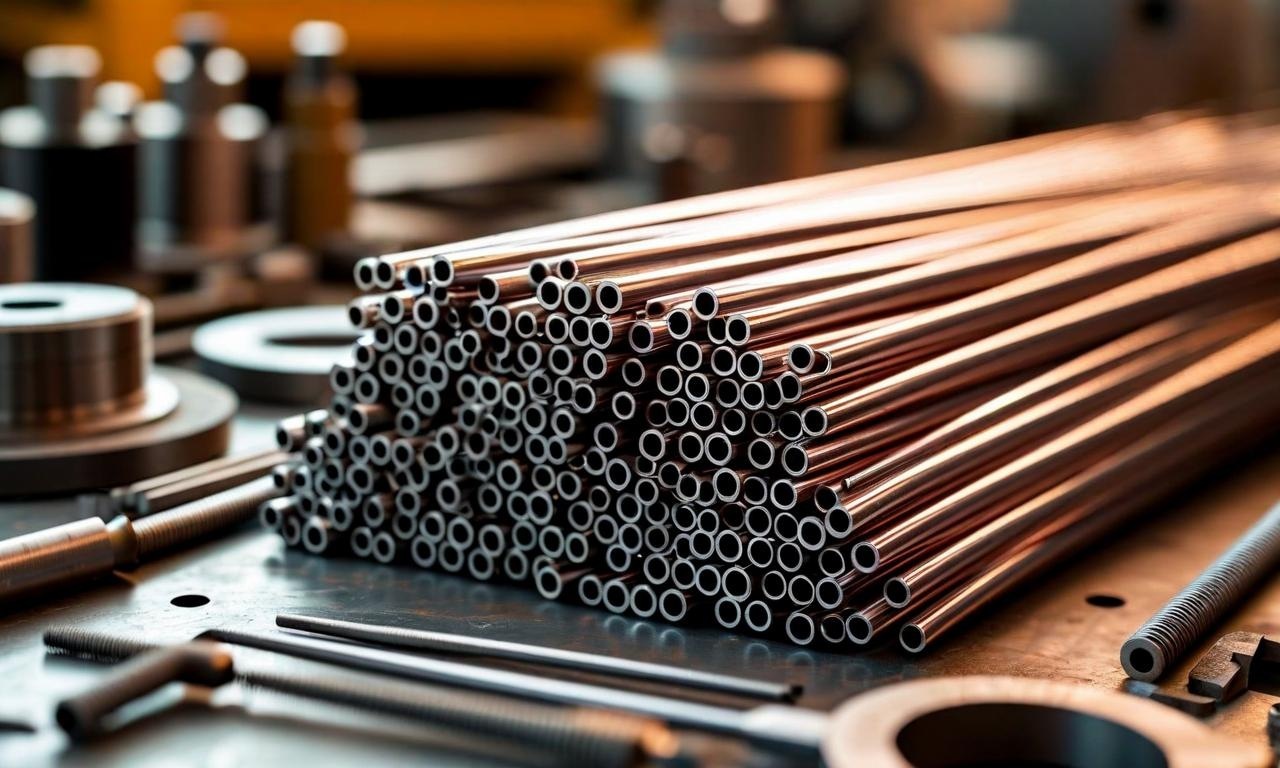
Mardia Samyoung Capillary Tubes Company Ltd (MSCTCL) was incorporated in 1992. For decades, its identity was tied to the manufacturing of copper tube components for the refrigeration and air conditioning sectors. However, if you look at the last decade of filings, the “manufacturing” part of the business was largely a memory.
The company has spent years in a state of suspended animation, reporting consistent losses and eroded equity. Its transition in FY26 is nothing short of a metamorphosis. The company has moved away from its historical roots and, according to the latest notes to the accounts, now operates in a single primary segment: “Trading of Agriculture Products.”
This shift is critical. Manufacturing is capital-intensive and slow; trading is volume-driven and high-velocity. This explains the sudden surge in revenue from ₹0 to ₹73.87 crore. But it also explains why the balance sheet is suddenly bloated with receivables and advances.
The narrative here is driven by a massive Preferential Issue of Warrants. Throughout February 2026, the company converted millions of warrants