The ethnic wear giant just dropped its audited full-year results, and the numbers are screaming for attention. While the broader retail sector has been grappling with “moderated demand” and “calendar shifts,” Sai Silks (Kalamandir) Ltd (SSKL) has managed to pull off a staggering 142% year-on-year (YoY) jump in net profit for the final quarter.
But behind the celebratory headlines lies a story of strategic transitions. The company has officially moved into a new era with the appointment of Bharadwaj Rachamadugu as the new CEO, signaling a shift from promoter-led execution to a more professionalized leadership structure. Meanwhile, the board has recommended a ₹1.50 per share dividend, keeping the “payout” story alive even as they prepare to burn through internal accruals for the next leg of growth.
1. At a Glance
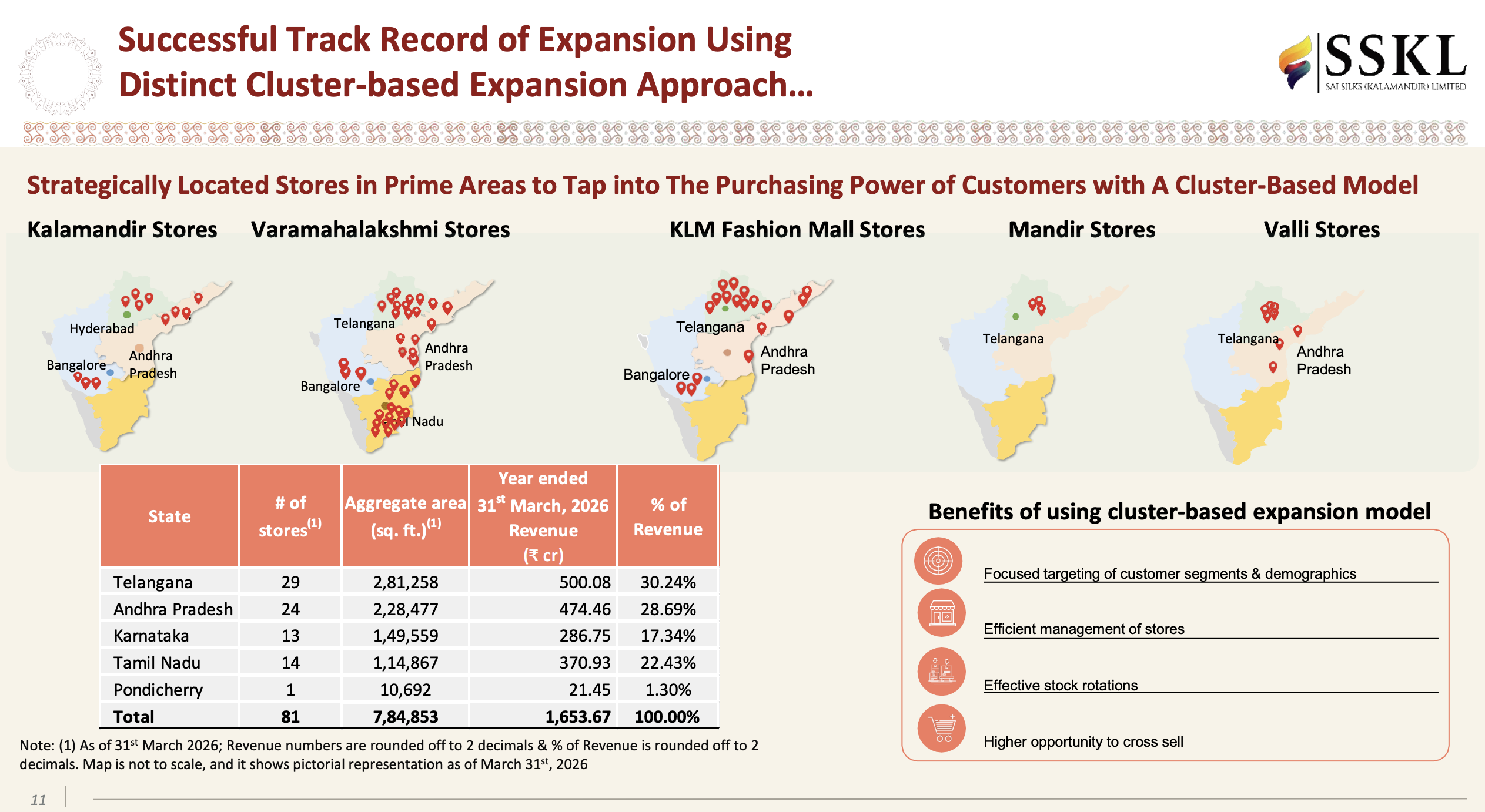
The numbers at SSKL are currently a paradox of aggressive scaling and operational tightening. For the full year FY26, the company reported Revenue of ₹1,654 Crore, marking a solid 13.1% growth over the previous year. However, the real story is in the bottom line. PAT surged by 65% to ₹141 Crore, a massive leap from the ₹85 Crore reported in FY25.
Investors shouldn’t let the growth mask the brewing complexities. The company has requested and received an extension for the utilization of its IPO proceeds until September 30, 2026. This suggests that the ambitious rollout of 30 new stores and two warehouses—originally funded by the ₹600 Crore fresh issue—is taking longer than anticipated. Why the delay? Management cites a “cautious approach” in new markets like Maharashtra, where high rentals are a primary deterrent.
Furthermore, the debt-to-equity ratio remains lean at 0.29, but the cash flow situation requires a forensic look. While Cash from Operations (CFO) improved significantly to ₹323 Crore, the company is aggressively reinvesting into inventory, which currently sits at a massive ₹816 Crore. With the IPO funds nearly exhausted, the company is now entering a phase where every new square foot of expansion must be funded by internal cash or fresh debt.
The inventory days are hovering around 311 days. This is typical for a luxury silk retailer—silk doesn’t expire, but capital does. The question remains: