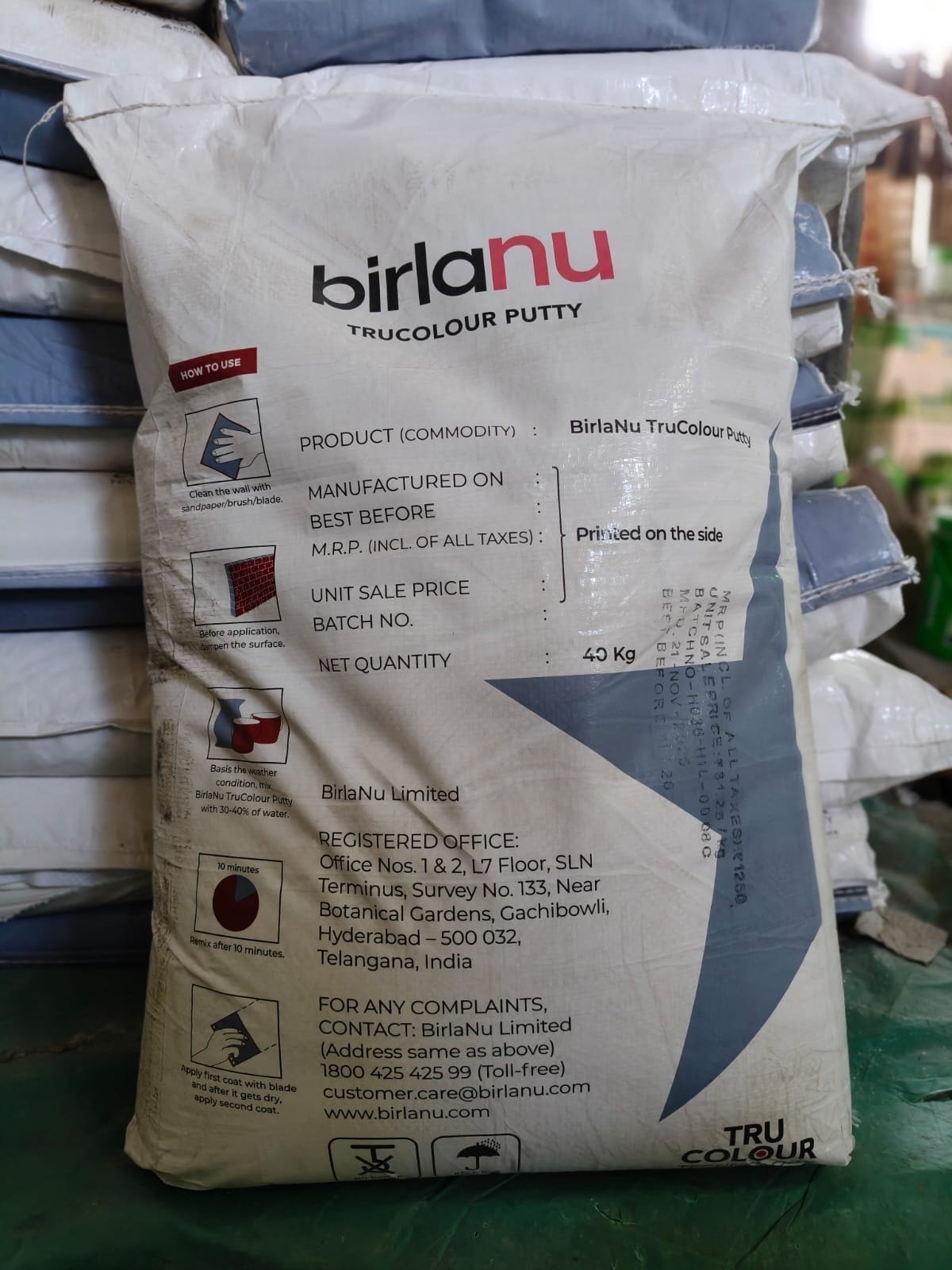
At a Glance
BirlaNu Limited is currently navigating a financial minefield that should make any disciplined investor pause and look closer. While the company proudly wears the C.K. Birla Group badge, the numbers in the latest reporting cycle tell a story of severe operational distress. We are looking at a business that has reported a staggering Consolidated Net Loss of ₹120.25 crore for the full year ended March 31, 2026. This isn’t just a minor dip; it is a violent swing into the red compared to previous cycles.
The most glaring red flag is the Debt-to-Equity ratio, which has now hit 1.00. In a high-interest environment, having your total borrowings (₹1,112.33 crore) equal your net worth is a dangerous game of leverage. The company’s Return on Capital Employed (ROCE) has plunged to a dismal -3.97%, while the Return on Equity (ROE) is sitting at -13.6%. Effectively, for every rupee of shareholders’ capital deployed, the company is incinerating value rather than creating it.
Operationally, the “Parador” flooring business in Europe continues to be a massive weight around the company’s neck. Exposure to the European market has turned from a diversification strategy into a liability, with high inflation and weak discretionary spending leading to poor plant utilization. To keep the lights on, the company has had to resort to selling non-core assets, generating an other income of ₹94.1 crore, without which the bottom line would look even more catastrophic.
Investors are currently staring at a stock with a Negative Price-to-Earnings (P/E) ratio and a Price-to-Book value of 0.95, suggesting that the market is beginning to value the company at less than the sum of its parts. With a low interest coverage ratio and a consistent inability to convert sales into meaningful profits, the “Nu” in BirlaNu seems to stand for a new era of volatility.
Introduction
BirlaNu Limited, formerly known as HIL Limited, is an 80-year-old veteran that has suddenly found itself in the middle of a massive identity and financial crisis. Headquartered in Hyderabad, it serves as the building materials arm of the C.K. Birla Group. Historically, the company was the undisputed king of roofing, but in an attempt to “de-risk,” it has aggressively expanded into pipes, boards, and high-end European flooring.
The transition has been anything but smooth. The latest financial data reveals a company struggling to maintain its footing across multiple geographies. While the domestic Indian market (84.29% of revenue) shows some resilience in volume, the international segment has collapsed from 39% of revenue in FY23 to a mere 15.7% in FY24. This shift highlights the severe “demand destruction” occurring in its overseas subsidiaries.
Management has recently doubled down on a “rebranding” exercise, shifting the name to BirlaNu to symbolize innovation and a “global reboot.” However, financial history suggests that a name change rarely fixes a broken balance sheet. With the acquisition of Crestia Polytech and Clean Coats, the company is desperately trying to buy its way into growth, but this has come at the cost of significantly higher debt.
For the general public, BirlaNu represents a classic case study of a legacy player attempting to transform into a modern multi-segment giant while battling global headwinds. The question remains: can a company with shrinking margins and mounting debt actually build a “future-forward” legacy, or is it simply overextending its reach?
Business Model – WTF Do They Even Do?
If you think BirlaNu just sells “cement sheets,” you are living in the 1990s. The company has chopped itself up into five distinct divisions, each with its own set of dramas:
- Roofing Solutions (Charminar): This is the legacy cash cow. They make Fiber Cement (FC) sheets and colored roofing. With a capacity of 1.1 million MT, they still hold a 25% market share in India. It’s the bread and butter, but the bread is getting stale as demand growth for asbestos-linked products remains structurally modest at 2-3%.
- Flooring Solutions (Parador): This is the “fancy” segment. Based in Germany and Austria, they produce engineered wood and laminates. It was supposed to be the