At a Glance
The numbers coming out of Hindoostan Mills Ltd aren’t just figures; they are a loud, clanging alarm for anyone watching the legacy textile space. We are looking at a company that has effectively chopped off its own primary limb to save the torso. In an unprecedented move, the board decided to shut down the Textile Division entirely as of April 15, 2025. This isn’t a “restructuring” or a “pivot”—it is a full-scale retreat from a 150-year-old legacy.
For the financial year ended March 31, 2026, the company reported a massive net loss of ₹ 6.63 crore (₹ 662.68 lakhs). This comes on the back of a previous year’s loss of ₹ 10.77 crore. If you think the bleeding has stopped because the textile mills are silent, look closer at the discontinued operations loss, which stood at a staggering ₹ 5.55 crore for FY26.
The company’s revenue has evaporated like steam in a dry boiler. Annual sales crashed from ₹ 33.15 crore in FY25 to a mere ₹ 14.49 crore in FY26—a 56% destruction of the top line. The “Engineering Division,” once a sidekick, is now the only one left on stage, contributing nearly 100% of the ongoing revenue. But even this survivor is struggling, with the company reporting a Profit Before Tax (PBT) loss of ₹ 1 crore from continuing operations for the full year.
The balance sheet is shrinking faster than a cheap cotton shirt. Total assets have plummeted from ₹ 55.29 crore to ₹ 45.49 crore in just twelve months. With the textile machinery now classified as “Assets Held for Sale” at a floor price of ₹ 15 crore, the company is essentially liquidating its past to fund an uncertain future. The question isn’t whether the company is changing; the question is whether there is enough left of the engine to keep the lights on once the scrap is sold.
Introduction
Founded in 1873, Hindoostan Mills Ltd is a name that once commanded respect in the Bombay textile corridors. For over a century, it weathered world wars, independence, and the transition to a globalized economy. However, the last decade has been a brutal lesson in “evolve or perish.” The company finally chose a third option: exit.
The latest audited results for Q4 FY26 mark the final chapter of Hindoostan Mills as a textile powerhouse. By officially closing the Karad textile unit and retrenching its workforce, the management has admitted that the “outlook and scenario” for Indian textiles, at least for them, is untenable.
What remains is a small, specialized Engineering Division (ECK Haubold & Laxmi) that manufactures calendar bowls and machinery for the textile and paper industries. While this niche business has some international traction in places like Uzbekistan and Bangladesh, it is currently too small to carry the legacy overheads of the parent firm.
Investors are now looking at a “shell-plus” entity—a company with significant real estate and machinery assets but a hollowed-out operational core. The drama involves legal battles with labor unions, Supreme Court orders on electricity duties, and a frantic attempt to sell off machinery before it turns into rust.
Business Model – WTF Do They Even Do?
If you asked this question two years ago, the answer was simple: “We make yarn and fabric.” Today, the answer is: “We used to make fabric, now we make the rollers that other people use to make fabric.”
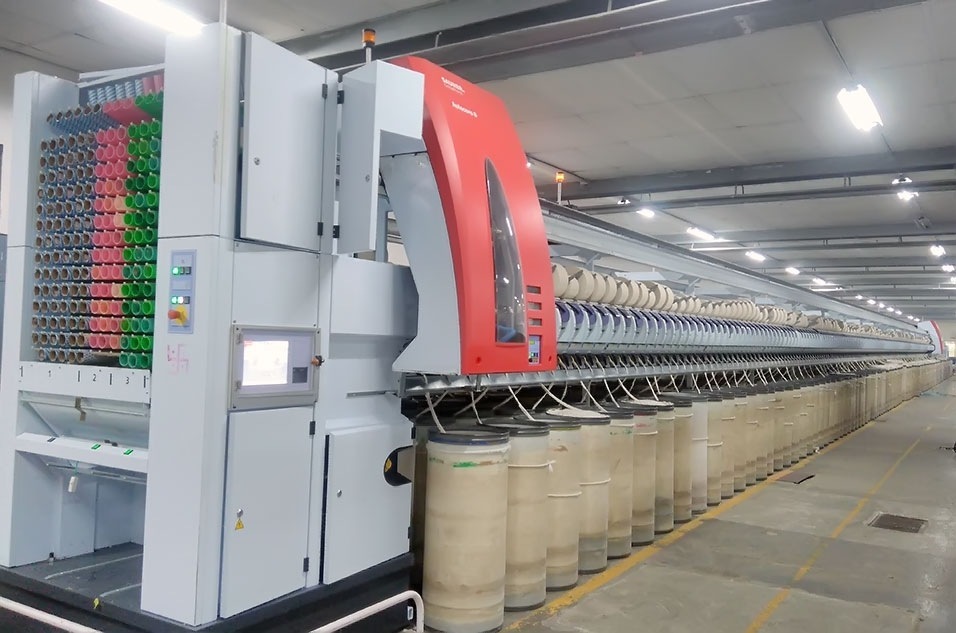
The Textile Division, which contributed 80% of revenue as recently as FY24, is dead. It produced everything from 100% cotton to technical fabrics like Carbon and Aramid. Now, that entire infrastructure is sitting under a “Closed” sign. The company is currently in the process of seeking shareholder approval to sell the entire textile machinery for a floor price of ₹ 15 crore.
The Engineering Division is the new (and only) protagonist. They specialize in Calendar Bowls. In