At a Glance
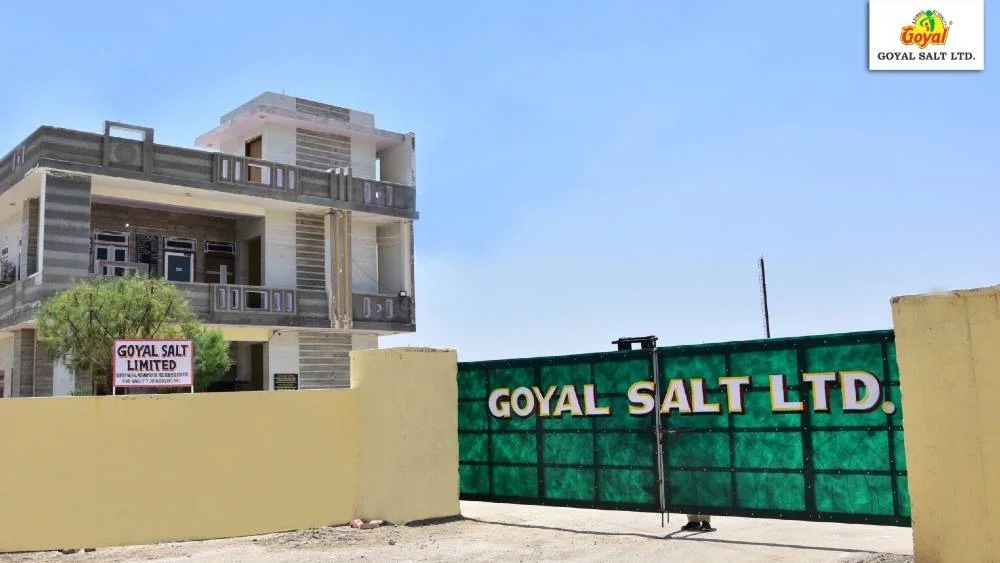
Goyal Salt Limited (GSL) is currently walking a tightrope between explosive growth and the heavy burden of ambitious capital expenditure. This isn’t just about common salt; it is about a company trying to transform itself from a regional B2B player in Rajasthan to a national B2C retail powerhouse. The latest numbers for FY26 are out, and they paint a picture of a business hitting the gas pedal while the financial framework starts to show signs of stress.
Revenue is surging, reaching ₹200 crore for the full year, a significant jump from ₹130 crore in FY25. On the surface, this looks like a victory lap for a small-cap player. However, a deeper look reveals that the Net Profit has actually contracted to ₹11.35 crore compared to ₹13.25 crore last year. Investors are seeing a classic case of top-line growth at the cost of bottom-line efficiency.
The most glaring red flag is the debt. Borrowings have ballooned to ₹44.4 crore, a massive spike from just ₹14.4 crore a year ago. This debt is fueling the Gandhidham plant expansion and the foray into the retail market with celebrity endorsements. But in the world of salt, where margins are razor-thin and climatic conditions are unpredictable, such aggressive leverage can be a double-edged sword.
- Revenue Growth: 53.7% YoY increase.
- Profit Contraction: PAT dropped by over 14% despite the sales surge.
- Debt Spike: Borrowings increased by over 200% in a single year.
- Operating Margins: Rising expenses in logistics and raw material procurement are squeezing the juice out of operations.
Is this a strategic pivot that will pay off once the Gujarat refinery hits full utilization, or is the company biting off more than it can chew?
Introduction
Goyal Salt Limited is not a new name in the industrial corridors of Rajasthan. Incorporated in 2010, the company has spent over a decade refining raw salt from sub-soil brine. However, the last two years have been a whirlwind of activity—an IPO, a massive capacity expansion, and now a move into the high-decibel retail segment.
The company operates in a sector that most investors ignore because it lacks the “glamour” of tech or pharmaceuticals. But salt is the backbone of the chemical, textile, and food industries. GSL has historically focused on the industrial side, but the “real money” in the eyes of the management lies in the 1kg packets sitting on kitchen shelves across India.
With the inauguration of the Gandhidham plant in Gujarat, GSL has effectively doubled its production capacity. This move is designed to capture the western and eastern markets, moving away from its traditional stronghold in the North. But expansion comes at a price. The company is now managing complex logistics, higher interest costs, and the marketing spend required to establish a brand in a market dominated by giants.
As we dissect the FY26 results, the story is clear: Management has built the engine, but the fuel (cash flow) is getting expensive.
Business Model – WTF Do They Even Do?
If you think they just dig up salt and put it in bags, you’re missing the point. GSL is an integrated refiner. They take raw salt—often high in impurities—and put it through a series of “triple refining” processes to produce everything from free-flow iodized salt for your dinner table to high-purity industrial salt for dye makers and chemical plants.
They have a dual-engine model:
- Industrial B2B: Supplying massive quantities to the chemical, detergent, and textile sectors.
- Consumer B2C: Selling branded packets like “Goyal Salt” and “Idea Salt.”
The “secret sauce” here is their lease rights for raw salt extraction in Rajasthan. This gives them a degree of backward integration, though they still procure a significant portion from external sources. The pivot they are attempting right now is a shift from being a “commodity supplier” to a “brand owner.”
By hiring Karisma Kapoor as a brand ambassador, they are signalling that they are no longer content being the silent partner in a detergent factory’s supply chain. They want to be the “premium” choice for households. It sounds great on a PowerPoint presentation, but in reality, it means fighting for shelf space against companies with much deeper pockets.
Financial Wisdom: In a commodity business, the low-cost producer wins. In a brand business, the best marketer wins. GSL is trying to be both, which is a very expensive game to play.
Financials Overview
The FY26 results show a massive divergence between sales performance and profitability. The company is selling more than ever, but keeping less of it.
QUARTERLY RESULTS (Consolidated)
(All figures in ₹ Crores)
| Metric | Latest Quarter (Mar 2026) | Same Quarter Last Year (Mar 2025) | Previous Quarter (Sep 2025) |
| Revenue | 111.41 | 61.71 | 88.19 |
| EBITDA | 12.25 | 3.09 | 12.35 |
| PAT | 4.97 | 3.92 | 6.38 |
| EPS (Annualised) | 25.36 | 1.06 | 14.24 |
Author’s Note: The annualised EPS for Q4 is based on the full-year figure as per the internal rules, coming in at ₹6.34. The quarterly jump in revenue is staggering (up 80.5% YoY), but the PAT margin is under pressure. Management “walked the talk” on capacity addition, but the interest costs from the ₹44 crore debt are starting to bite, with finance costs jumping from ₹0.59 crore to ₹3.23 crore.
Valuation Discussion – Fair Value Range
Let’s get into the math. The stock is currently trading around ₹120, with a P/E of 18.9.
Method 1: P/E Based Valuation
With an EPS of ₹6.34 and an industry median P/E of approximately 23, the theoretical price would be:
$$6.34 \times 23 = 145.82$$
However, given the SME nature and high debt, a 20% liquidity discount is applied.
$$145.82 \times 0.80 = 116.65$$
Method 2: EV/EBITDA
The Enterprise Value (EV) is ₹259 Cr. EBITDA for FY26 is approximately ₹24 Cr.
$$EV/EBITDA = 259 / 24 = 10.79$$
Industry average for mid-tier food processors is around 12-14x.
$$13 \times 24 = 312 \text{ (Total EV)}$$
$$312 – 44 \text{ (Debt)} = 268 / 1.79 \text{ (Shares)} = 149.72$$
Method 3: DCF (Discounted Cash Flow)
Assuming a conservative 12% growth rate for the next 5 years (post-expansion ramp-up) and a discount rate of 14%:
The terminal value and present value of cash flows suggest a range of ₹105 to ₹135.
Fair Value Range: ₹110 – ₹145
This fair value range is for educational purposes only and is not investment advice.
What’s Cooking – News, Triggers, Drama
There is plenty of drama in the salt pans. GSL has been on a spending spree.
- The Gandhidham Inauguration: In April 2025, they opened the Gujarat plant, targeting a ₹300 crore turnover by FY27. This is the big bet. If this plant doesn’t hit 80%+ utilization quickly, the fixed costs will devour the company.
- The ₹178 Crore Order: They recently bagged a massive order for refined iodized salt from Chhattisgarh. This provides revenue visibility, but government contracts are notorious for tight margins and delayed payments.
- Black Salt & Tier-1 Cities: They launched “Goyal Black Salt” to target health-conscious urbanites. It’s a niche play, but it shows they are desperate to move away from low-margin industrial salt.
- Karisma Kapoor: Hiring a Bollywood star isn’t cheap. It’s a clear sign they are going all-in on retail. But will a “celebrity” make you switch your salt brand? Only the grocery bills will tell.
Does a brand ambassador actually help a commodity player, or is it just an ego trip for the promoters? Let us know your thoughts in the comments.
Balance Sheet
The Balance Sheet has undergone a radical transformation. It is no longer the lean, debt-free sheet of a small regional player.
(All figures in ₹ Crores)
| Component | Mar 2026 | Mar 2025 | Mar 2024 |
| Total Assets | 121 | 81 | 51 |
| Net Worth | 67 | 55 | 42 |
| Borrowings | 44 | 14 | 6 |
| Other Liabilities | 10 | 12 | 3 |
| Total Liabilities | 121 | 81 | 51 |
- Borrowings have tripled in two years—apparently, salt isn’t the only thing they’re “refining”; they’re refining their ability to take bank loans.
- Fixed assets jumped from ₹12 Cr to ₹48 Cr—the Gandhidham dream is literally made of concrete and steel now.
- Inventories have doubled to ₹28 Cr—either they’re expecting a massive sales surge, or the salt is just piling up in the warehouse.
Cash Flow – Sab Number Game Hai
This is where the “growth at all costs” strategy shows its cracks.
(All figures in ₹ Crores)
| Activity | Mar 2026 | Mar 2025 | Mar 2024 |
| Operating Cash Flow | -2 | 12 | 5 |
| Investing Cash Flow | -18 | -27 | -17 |
| Financing Cash Flow | 20 | 15 | 12 |
The Reality Check:
The company is Operating Cash Flow Negative. Let that sink in. Despite making a “paper profit” of ₹11 crore, the cash from operations is -₹2 crore. Why? Because all the money is stuck in Inventories (₹28 cr) and Trade Receivables (₹26 cr).
They are essentially borrowing money (Financing Cash Flow: ₹20 cr) to build plants (Investing Cash Flow: -₹18 cr) because their actual business isn’t generating enough cash to fund itself right now.
Ratios – Sexy or Stressy?
The ratios tell a story of a company in transition—and not necessarily a smooth one.
| Ratio | Mar 2026 | Mar 2025 | Mar 2024 |
| ROE | 18.6% | 18.6% | 19.0% |
| ROCE | 19.6% | 20.0% | 17.0% |
| P/E | 18.9 | 16.2 | 15.1 |
| PAT Margin | 5.7% | 10.2% | 8.0% |
| Debt to Equity | 0.66 | 0.25 | 0.14 |
The Verdict:
The PAT Margin has been sliced in half (from 10% to 5.7%). This is a classic “scale-up” problem. The Debt to Equity ratio has shot up to 0.66. While not in the “danger zone” yet, it’s a far cry from the conservative management style of 2024.
Financial Wisdom: High ROCE is great, but when it’s paired with negative operating cash flow, it usually means the “return” is stuck in a ledger, not in the bank.
P&L Breakdown – Show Me the Money
(All figures in ₹ Crores)
| Metric | Mar 2026 | Mar 2025 | Mar 2024 |
| Revenue | 200 | 130 | 118 |
| EBITDA | 24 | 12 | 7 |
| PAT | 11 | 13 | 9 |
The Roast:
Revenue went up by ₹70 crore, and PAT went down by ₹2 crore. It takes a special kind of management talent to sell ₹700,000,000 more of a product and end up with less money in your pocket than the year before. The culprit? Finance costs and “Other Expenses” (likely marketing and logistics) which skyrocketed.
Peer Comparison
GSL is a small fish in a pond with some very hungry sharks.
| Company | Revenue (₹ Cr) | PAT (₹ Cr) | P/E |
| EID Parry | 10,315 | 437 | 13.5 |
| Manorama Ind. | 382 | 59 | 34.3 |
| Goyal Salt | 200 | 11 | 18.9 |
| Krishival Foods | 102 | 5 | 45.5 |
EID Parry is a giant playing a different game, while Krishival is trading at valuations that suggest they’ve discovered a way to turn salt into gold. GSL sits in the middle—cheaper than the “growth” peers but more expensive than the established commodity players.
Miscellaneous – Shareholding and Promoters
The promoters are holding tight, which is usually a good sign, but the “family” nature of the business is evident.
| Holder | Share % |
| Promoters | 72.61% |
| FIIs | 0.46% |
| DIIs | 2.37% |
| Public | 24.55% |
The promoter group consists of various “Goyal” entities and individuals (Lokesh, Pramesh, Rajesh, etc.). It’s a classic family-run SME. The FII interest is negligible, and while DIIs have increased their stake slightly to 2.37%, this is still very much a retail-driven stock.
Promoter Roast: The family seems to have a HUF (Hindu Undivided Family) for every day of the week. With 10 different promoter entities holding roughly equal small chunks, it looks more like a family reunion than a corporate cap table.
Corporate Governance – Angels or Devils?
GSL recently appointed PSAG & Associates as internal auditors for FY27. This is a step towards professionalism as they migrate from being a private entity to a public-listed one.
However, the “Related Party Transactions” are worth watching. At the last AGM, they sought approval for transactions up to ₹40 crore. In family-run SMEs, the line between “company business” and “family business” can sometimes get blurry.
There are no reported pledges on the promoter shares, which is a major positive. They are using bank debt (Yes Bank) rather than mortgaging their skin in the game.
Industry Roast and Macro Context
The salt industry is about as exciting as watching paint dry, until it isn’t. It is heavily dependent on the monsoon. If Rajasthan gets unseasonal rain, the brine concentration drops, and production halts.
The industry is currently facing a “logistics nightmare.” Salt is a heavy, low-value commodity. If diesel prices go up by 5%, your entire profit margin on a bag of salt can vanish.
The macro shift toward “branded and packaged” foods is the only tailwind GSL is riding. But let’s be honest: in the eyes of the consumer, salt is salt. Unless you’re Tata Salt with decades of trust, it’s a brutal price war.
EduInvesting Verdict
Goyal Salt is at a crossroads. They have successfully scaled their revenue, proving there is demand for their product. They have successfully commissioned their Gujarat plant, proving they can execute large projects.
However, the financial strain is visible. The drop in PAT despite record sales is a warning that the company is currently “buying” growth. The negative operating cash flow means they are surviving on bank loans to keep the expansion dream alive.
SWOT Analysis
- Strengths: Integrated production, established North Indian distribution, high promoter skin in the game.
- Weaknesses: Negative operating cash flow, shrinking margins, high geographic concentration (though improving).
- Opportunities: B2C retail expansion, export potential from Gujarat, government PDS contracts.
- Threats: Climatic risks in Rajasthan/Gujarat, rising interest rates on their ₹44cr debt, intense competition from Tata and Nirma.
The next 12-18 months will be critical. If GSL can convert its massive revenue growth into actual cash flow and stabilize its margins, it will be a major success story. If the “Other Expenses” continue to eat the profits, the debt burden might become too heavy to carry.
The fair value range of ₹110 – ₹145 remains our estimate based on current fundamentals and the projected ramp-up of the Gandhidham facility.
Disclaimer: This fair value range is for educational purposes only and is not investment advice. We are not SEBI-registered advisors. Do your own due diligence before putting your hard-earned money into any stock.