Asarfi Hospital Ltd Q4 FY26: Cardiology Pulses and Cancer Expansion Quantitative Reality
1. At a Glance – A Surgical Deep Dive into the Numbers
Asarfi Hospital Limited (AHL) is currently operating in a high-stakes environment where healthcare demand meets regional supply gaps. The company reported a consolidated revenue of ₹173.5 crore for FY26, a significant 42% jump from the previous fiscal. However, behind the headline growth lies a complex web of operational shifts and mounting financial pressure points that demand a serious look.
The company’s Super-Specialty unit in Dhanbad, which has been the bedrock of its operations since 2005, is now sharing the spotlight with the newly operationalized Asarfi Cancer Institute. While the top-line growth is undeniable, the PAT margin for Q4 FY26 sat at 9%, a slight dip from the 11% recorded in the same period last year. This compression suggests that scaling up specialized services like oncology is coming at a cost.
One of the most glaring red flags is the receivable situation. Management has openly admitted that trade receivables are a “cause of concern.” A significant portion of the revenue, nearly 30-35% in the main hospital and a staggering 90% in the cancer unit, is tied to government schemes. This has pushed the working capital requirements into a territory where collection cycles range from 90 to 180 days for government dues.
Investors are witnessing a transition from a lean cardiology-focused setup to a massive multi-specialty and oncology play. The ARPOB (Average Revenue Per Occupied Bed) in the Super-Specialty unit rose to ₹26,091 in Q4 FY26, but the occupancy dropped to 56% from 62% YoY. This suggests that while they are billing more per patient, the beds are staying empty longer as capacity expansion temporarily outpaces volume.
The company is currently chasing a “Vision 2027” that targets 500 beds and ₹200+ crore in revenue. With the recent MoU with Gleneagles Hospital for organ transplants, Asarfi is trying to turn Jharkhand from a “medical desert” into a “medical destination.” But with regulatory policies on organ donation in the state still being “not very clear,” this ambitious vertical remains a wildcard rather than a guaranteed revenue stream.
Is the rapid expansion into high-capex oncology and transplant units a masterstroke of regional dominance, or is it stretching the balance sheet too thin? The following analysis breaks down the gears of this medical machine.
2. Introduction
Asarfi Hospital Limited (AHL) stands as a dominant healthcare player in the Eastern region of India, specifically targeting the underserved markets of Jharkhand. What started as a primary healthcare provider in 2005 has evolved into a multi-facility operation with a total current capacity of 350 beds across its Super-Specialty and Cancer Care units.
The company’s strategic positioning in Dhanbad is its greatest asset. It operates the first and only comprehensive cancer care hospital within a 200 km radius. By offering high-end services like Interventional Cardiology, Neurosurgery, and Radiation Oncology, AHL is attempting to capture the “outbound” patient traffic that previously fled to metros like Kolkata or Delhi.
However, being a big fish in a small pond comes with unique challenges. The heavy reliance on government-sponsored health schemes like Ayushman Bharat introduces a structural delay in cash flows. Furthermore, the healthcare industry is notoriously image-sensitive; any clinical lapse in a single-location dominant player can have catastrophic impacts on brand trust.
Management is currently juggling three major balls: the ramp-up of the Cancer Institute, the expansion of the existing Super-Specialty unit, and a proposed entry into the education sector via a research institute in Ranchi. The execution of these diverse projects will determine if Asarfi remains a regional heavyweight or becomes a cautionary tale of over-leveraged expansion.
3. Business Model – WTF Do They Even Do?
At its core, Asarfi Hospital sells the promise of survival in a region where specialized medical infrastructure is as rare as a quiet day on the stock market. They operate a hub-and-spoke-lite model, where the main hospital acts as the primary revenue generator through high-turnover procedures like cardiology and general surgery.
The Super-Specialty Hospital in Baramuri is the “cash cow.” Cardiology and Neurology alone contribute nearly 50% of its revenue. The stay periods for cardiology are low, and the billing is high—the perfect financial combo. In Q4 FY26, they performed 492 cardiology surgeries, proving that the heart is still where the money is.
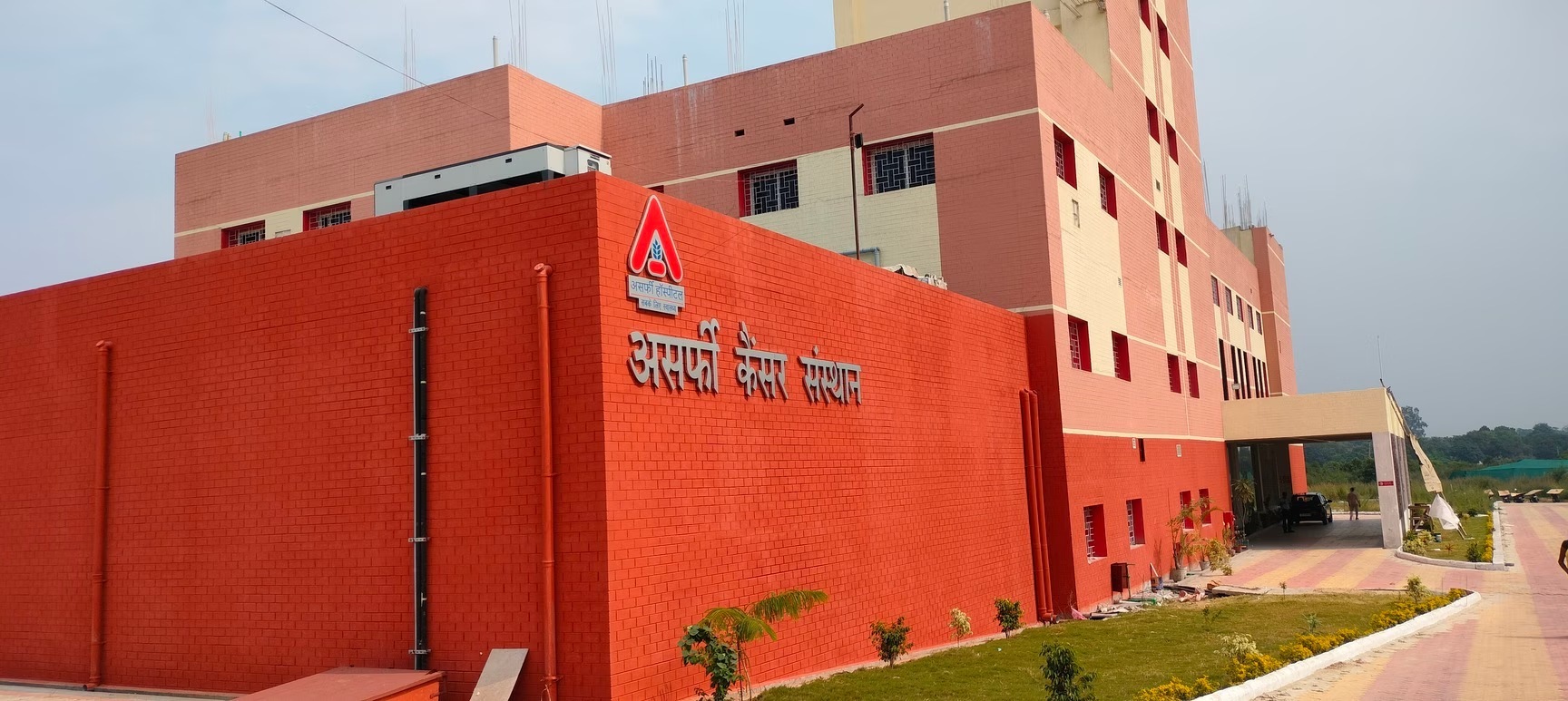
Then there is the Asarfi Cancer Institute. This is the “growth bet.” It houses advanced tech like the Varian TrueBeam Linear Accelerator. While it has a higher ARPOB potential, it currently suffers from a trust deficit. People still “rush to Tata” for cancer, and Asarfi is fighting this perception by hiring surgeons from premium institutes like TMH Mumbai.
The third pillar is the Asarfi Educational Foundation. They are building a research institute in Ranchi and even planning a B.Com LLB program. Why a hospital wants to teach law is anyone’s guess, but management likely views it as a way to diversify revenue and utilize their land bank.
4. Financials Overview
The financial health of Asarfi is a tale of massive top-line growth fighting against operational friction.
Particulars
Q4 FY26 (Latest)
Q4 FY25 (YoY)
Q3 FY26 (QoQ)
Revenue
₹45.2 Cr
₹35.1 Cr
₹46.1 Cr
EBITDA
₹7.7 Cr
₹6.3 Cr
₹10.1 Cr
PAT
₹3.9 Cr
₹3.6 Cr
₹5.4 Cr
EPS
₹2.08
₹1.95
₹2.78
Annualised EPS Calculation:
Since this is a Q4 result, we use the full-year EPS of ₹8.47 (Consolidated).
At the current price of ₹196, the P/E ratio stands at 23.1.
Management “Walk the Talk” Analysis:
In previous communications, management guided for an FY26 revenue of ₹160 crore. They delivered ₹173.5 crore, effectively beating their own target by 8.4%. However, they also aspired for a 13-15% PAT margin. The actual FY26