PPAP Automotive is no longer just a “quiet” auto-component player. The latest numbers are a calculated punch to the gut of the status quo. With an annualised EPS of ₹30.60 and a bold ₹100 Crore cash infusion from exiting a long-standing joint venture, the management is finally cleaning the glass. They are shifting from being a “vendor” to a “mobility partner,” and the market is starting to sniff the change.
1. At a Glance
The era of emotional baggage is over at PPAP Automotive. For years, the company sat on a Joint Venture (PTI) that was essentially a capital graveyard—INR 48.5 crore invested since 2012 with nearly zero returns. In a move that screams “auditor’s dream,” the management finally pulled the plug in Q4 FY26, selling their 50% stake for INR 100 crore. This isn’t just a divestment; it’s a strategic exorcism.
The numbers for Q4 FY26 show a company in the middle of a violent pivot. Revenue surged 18.6% YoY to ₹174.6 Crore, and PAT clocked in at ₹32.20 per share (annualised), largely bolstered by the extraordinary gains from the JV exit. However, underneath the headline numbers lies a complex reality. The company missed its revised January guidance because its major customers—Maruti and Tata Motors—had “soft” demand for specific models where PPAP has high exposure, like the Tata Curvv.
There are red flags that cannot be ignored. The Stock P/E sits at a staggering 165, and the Interest Coverage Ratio is a razor-thin 1.03. While the cash from the JV exit will slash interest costs by an estimated 30%, the operational core is still fighting a war against under-absorption of fixed costs. They built capacity for a “ramp-up” that didn’t fully arrive in Q3, leading to high manpower costs without the corresponding revenue.
The company is now reorganising under the “AJAY Group” identity, merging its battery business and selling its tool room as a “slump sale” to a subsidiary. It’s a massive restructuring aimed at “governance and financial prudence.” But the question remains: Can a company that has delivered a poor sales growth of 12% over the last five years truly transform into a high-growth mobility beast?
The Teaser: With ₹100 Crore hitting the balance sheet and a massive order book of ₹4,103 Crore, is PPAP finally ready to stop “bleeding” and start leading?
2. Introduction
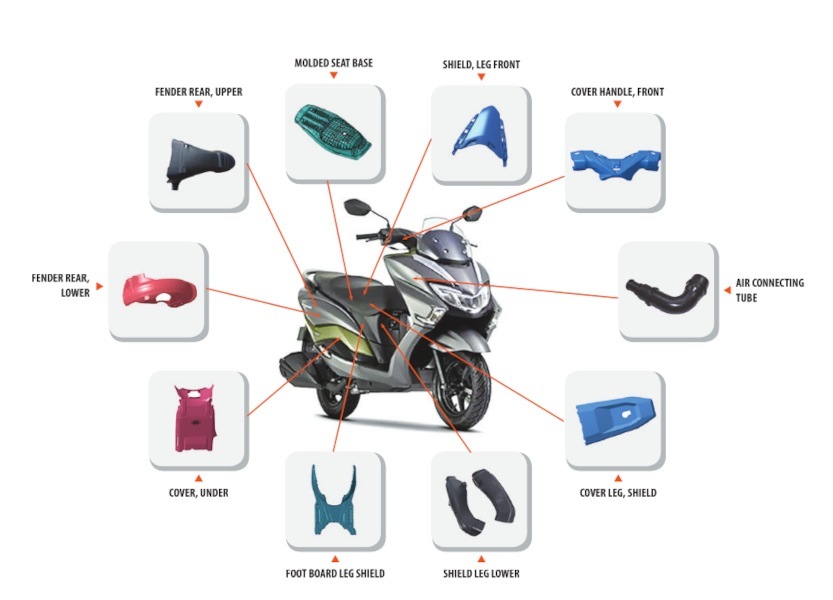
PPAP Automotive is an Indian automotive success story that had recently started looking like a cautionary tale of “capital misallocation.” Incorporated in 1995, they specialize in automotive body sealing systems and injection-molded parts. If you drive a Maruti, a Honda, or a Tata, chances are you are touching their products every day.
They operate through 10 manufacturing facilities across India’s major auto hubs. They ship over 225,000 parts every single day. Yet, despite this massive scale, the financial returns have been pedestrian for years. The management’s recent transparency in the ConCalls suggests they are well aware of the “emotional attachment” trap they fell into with underperforming business lines.
The company is currently undergoing a “Grand Reset.” They are diversifying into Lithium-ion batteries (Avinya), Industrial Products, and a high-growth Aftermarket segment (Elpis). They are moving away from being purely “engine-agnostic” to being “customer-agnostic”—trying to reduce their heavy 37.1% dependence on Maruti Suzuki.
The restructuring announced in May 2026 is the most significant event in the company’s 30-year history. By merging the battery business and creating a separate entity for tooling, they are attempting to create “focused platforms.” This is no longer just about rubber and plastic; it’s about surviving the EV transition and the shifting global supply chain.
3. Business Model – WTF Do They Even Do?
Think of PPAP as the “skin and seals” specialist of the car world. They