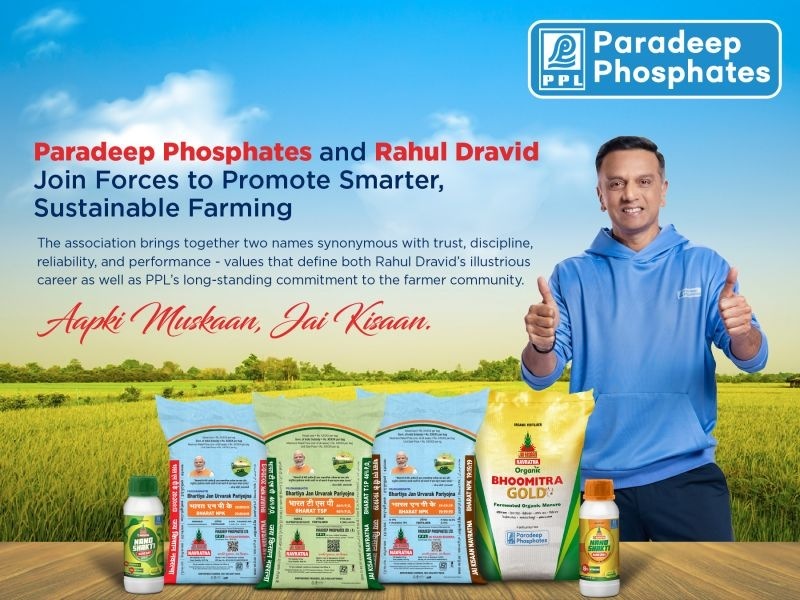
The fertilizer sector is often dismissed as a boring, subsidy-dependent utility play. Paradeep Phosphates Limited (PPL) just shattered that narrative with its FY26 performance. We are looking at a company that has effectively doubled its scale, integrated its supply chain to the point of being “port-to-farm,” and is now clocking a PAT of ₹1,000 crore.
This isn’t just about selling bags of DAP; it’s a story of backward integration and a massive shift toward high-margin NPK (Nitrogen, Phosphorus, and Potassium) variants. With a consolidated revenue crossing ₹21,800 crore, PPL is aggressively moving to capture the “balanced nutrition” trend in Indian agriculture.
The most striking part? While the industry grapples with geopolitical raw material shocks, PPL has used its proximity to ports and long-term tie-ups with the OCP Group of Morocco to turn supply chain volatility into a competitive fortress.
1. At a Glance
Paradeep Phosphates is currently the second-largest private sector phosphatic company in India. But size is a vanity metric; integration is the real sanity. In FY26, the company achieved a massive 8% YoY growth in production, hitting 37 lakh tonnes and reaching 100% capacity utilization. This is a rare feat for a heavy-industrial setup.
The numbers gaining investor attention are hard to ignore. We saw a 29% YoY jump in Revenue and a 52% surge in Net Profit for the full year. However, don’t let the green flags blind you to the red ones. The company is carrying a total debt of ₹6,906 crore. While the management justifies this as “conscious inventory building,” the interest cost is a recurring drain that requires perfect operational execution to stay manageable.
There is also the ghost of raw material inflation. Sulphur prices, which used to hover around ₹150–200, recently skyrocketed to ₹540–550. PPL is fighting this by commissioning its own sulphuric acid plants to insulate its margins. If they fail to integrate further, they remain at the mercy of global commodity traders.
The question for the savvy observer: Can a company with a 1.02 Debt-to-Equity ratio continue its aggressive ₹3,600 crore capex plan without diluting shareholder value or facing a liquidity crunch? The transition from a simple manufacturer to an integrated chemical giant is fraught with execution risks.
2. Introduction
To understand Paradeep Phosphates, you must understand the geography of its success. It operates three strategic units: Paradeep (Odisha), Zuarinagar (Goa), and the newly integrated Mangalore (Karnataka) facility.
By absorbing Mangalore Chemicals and Fertilizers (MCFL), PPL has effectively expanded its footprint across 18 states, reaching over 15 million farmers. This isn’t just a merger on paper; it is a tactical land grab of the South Indian market.
The company is no longer just “the DAP guys.” They are pivoting hard toward Value-Added NPKs. In the latest quarters, NPK volumes have grown significantly, now making up nearly 50% of their total volume.
This shift is crucial because DAP is a commodity with thin margins and high subsidy sensitivity. NPK, on the other hand, allows for “brand-led” pricing and better margin protection. With brands like “Jai Kisaan” and “Navratna”, PPL is trying to build a consumer-brand moat around a commodity business.
3. Business Model – WTF Do They Even Do?
PPL takes raw rocks and gas and turns them into food security. Their business is a massive logistics and chemical puzzle. They import Rock Phosphate, Ammonia, and Sulphur, process them into Phosphoric Acid, and then granulate them into fertilizers like DAP (Diammonium Phosphate) and NPK.
They have mastered the art of Backward Integration.
- Paradeep Plant: Uses a 3.4 km conveyor pipeline directly from the port. No trucks, no traffic, no extra costs.
- Goa Plant: