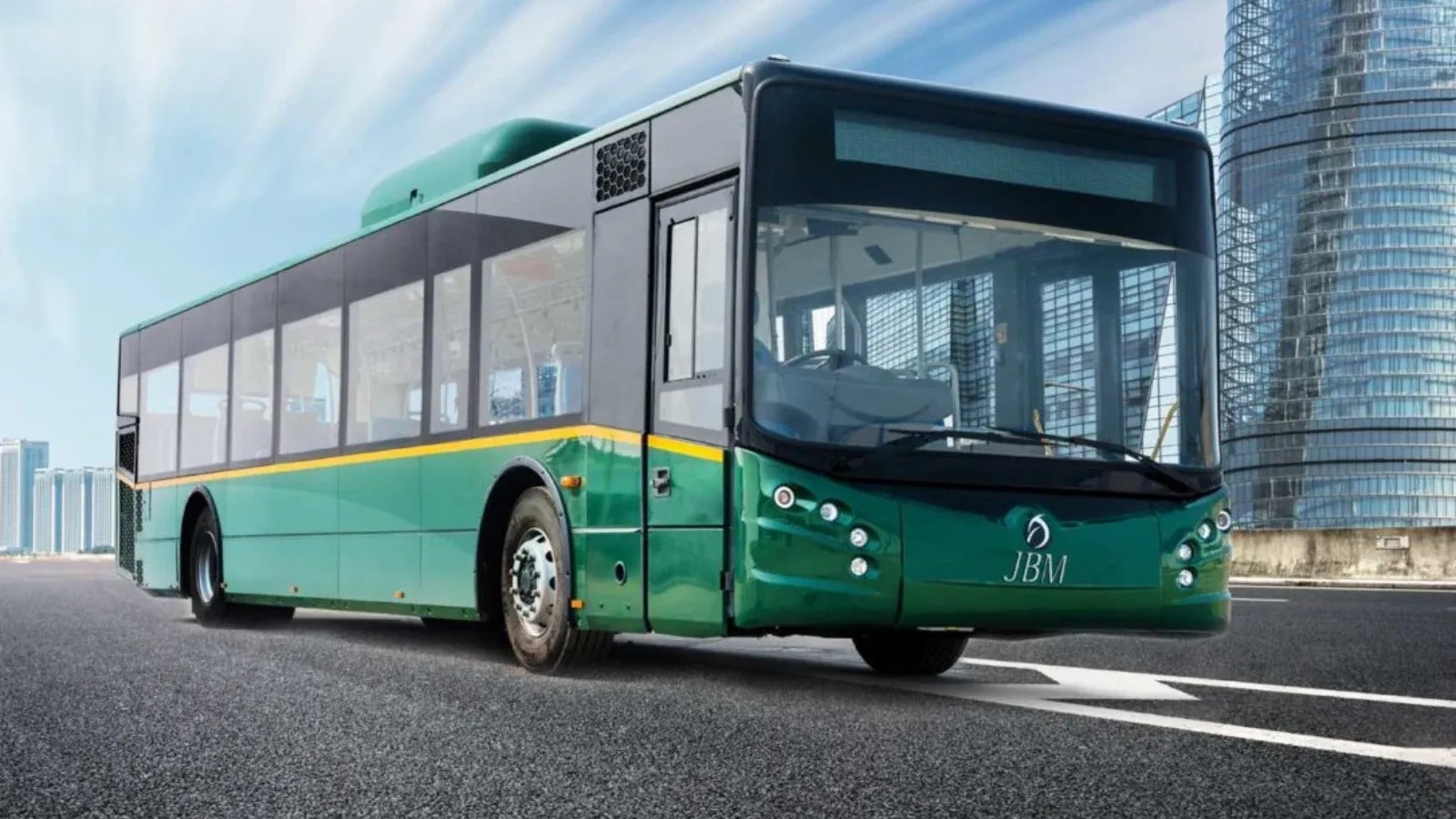
The electric vehicle revolution in India is no longer a “future” theme; it is a current, high-stakes operational reality. JBM Auto Limited has just dropped its audited financial results for the full year and fourth quarter ended March 31, 2026. While the top-line growth and market leadership in the e-bus segment are grabbing headlines, the balance sheet tells a far more complex story of capital intensity and liquidity pressures.
1. At a Glance
The numbers are massive, but so are the red flags. JBM Auto has closed FY26 with a consolidated revenue of ₹ 6,088.37 crore, a steady climb from the previous year. However, the market is no longer just looking at the number of buses on the road. The real story lies in the debt-to-equity ratio of 1.97 and a staggering increase in debtor days, which have shot up from 82 to 131 days.
This is a classic case of a high-growth company operating in a sector where the primary customer—state transport undertakings—often pays at its own pace. The company is sitting on a massive order book of ₹ 45,000 crore, yet the cash from operating activities has turned negative to the tune of ₹ 60 crore for FY26.
Investors are witnessing a tug-of-war between high-octane growth prospects and a balance sheet that is becoming increasingly stretched. The company is aggressively expanding its EV ecosystem, even renaming its OEM division to the “EV Business” to signal its commitment. But with borrowings crossing the ₹ 3,000 crore mark, the cost of funding this “green” dream is becoming a heavy burden on the profit and loss statement.
The valuation is equally provocative. Trading at a Stock P/E of nearly 70, the market is pricing in a perfection that the current cash flow statement struggles to justify. Is this a market leader scaling to dominance, or a capital-heavy machine heading toward a liquidity crunch? The teaser lies in the upcoming execution of the PM e-bus Seva Scheme orders, which could either be the ultimate catalyst or the final strain.
2. Introduction
JBM Auto Limited, part of the JBM Group, has evolved from a traditional auto-component manufacturer into a full-scale Electric Vehicle (EV) ecosystem player. Established in 1983, the company initially made its bones by supplying sheet metal components and sub-assemblies to major OEMs like Tata Motors and Mahindra & Mahindra.
Today, it operates through three primary divisions: Component Division, EV Business (formerly OEM), and the Tool Room Division. The shift in focus is clear. The company is now the market leader in the Indian e-bus segment with a dominant 30%-35% market share.
The manufacturing footprint is equally impressive, with 16 facilities across the country and an annual electric bus manufacturing capacity that has been scaled up to 20,000 units. This is not just about assembling buses; the company has integrated backward into EV aggregates, including battery solutions and charging infrastructure.
However, being at the forefront of a capital-intensive industry transition comes with inherent risks. The recent FY26 results show a company that is growing, but at a cost. The net profit for the year stood at ₹ 238 crore, yet the interest costs have ballooned to ₹ 318 crore. Essentially, the company is paying more to its lenders than it is keeping for its shareholders.
Do you think a company can sustain such high valuation multiples when its interest outgo exceeds its net profit?
3. Business Model – WTF Do They Even Do?
JBM Auto is effectively a “pick and shovel” player for the traditional auto industry and a “gold miner” for the EV sector.
The Component Division (The Cash Cow?)
This segment accounts for about 68% of revenue. It manufactures safety-critical components, chassis, suspension systems, and pedal boxes. If you drive a car in India, there is a high probability that JBM made the metal bits you don’t see but rely on. They have successfully added international clients and ramped up capacity for domestic giants.
The EV Business