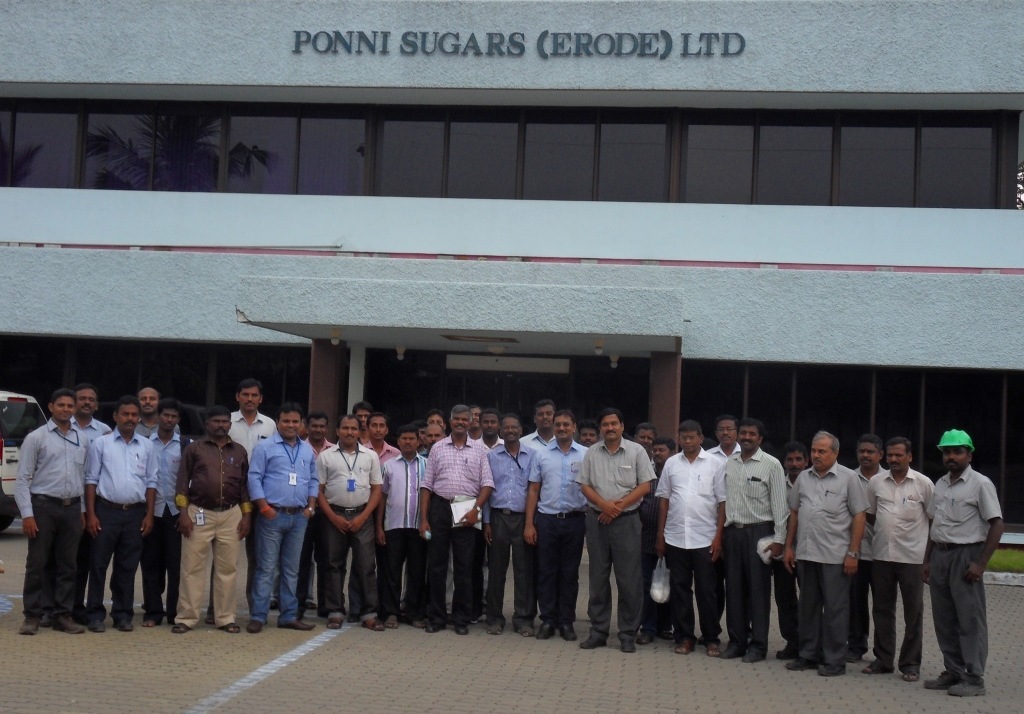
Ponni Sugars (Erode) Ltd Q4 FY26: The Sweet Success of a Legal Windfall and the Bitter Reality of Taxman’s Scrutiny
At a Glance
Ponni Sugars (Erode) Ltd is currently commanding significant investor attention, but not for the usual reasons of organic market dominance. The company reported a total income of ₹429.46 crore for FY26, a growth compared to the ₹371.41 crore in the previous year. However, the headline Net Profit of ₹48.03 crore is a complex cocktail of legal victories and aggressive tax reassessments that would make any auditor’s head spin.
The narrative here is a classic tale of two halves. On one side, the company secured a massive favorable judgment from APTEL regarding power tariffs, allowing them to recognize ₹51.64 crore as an exceptional gain. On the other, the Income Tax Department has launched a “Transfer Pricing” assault, forcing the company to write down ₹20.53 crore of MAT credit.
While the stock trades at a seemingly attractive Price to Book value of 0.47, the underlying Return on Equity (ROE) remains a sluggish 3.79%. Investors are looking at a debt-free balance sheet, but one that is heavily reliant on “Other Income” and legal settlements rather than just selling bags of sugar. Is this a value play or a value trap waiting for the next regulatory hammer to fall?
Introduction
Ponni Sugars (Erode) Limited, incorporated in 1986, operates in the volatile sugar sector with a crushing capacity of 3,500 TCD and a 19 MW co-generation plant. It belongs to the Seshasayee Paper and Boards (SPB) group, a lineage that brings credibility but also significant related-party exposure.
The company’s primary operations are situated in Erode, Tamil Nadu, a location that offers a dual-crushing season but leaves the company at the absolute mercy of the Cauvery river’s water levels and the vagaries of the South Indian monsoon. In FY26, the company managed to post a total comprehensive income of ₹38.58 crore, a stark recovery from the negative ₹13.77 crore seen in FY25.
However, the “growth” seen this year is largely inorganic. Without the exceptional gain from the APTEL judgment, the core profitability would look far more modest. The management is currently walking a tightrope between defending its tax positions and navigating a sugar industry that is increasingly regulated by the government’s Minimum Sales Quota (MSQ) and Fair & Remunerative Price (FRP) mandates.
Business Model – WTF Do They Even Do?
At its core, Ponni Sugars is a giant processor that takes sugarcane and squeezes it until it yields three things: sugar, waste (bagasse), and juice (molasses).
Sugar (72.5% Revenue): They sell sugar to the government (12.5%) and private players (87.5%). It’s a commodity business where they have zero pricing power.
Power (11.5% Revenue): They burn the bagasse to create electricity. They use some and sell the rest to the state grid (TNERC). This is where the legal drama lives.
Molasses & Bagasse: The leftovers are sold to chemical companies or their sister concern, Seshasayee Paper and Boards Ltd.
The company has been “planning” an Ethanol plant since 2019, but environmental clearances are stuck in a bureaucratic black hole. Effectively, they are a sugar mill that is currently functioning as a legal desk and a small power utility.
Financials Overview
The latest results for the quarter ended March 31, 2026, show a company whose bottom line is being heavily massaged by accounting entries.