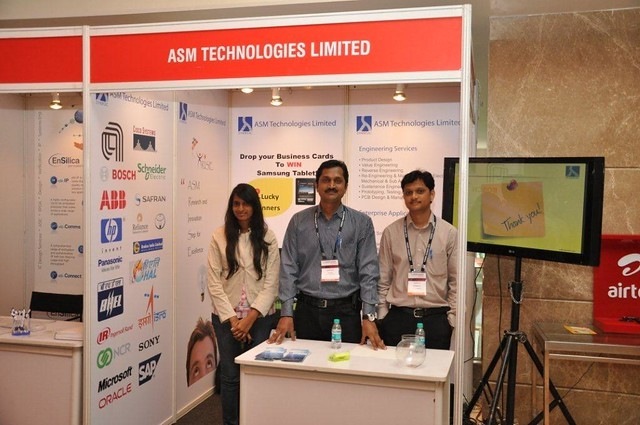
The semiconductor and ER&D (Engineering Research & Development) darling, ASM Technologies, has just dropped its FY26 scorecard, and the numbers are shouting for attention. With a topline that skyrocketed by 83% in a single year, the company is aggressively pivoting from a pure-play services firm to a Design-Led Manufacturing (DLM) powerhouse. Investors are swarming, but beneath the flashy ₹529 crore revenue, a massive ₹760 crore capex plan and a high valuation P/E of 75.2 suggest that management is playing a high-stakes game of scale.
1. At a Glance
ASM Technologies is no longer the quiet engineering consultant it used to be. In FY26, the company reported a massive revenue leap to ₹528.5 crore, up from ₹288.8 crore in the previous year. This wasn’t just a small bump; it was an 83% YoY explosion driven by a structural shift toward manufacturing. The “Design-Led Manufacturing” (DLM) segment now commands 56.6% of the quarterly revenue, signaling that ASM is moving closer to the physical hardware of the semiconductor and electronics world.
However, the rapid expansion comes with a price tag. The company is trading at a staggering 15.4 times its book value, a level that usually leaves zero room for execution errors. While the PAT grew by 138% YoY to ₹60.8 crore, the market has already priced in a lot of “future glory.” The debt levels have also climbed to ₹128 crore, reflecting the capital-intensive nature of their new growth path.
The most sensational part of the story is the ₹760 crore cumulative MoU signed with the governments of Karnataka and Tamil Nadu. For a company with a net worth of ₹307 crore, planning a capex that is more than double its equity base is a bold, borderline scary move. They are betting the house on the “Make in India” semiconductor wave. Will the operating leverage kick in fast enough to service the upcoming debt, or is the working capital cycle of 107 days a ticking time bomb?
2. Introduction
ASM Technologies, incorporated in 1992, has spent three decades evolving. What started as an engineering design firm has now morphed into a global player with a presence in the USA, Singapore, UK, Japan, and Vietnam. The core of their current narrative is the integration of high-end engineering with precision manufacturing.
The management, led by Mr. Rabindra Srikantan, has been vocal about their “pivot.” They aren’t just designing circuits anymore; they are building the machines that build the electronics. This “end-to-end” approach is aimed at capturing a larger slice of the value chain in sectors like Semiconductors, Hi-Tech, and Medical Equipment.
The fiscal year 2026 has been a year of “commissioning.” The company added three new manufacturing facilities in a single year—two in Bengaluru and one in Vietnam. This brings their total tally to seven facilities. The speed of this rollout is designed to capture the immediate demand in the semiconductor equipment space, where lifecycles can last up to 25 years.
Despite the growth, the geographical mix is shifting. Domestic revenue now accounts for 80% of the pie, a sharp increase from previous years where exports were more dominant. This reflects the massive push for local electronics manufacturing in India. But as the company scales, it faces the classic “growing pains”: rising employee costs, higher interest