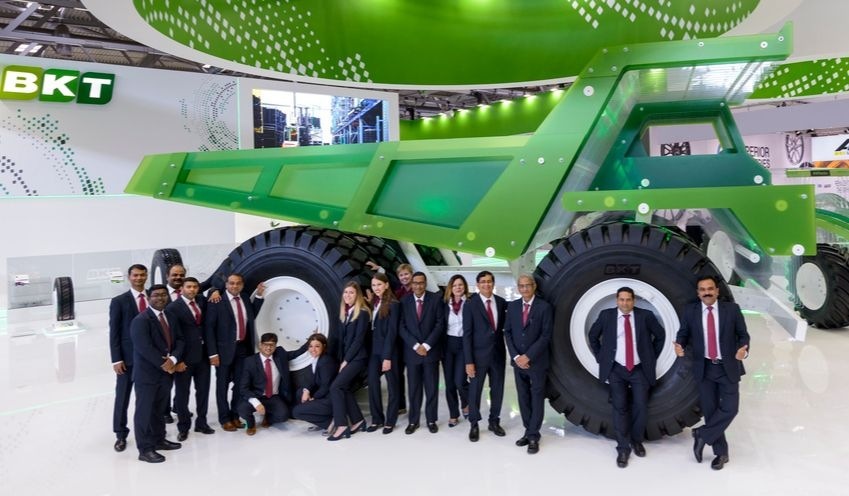
The specialized world of Off-Highway Tires (OHT) is witnessing a high-stakes poker game where Balkrishna Industries Limited (BKT) just went all-in. While the latest audited results for the full year 2026 (FY26) show a gut-wrenching 25% drop in Net Profit, the Board has doubled down with a fresh ₹2,000 crore capex approval. This brings their total ongoing war chest for expansion to a staggering ₹6,800 crore.
Investors are staring at a massive paradox: a company whose EBITDA margins have thinned out by 252 basis points due to brutal US reciprocal tariffs, yet is aggressively chasing a 2.2x revenue growth target of ₹23,000 crore by 2030. The red flags are flying high—Gross Debt has ballooned to ₹4,111 crore, and the core US market remains a battlefield of shifting duties and shrinking realizations. Is this visionary expansion or a desperate sprint into a debt trap?
1. At a Glance
Balkrishna Industries is no longer just a “tyre company”; it has morphed into a complex industrial beast trying to outrun global macroeconomic decay. With a presence in over 160 countries, it is the crown jewel of Indian OHT exports. However, the current numbers paint a picture of a titan under siege.
The most alarming metric is the Net Profit, which tumbled from ₹1,628 crore in FY25 to ₹1,222 crore in FY26. This isn’t just a minor “hiccup”—it’s a deep structural wound caused by a 10% decline in EBITDA. While the company boasts a 5-6% global market share, the cost of maintaining this territory is becoming prohibitively expensive.
The Red Flags You Can’t Ignore:
- Tariff Torture: The US market, once a high-margin stronghold, is now a drain. BKT is “sharing the pain” with distributors, which is corporate-speak for “we are eating the losses to stay relevant.”
- Debt Explosion: Borrowings have jumped from ₹3,267 crore last year to ₹4,111 crore. The interest burden is creeping up just as the cash flow starts to sweat.
- Margin Erosion: Operating margins have slid to 22.7%. For a company that once enjoyed near-30% levels, this downward trajectory is a warning shot.
BKT is banking everything on its Carbon Black backward integration and a risky foray into Passenger Car Radials (PCR) and Commercial Vehicles (CV). They are moving away from their niche “specialist” identity to compete with the big boys in the general tire market—a move that historically destroys the “specialty” valuation premium.
2. Introduction
Balkrishna Industries Limited (BKT) started its journey in 1987 and spent three decades carving out a niche in agriculture, mining, and construction tires. They were the masters of “Off-Highway,” avoiding the cut-throat competition of the passenger car segment.
Today, that focus is shifting. The company is in the middle of a massive identity crisis, pivoting towards a “BKT 2.0” architecture. They are now an integrated player, producing their own Carbon Black and even generating their own power at the Bhuj plant.
The management is chasing a “2030 Vision,” aiming for an 8% global market share in OHT. But the path is littered with geopolitical landmines. From the Red Sea crisis affecting freight to the US reciprocal tariffs reaching as high as 50% in late 2025, BKT’s global supply chain is being stress-tested like never before.
They currently operate five manufacturing plants across Maharashtra, Rajasthan, and Gujarat. The Bhuj plant is the heart of the operation, now boasting an achievable capacity of 360,000 MTPA for tires and a massive 265,000 MTPA for Carbon Black.
3. Business Model – WTF Do They Even Do?
BKT makes the massive, rugged tires you see on tractors, giant mining trucks, and port equipment. If it doesn’t run on