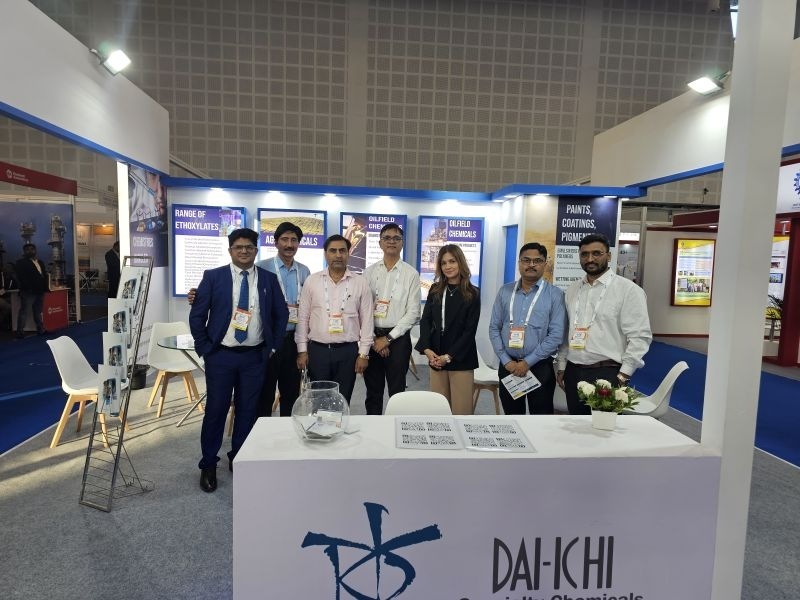
The specialty chemicals sector is often touted as the “golden child” of Indian manufacturing, but Dai-ichi Karkaria Ltd is currently serving as a sobering reality check. While the broader market indices might be flirting with highs, this micro-cap player with a ₹192 Crore market cap is navigating a financial storm that would make even the most seasoned auditor pause.
The numbers are not just whispering; they are screaming. We are looking at a 98.6% crash in quarterly profit and a 41.1% drop in sales. When a company’s return on equity (ROE) enters negative territory at -0.30%, the narrative shifts from “growth potential” to “survival tactics.”
Investors who were lured by the “Specialty Chemicals” tag are now staring at a stock that has eroded 34.8% of its value over the last year. The market doesn’t lie—it’s discounting a deep-seated struggle in the core business. With an operating profit margin (OPM) of just 2.15%, the company is operating on razor-thin breathing room. One wrong move in raw material pricing or another “delay in orders” could turn the current stagnation into a full-blown crisis.
Is this a temporary cyclical downturn or a structural decline of a 60-year-old veteran? The intrigue lies in whether the planned capacity expansion at Dahej can actually revive a balance sheet that is currently gasping for air.
1. At a Glance
The numbers for Dai-ichi Karkaria (DKL) tell a story of a business caught between a glorious past and a very uncertain future. Founded in 1963, DKL has the pedigree and technical collaborations (notably with Dai-ichi Kogyo Seiyaku, Japan) that should theoretically make it a powerhouse. Instead, it is currently a ₹192 Crore micro-cap struggling to keep its head above water.
The most alarming metric is the Profit After Tax (PAT) growth, which has plummeted by -107%. For a company in the specialty chemicals space—a sector known for high margins—an OPM of 2.15% is dangerously low. It suggests that DKL has zero pricing power and is being pulverized by rising input costs or intense competition.
The Red Flags You Can’t Ignore
- Revenue De-growth: Sales have shrunk by 11.1% over the last year, and the 3-year sales growth is a pathetic -4.28%.
- Operational Inefficiency: The company reported an Operating Profit of just ₹0.68 Crore on sales of ₹41.25 Crore in the latest quarter.
- Interest Coverage Crisis: The interest coverage ratio stands at -2.13, meaning the company isn’t even generating enough operating profit to cover its interest obligations.
- Asset Utilization: While the company is expanding capacity in Dahej, its Estimated Capacity Utilization remains a mystery in recent filings, though older data suggested a range of 70-80%.
Despite these grim figures, the stock trades at 1.04 times its Book Value. This is often the last line of defense for a stock—if it falls below book value, the market is essentially saying the company is worth more dead than alive.
The company recently received a final insurance claim of ₹20.58 Crore from a fire incident back in 2020. While this provides a temporary liquidity cushion, “fire insurance” is not a sustainable business model. The real question is: where is the core business going?
2. Introduction
Dai-ichi Karkaria Ltd is a veteran in the Indian specialty chemicals landscape. With nearly six decades of operations, it has diversified into sectors ranging from Oilfield Chemicals to Agrochemicals and Home & Personal Care.
The company operates through a complex structure involving a