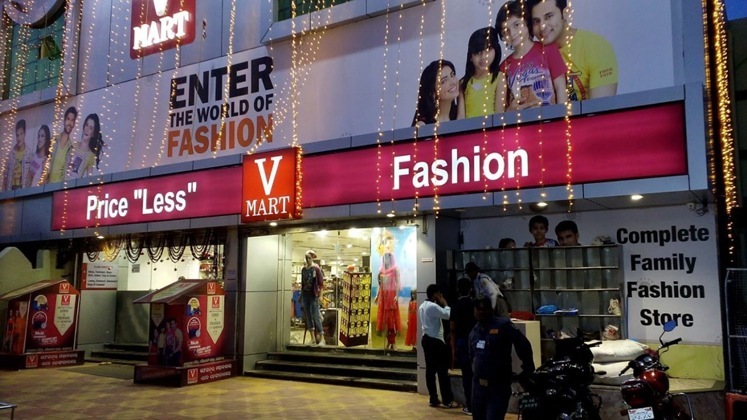
V-Mart Retail is no longer just a small-town North Indian story; it has transformed into a multi-format retail powerhouse that is systematically dismantling its competition in Tier 2 and Tier 3 cities. The latest financial data reveals a company that has successfully navigated the treacherous waters of the LimeRoad acquisition and is now firing on all cylinders. With a Net Profit growth of 1,101% in the latest quarter and a Revenue surge of 24%, the company is proving that “Value Retail” is the most resilient segment in the Indian consumption basket.
At a Glance – The Numbers That Scream Growth
The scale of V-Mart’s operations has reached a tipping point. As of March 2026, the company operates 577 stores spanning a massive 5.0 million square feet. To put this in perspective, they added a record 29 stores in Q4 alone. But it’s not just about adding floor space; it’s about the efficiency of that space. The Same Store Sales Growth (SSSG) stood at a robust 12%, signaling that existing customers are spending more even as new ones walk through the doors.
However, beneath this veneer of aggressive growth lie significant shifts in the balance sheet. The company has transitioned to a Pre-Ind AS 116 Net Profit of ₹1,240 million for FY26, a staggering 171% increase over the previous year. While the “Unlimited” brand is scaling rapidly in the South, contributing 16% to the total revenue, the digital arm “LimeRoad” has finally started behaving. Management has managed to slash LimeRoad losses by 56% YoY, bringing the quarterly net loss for the vertical down to a mere ₹30 million (₹3 crore).
But is it all sunshine? Hardlly. The company is grappling with a Debt-to-Equity ratio of 1.01, and while management claims no “long-term” debt, the lease liabilities are ballooning as they sign more properties. Furthermore, the Average Selling Price (ASP) for V-Mart apparel rose by 5%, a move that tests the price sensitivity of its core rural and semi-urban customer base.
The most intriguing part? The company declared a 3:1 bonus issue in May 2025, which has now fully reflected in the equity capital, which jumped from ₹18 crore to ₹79.5 crore. This was a bold move to reward shareholders, but it also means the EPS is now spread across a much larger share base.
Introduction
V-Mart Retail Limited is the “Value King” of Indian retail, specifically targeting the aspirational middle class in regions where high-street brands fear to tread. Operating primarily in Uttar Pradesh (176 stores) and Bihar (82 stores), the company has built a fortress in the Hindi heartland.
The business has evolved from a simple apparel store to a sophisticated retail ecosystem. It now operates under several sub-brands: V-Mart Aspire (Gen Z trends), V-Mart Plus (family basics), and V-Mart Corporate (working professionals). Their private label portfolio, including brands like J White and Flick, now accounts for 69% of apparel sales, giving them a massive margin cushion that “pure-play” aggregators lack.
The acquisition of Unlimited from Arvind Lifestyle was a strategic pivot to capture the South Indian market. With 99 Unlimited stores now operational, V-Mart has successfully hedged its geographical risk. No longer is the company solely dependent on a good monsoon in UP or Bihar; it now has a front-row seat to the consumption boom in Tamil Nadu, Karnataka, and Telangana.
Business Model – WTF Do They Even Do?
If you think V-Mart just