At a Glance
The FMCG giant is navigating a landscape of shifting consumer patterns and regulatory hurdles, yet it continues to command a massive 15% operating profit growth in its latest quarterly outing. Dabur India has once again demonstrated why it is the “Big Brother” of the Ayurvedic world, reporting a consolidated revenue of ₹ 3,038 crore for the quarter ended March 31, 2026. This represents a healthy 7.3% YoY growth, fueled by a robust 6% volume growth in the domestic market.
However, beneath the surface of these steady numbers lie significant friction points. The company faced unseasonal rains in March 2026, which acted as a cold shower for its summer-heavy portfolio, specifically impacting the beverages and glucose segments. While the Home and Personal Care (HPC) segment blazed ahead with double-digit growth, the food and beverage side felt the damp chill of the weather gods.
Investors are closely watching the margin expansion. Despite an inflationary environment and geopolitical disturbances in the Middle East, Dabur managed an 82 bps expansion in PAT margins, bringing the quarterly profit after tax to ₹ 369 crore. This was supported by calibrated price hikes and a strategic pivot toward premiumization in categories like Honey and Juices.
There are legal and regulatory shadows that cannot be ignored. The ongoing litigation in the US involving Namaste Laboratories regarding hair relaxer safety remains a long-term monitorable, even if insurance is currently footing the legal bills. Closer to home, a staggering GST demand of ₹ 320 crore (now stayed by the High Court) and an FIR involving the Chairman add a layer of corporate governance “noise” that the market is struggling to price in.
Dabur is doubling down on its “Power Brands” while aggressively rationalizing its tail products. The company is investing ₹ 400 crore in a Greenfield multi-category plant in South India to break its geographical concentration. With a dividend payout that remains high, the company is effectively saying it has more cash than it knows what to do with—or perhaps, it’s keeping the shareholders happy while the growth engine operates at a “moderate” 5-7% speed.
Can Dabur maintain its premium valuation while dealing with GST battles and uterine cancer lawsuits abroad?
Introduction
Dabur India is not just a company; it is an institution that has successfully “branded” the 5,000-year-old science of Ayurveda for the modern consumer. Founded in 1884, it has evolved into the world’s largest Ayurvedic and Natural Health Care Company. Today, it operates with a portfolio of over 250 herbal and Ayurvedic products, touching every corner of the Indian household from the kitchen shelf to the medicine cabinet.
The business is broadly divided into three pillars: Home & Personal Care (48.6%), Healthcare (31.4%), and Food & Beverages (20%). While many FMCG peers struggle to penetrate the rural heartland, Dabur has turned it into a fortress. Rural demand continues to outperform urban markets for the company, a testament to its deep distribution reach of 7.7 million retail locations.
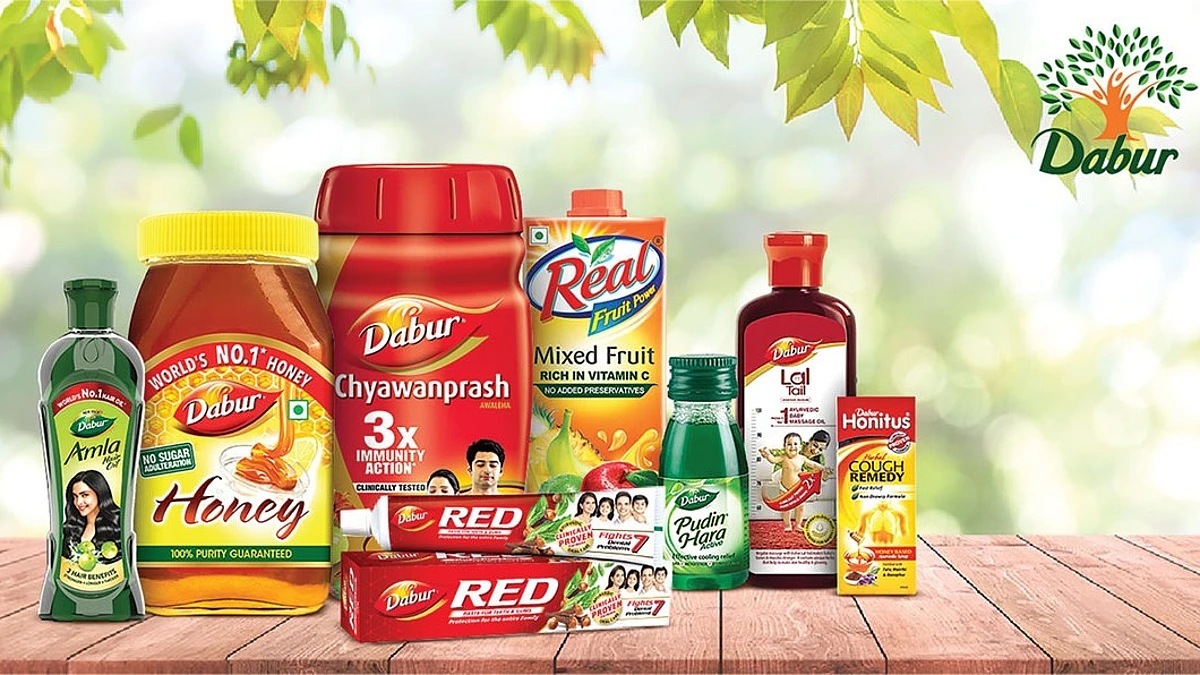
In recent years, the management has shifted its focus to a “Power Brand” strategy. This involves aggressive marketing and innovation in eight core brands: Dabur Chyawanprash, Dabur Honey, Dabur Honitus, Dabur Pudin Hara, Dabur Lal Tail, Dabur Amla, Dabur Red Paste, and Real. This strategy is clearly visible in the Q4 FY26 results, where brands like Dabur Red and Meswak continue to outpace the general toothpaste category growth.
Geographically, Dabur is no longer just an Indian story. Its international business accounts for 25% of total turnover, with a presence in over 120 countries. However, this global footprint brings global risks. Geopolitical volatility in the Middle East and currency devaluations in Africa are constant “wildcards” in their quarterly P&L.
The company is currently in a transition phase. It is moving from being a traditional Ayurvedic player to a “Digital-First” FMCG powerhouse. The launch of Dabur Ventures, with an allocation of ₹ 500 crore, signals its intent to acquire or invest in premium, wellness-oriented brands that cater to the younger, urban consumer.
Business Model – WTF Do They Even Do?
Dabur is essentially a giant “naturalizer.” They take everyday products—toothpaste, hair oil, juice—and give them an Ayurvedic or herbal twist that justifies a brand premium and consumer trust.
1. Home & Personal Care (The Breadwinner)
This segment is the engine room, contributing nearly half of the revenue.
- Oral Care: Dominated by Dabur Red, which is effectively fighting multinational giants. They focus on “clinically proven Ayurvedic benefits” to keep users hooked.
- Hair Care: Dabur Amla is the world’s largest hair oil brand. They recently