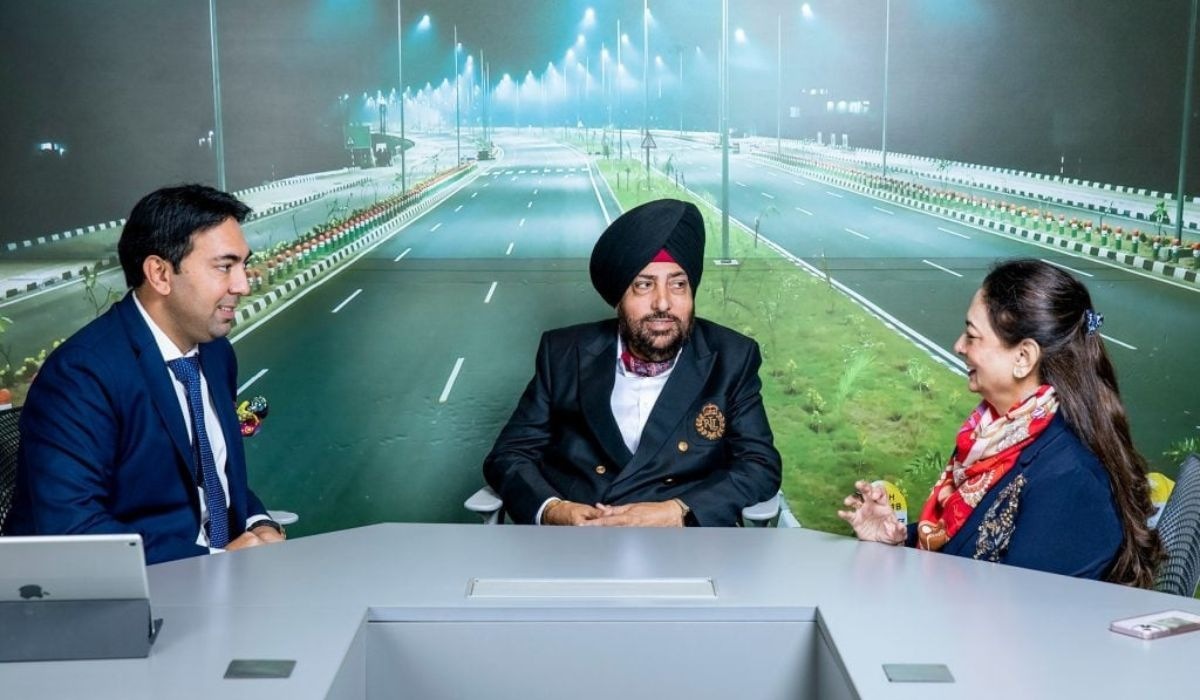
The numbers coming out of Ceigall India Limited for the financial year ending March 31, 2026, are designed to make the competition sweat. With a closing order book that has ballooned to ₹185,543 million, the company has effectively secured its revenue trajectory for the next several years. But don’t let the sheer scale blind you; there is a strategic pivot happening here. The company is no longer just a “road player”—it is aggressively encroaching into renewables, metros, and international markets.
While the top line grew 17% YoY to hit ₹40,224 million, the real story lies in the “Balance Sheet Cleaning” act. Management has finally walked the talk on asset recycling, concluding the sale of the Malout–Abohar HAM asset to Neo Asset Management. This isn’t just about booking a gain; it’s about freeing up ₹1,770 million in equity to feed the hunger of new, high-margin projects. However, the aggressive growth comes with the baggage of a stretched working capital cycle, which currently sits at an elevated 64 days.
1. At a Glance
Ceigall India is currently a paradox of massive growth and heavy capital commitment. On one hand, you have a company that has scaled its order book from ₹92,257 million in FY24 to over ₹1.85 lakh million in FY26— a staggering feat. On the other hand, the financial auditor in us cannot ignore the negative Cash Flow from Operations (CFO) of ₹913 million on a consolidated basis. The company is running fast, but it is consuming a lot of fuel (cash) to keep that pace.
Investors are flocking to the stock because of the 4.8x Book-to-Bill ratio, which provides extreme visibility. Yet, the red flags are waving in the wind. The Total Assets have surged to ₹55,234 million, but so have the Trade Payables, which now stand at a massive ₹14,713 million (including MSME dues). The company is effectively using its vendors as a source of interest-free financing to bridge the gap in its working capital.
The strategic diversification is also a double-edged sword. Moving into Renewable Energy (now 19% of the order book) and Metros (6%) reduces NHAI concentration risk but introduces new execution complexities. The foray into Singapore and UAE via new subsidiaries is a bold move, but international infrastructure is a graveyard for many Indian EPC firms who underestimated local regulations and cost escalations.
Can Ceigall maintain its 14.6% EBITDA margin as it ventures into these new territories? Management claims these new verticals will match historical levels, but the “entry-level” nature of these bids often hides hidden costs. The company is at a critical juncture where execution must now catch up with the massive paper-wealth of its order book.
Is this a masterpiece of infrastructure scaling, or is the balance sheet becoming a house of cards supported by vendor credit?
2. Introduction
Ceigall India Limited is currently the “it” child of the Indian infrastructure space. From its humble origins in Punjab in 2002, it has transformed into a multi-state giant with operations spanning 12 states and now, international borders. The company specializes in the tough stuff: elevated corridors, twin-tube tunnels in J&K, and high-speed expressways.
The core of Ceigall’s appeal has always been its asset-light model. Unlike traditional construction firms that sink billions into owning heavy machinery that rusts in the yard between projects, Ceigall leases nearly 86% of its equipment. This allows them to stay nimble and keep their fixed costs low, which is vital when interest rates are volatile.
In FY26, the company achieved several landmark milestones. They secured the Jaipur Metro Phase-II project and received the completion certificate for the 35.15 km Delhi-Amritsar-Katra project. The “Frontier Highway” projects in Arunachal Pradesh have also added a strategic depth to their portfolio, proving they can handle complex projects in sensitive border regions.
The management, led by Ramneek Sehgal, has been vocal about “capital recycling.” They aren’t interested in holding onto completed roads for 15 years to collect slow annuities. They want to build, sell, and move the cash into the next big construction site. This velocity of capital is what separates Ceigall from the slower, more traditional road builders in India.
However, as we dig deeper into the FY26 results, the pressure of this rapid expansion is visible. The debt levels, while manageable on a debt-to-equity basis, are rising in absolute terms. The company is now a complex machine with multiple moving parts across HAM, EPC, and Renewable energy segments.
3. Business