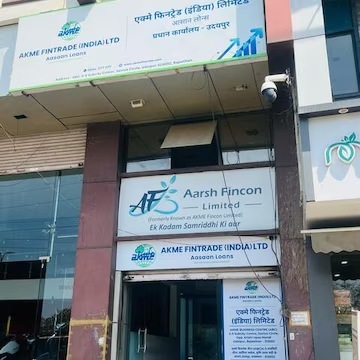
1. At a Glance
Akme Fintrade (India) Ltd (AFIL) is currently operating in a high-octane growth phase that is beginning to look less like a steady climb and more like a vertical takeoff. In a financial landscape where most NBFCs are struggling with the ghost of unsecured lending stress, AFIL has positioned itself as a secured-only fortress, and the numbers are starting to reflect the rewards of this discipline.
The company has successfully scaled its Assets Under Management (AUM) to ₹918.60 crore by the end of March 2026, marking a staggering growth trajectory from the ₹425.66 crore seen just a year prior. This is a massive 115% YoY jump in AUM, far outstripping the management’s own ambitious guidance of ₹950 crore by the skin of its teeth. If the first rule of credit is “don’t lose the money,” AFIL is adding a second: “scale it while it’s safe.”
However, this aggressive expansion comes with the standard set of small-cap red flags that should keep any serious analyst awake at night. The company’s borrowings have ballooned to ₹503 crore, up from ₹282 crore in the previous year. While the leverage is being used to fuel the loan book, the reliance on high-cost funding channels and the sheer speed of disbursement—₹503.91 crore in FY26—raises questions about the long-term vintage of these assets.
Furthermore, the promoter holding has slipped to 39.53%, a drop from 41.57% in earlier quarters. While some of this is due to dilution from fundraises, any drop below the 40% mark in a promoter-driven NBFC creates a psychological overhead for the market. The geographic concentration remains a heavy anchor; nearly 61% of the portfolio is still stuck in Rajasthan. A single localized economic shock or a drought in the desert could send the GNPA numbers, which are currently manageable at 2.94% (as of Dec 2025), into a tailspin.
The market is watching a company that is doubling its book every year. The curiosity isn’t about whether they can grow—they clearly can. The real intrigue lies in whether the “secured” nature of their SME and vehicle loans can actually withstand the pressure of a 100%+ growth rate without the quality of the collateral deteriorating under the rug.
2. Introduction
Akme Fintrade (India) Ltd is a Udaipur-headquartered NBFC that has spent the last three decades carving out a niche in the rural and semi-urban heartlands of India. Historically a quiet player, the company’s recent trajectory after its IPO has been anything but quiet. It operates primarily in Rajasthan, Maharashtra, Madhya Pradesh, and Gujarat, focusing on the “missing middle”—borrowers who are too big for microfinance but too small or “informal” for large private banks.
The company’s core strength lies in its 100% secured lending model. In an era where fintechs are burning cash on unsecured personal loans, AFIL insists on collateral. Whether it is a two-wheeler, a commercial vehicle, or a small business loan (SME/LAP), the company ensures there is a physical asset to back the credit. This conservative approach to credit quality is balanced by an aggressive approach to technology, with the launch of their digital platform “AASAANLOANS.”
The management team, led by Mr. Nirmal Kumar Jain, has recently undergone a professional overhaul. The transition from a family-run style to a KMP-driven (Key Managerial Personnel) structure is visible in the rapid-fire fundraises via Non-Convertible Debentures (NCDs) and the pursuit of higher credit ratings. With an A- Stable rating from Acuité as of April 2026, the company is now knocking on the doors of cheaper capital.
But don’t let the “A-” rating fool you into thinking the risk is gone. The company is operating in the high-yield, high-risk segment of rural finance. The average ticket sizes are small, the customers are often first-time borrowers, and the operational costs of maintaining 29 branches and 35+ points of presence are significant. This is a story of a regional tiger trying to become a national powerhouse.
3. Business Model – WTF Do They Even Do?
AFIL is essentially a high-interest pawn shop with a banking license and a tech-savvy marketing team. They take money from big banks and markets at 11-14% and lend it to rural entrepreneurs and vehicle buyers