At a Glance
The water treatment sector is often viewed as a sleepy utility play, but Apex Ecotech is currently anything but quiet. Looking at the latest numbers for the financial year ending March 2026, the company is screaming for attention with a 109.5% surge in revenue and a 98.8% jump in Net Profit. This isn’t just organic growth; it is an operational blitzkrieg. The company has transitioned from a small-scale player into a high-velocity execution machine, recently securing a massive ₹100–125 crore order from Reliance Consumer Products.
However, beneath the surface of these triple-digit growth figures lies a classic small-cap detective story. The company’s business model is heavily back-ended. In FY26, the second half of the year was expected to be 3x the size of the first half, creating an immense amount of execution pressure on a team of just 116 people. While the order book is bulging at ₹145 crore+, the reliance on a few “showcase” mega-orders introduces a high level of concentration risk. If one large client delays a site inspection or a payment milestone, the beautifully crafted quarterly charts could face a sudden gravity check.
Furthermore, the “Zero Liquid Discharge” (ZLD) space is technically brutal. Management admits it is the “toughest of the lot.” While Apex claims a moat through design-led engineering, they are competing in a shark tank with giants like Va Tech Wabag and Ion Exchange. The company is currently enjoying the honeymoon phase of post-IPO liquidity, having used proceeds to clear debt and fund working capital. But as the scale increases, the question remains: Can they maintain these 15% operating margins when playing in the big leagues?
The market is currently pricing this as a high-growth tech-adjacent play rather than a slow-moving construction firm. With a Return on Capital Employed (ROCE) at a staggering 41.2%, the efficiency is undeniable, but the sustainability of such high returns in a capital-intensive turnkey business is the ultimate riddle. Is this a genuine engineering powerhouse in the making, or a seasonal sprinter hitting its peak?
Introduction
Apex Ecotech is an engineering-driven firm that specializes in the “unsexy” but essential business of making dirty water clean. Based out of Pune, the company has spent the last 16 years carving out a niche in the Turnkey Water and Wastewater Treatment space.
They don’t just sell filters; they design, build, and commission entire ecosystems that allow factories to reuse every single drop of water. This is what the industry calls Zero Liquid Discharge (ZLD). In a country like India, where water scarcity is a boardroom-level risk for manufacturers, Apex’s services have moved from “good to have” to “license to operate.”
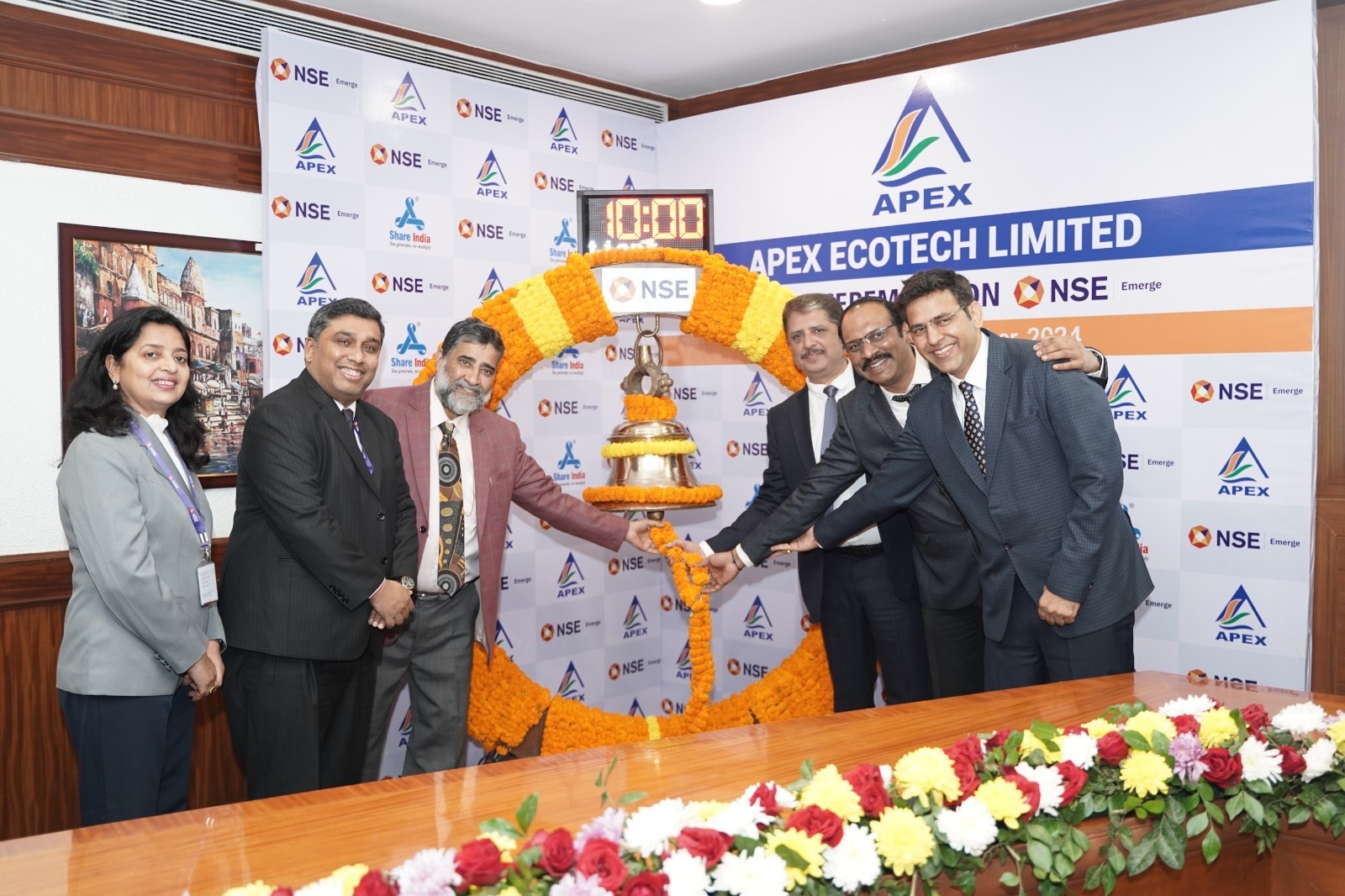
The company’s recent trajectory shifted gears following its December 2024 IPO. Before the listing, Apex was a quiet operator; now, it is bagging orders from the likes of L&T, Hero MotoCorp, and Reliance.
The scale of operations has expanded significantly. From serving a few automotive clients pre-COVID, they now claim a presence across 14 different industrial sectors, including FMCG, Pharma, and Chemicals. This diversification is their shield against cyclical downturns in any single industry.
As of March 2026, the company is managing a total volume of 145 million litres per day of water treatment. To put that in perspective, they are essentially managing the daily water needs of a mid-sized city, but for industrial giants.
The narrative is simple: India is running out of water, regulations are getting tighter, and companies like Apex provide the survival kit. But in the world of turnkey projects, “designing” a solution is easy—”executing” it on time without burning through cash is where the real battle is won or lost.
Business Model – WTF Do They Even Do?
If you think Apex Ecotech is just a plumbing company with a fancy name, you’re missing the point. They are essentially outsourced environmental engineers.
Imagine a massive Coca-Cola or Reliance beverage plant. These factories gulp down millions of litres of water and spit out toxic effluent. Environmental laws say they can’t just dump that into the local river. Apex walks in and says, “Give us the dirty water, and we will give you back pure water and a pile of dry salt.”
They operate through several high-tech verticals:
- Zero Liquid Discharge (ZLD): This is their crown jewel. They use Mechanical Vapor Recompression (MVR) to evaporate wastewater until only solids remain. It’s energy-heavy and technically complex.
- Membrane Recycle Systems: Using advanced tech like Electrodialysis Reversal (EDR) and Reverse Osmosis (RO) to “mine” clean water out of sewage.
- Sewage Treatment Plants (STP): The bread and butter. They build these for industrial townships and large-scale factories.
The “Turnkey” part of their business means they handle everything—from the first drawing on a napkin to the final bolt in the electrical panel. They even provide Operations and Maintenance (O&M) services, which provides a small but steady stream of recurring revenue after the big project is finished.
Their moat, if you believe management, isn’t the hardware (which they often source from partners like DuPont or Grundfos), but the Engineering Intelligence. They claim to be “customer-centric,” which in the SME world is often code for “we work harder and cheaper than the big guys.”
Do you think a company with only 116 employees can successfully manage a ₹100 crore project for a giant