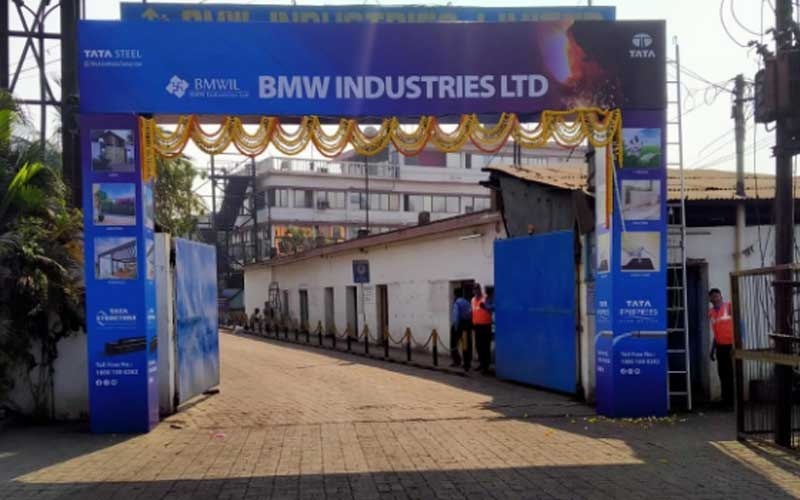
1. At a Glance
The steel sector is a graveyard of companies that couldn’t manage their debt or their margins, but BMW Industries is attempting a high-wire act that has caught the market’s undivided attention. While most mid-tier players are struggling with fluctuating raw material costs, this company has historically played it safe in the “conversion” shadow of giants like Tata Steel. However, the safety net is being pulled back. The latest financial disclosures reveal a company in the midst of a violent transformation—pivoting from a low-risk service provider to an integrated specialty steel manufacturer.
The numbers are staggering and frightening in equal measure. Net Profit for Q4 FY26 surged by a massive 88% YoY, reaching ₹33.2 crore. This is not a typo; it is the result of a concentrated push into higher-value products. But before you get blinded by the bottom-line glow, look at the “What’s Cooking” section below. The company has secured ₹500 crore in fresh debt to fund its ambitious Bokaro Greenfield project.
The red flags are waving, albeit in a structured formation. Receivable days have ballooned from 55 to 82 days, suggesting that while sales are growing, the cash isn’t hitting the bank as fast as it used to. Furthermore, the Debt-to-Equity ratio has spiked to 0.46, and the company is navigating a transition where raw materials will now form 80% of its cost base, up from nearly zero in its legacy model.
Investors are witnessing a classic “Scale vs. Margin” battle. The company is betting the house on a ₹803 crore expansion that promises to triple its revenue over the next three years. If they pull it off, it’s a masterstroke. If the execution falters, the interest costs alone could swallow the current profits whole. This is no longer a boring tolling business; it is a high-stakes infrastructure play.
2. Introduction
BMW Industries Limited (BMWIL), established in 1981, is no longer the quiet processing house it once was. Headquartered in Kolkata with a massive operational footprint in Jharkhand, the company has spent three decades acting as the backbone for Tata Steel’s “Tata Shaktee” brand.
For years, the business model was simple: Tata Steel sends the raw material, BMWIL processes it into Galvanised Corrugated (GC) sheets, and Tata Steel pays a conversion fee. No raw material risk, no marketing headache, and stable—albeit capped—margins.
However, the “New BMW” is hungry. The company is currently executing a massive Greenfield Downstream Steel Complex in Bokaro. This project is designed to manufacture high-end specialty products like ZAM (Zinc-Aluminium-Magnesium) and Color-Coated Coils. This move marks their entry into the proprietary business, where they will buy their own steel, process it, and sell it under their own steam.
With six manufacturing plants and an in-house logistics fleet of over 100 trucks, the infrastructure is ready. The question is whether the management can handle the volatility of the open market after 30 years of protected “conversion” income.
3. Business Model – WTF Do They Even Do?
Think of BMW Industries as the high-end “Kitchen” for the steel industry. For decades, they didn’t own the groceries (raw steel); they just charged a “cooking fee” (conversion charges) to turn that steel into TMT bars, pipes, and galvanized sheets.
The Legacy Model (The Comfort Zone)
They operate one of India’s largest independent cold rolling and galvanizing facilities. Their biggest client is Tata Steel. They convert Hot Rolled (HR) coils into the famous Tata Shaktee sheets. They