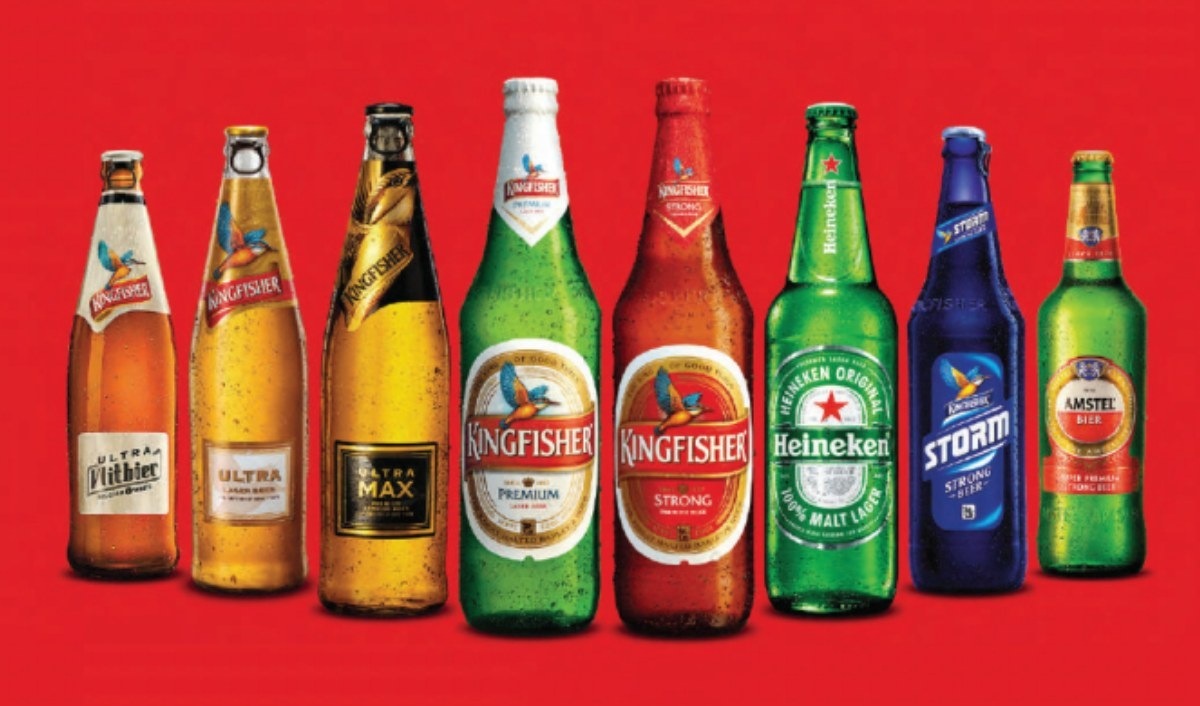
The Indian beer market is a battlefield of policy, weather, and branding, and no one sits closer to the fire than the maker of Kingfisher. With a dominant 54% market share, this entity is the undisputed “Emperor of Good Times,” yet the latest financial disclosures reveal a kingdom under siege. While revenues have climbed to a staggering ₹9,240 Crore, the bottom line tells a story of tightening nooses, with Quarterly Profit crashing by 58.3% in recent periods. Investors are witnessing a paradox: a company with massive scale and 61.5% parentage by global giant Heineken, yet struggling against a “triple threat” of record monsoons, aggressive state excise hikes, and a lingering ₹751.8 Crore CCI penalty hanging like a Damocles sword.
What is truly alarming is the “affordability trap.” In key states like Karnataka, which accounts for a massive chunk of profitability, the government has squeezed the category so hard that volumes have entered a double-digit death spiral. The management is now forced to play a high-stakes game of “premiumization or bust,” pushing brands like Heineken Silver and Ultra Max to offset the cooling thirst for economy lagers. With a Stock P/E of 101, the market is pricing in a recovery that the current numbers barely support. Are we looking at a long-term compounder undergoing a temporary dip, or a structural decline in India’s beer drinking habits driven by predatory taxation?
1. At a Glance – The Frothy Reality of a Market Leader
To the uninitiated, this company is a powerhouse. It controls over half the beer sold in India. It has 20 owned facilities, 16 contract manufacturing units, and a distribution network that reaches the furthest corners of the country. But behind the iconic “Kingfisher” label lies a financial profile that is increasingly stressed. In the latest fiscal year, while sales grew by a modest 3.6%, profits were decimated by 18.7%. This isn’t just a rounding error; it is a signal of fundamental margin compression.
The red flags are waving in plain sight. First, the taxation nightmare. The company is currently battling state governments that treat beer as a cash cow, raising excise duties to the point where a bottle of beer is losing its “affordable” tag compared to hard spirits. Second, the legal overhang. A penalty of ₹751.83 Crore from the Competition Commission of India (CCI) for alleged cartelization remains a massive contingent liability. Although stayed by the NCLAT on a 10% deposit, the risk remains real and un-provisioned in full.
Furthermore, the “Heineken Era” has brought discipline but also heavy investment. The company is pumping ₹750-900 Crore into a new greenfield brewery in Uttar Pradesh and massive “visi-cooler” expansions. They are doubling down on the “what is cold, gets sold” mantra. But with a Return on Equity (ROE) of 8.4% and a ROCE of 10.7%, one must ask: is the capital being deployed efficiently, or is the company running faster just to stay in the same place?
The stock has wiped out 35% of its value over the last year, underperforming the broader market significantly. For an investor, the question isn’t whether people will drink beer—they will. The question is whether this company can keep any of the profit after the taxman and the raw material suppliers take their cut.
2. Introduction
United Breweries Limited (UBL) is more than just a company; it is a cultural landmark in the Indian consumer space. For decades, it has defined the “social drinking” category in India, transitioning from a domestic heavyweight under the