1. At a Glance
The affordable housing finance sector in India is witnessing a seismic shift, and at the center of this transformation is a company that has quietly built a ₹23,452 crore empire. This isn’t just about lending money; it’s about a relentless, data-driven machine that has just crossed the ₹20,000 crore balance sheet milestone while maintaining asset quality that would make most traditional banks blush. With a Net Worth crossing the ₹5,000 crore mark in FY26, this player is no longer a small-town lender—it is a financial fortress.
However, the landscape is changing. The company has seen a massive transition in its promoter DNA, with global giant CVC Capital Partners taking the reins. This comes at a time when the “affordable” tag is being chased by every large HFC and bank in the country. Can a specialist survive the onslaught of the giants?
The numbers tell a story of aggression tempered by extreme caution. While disbursements grew 16% YoY to hit ₹2,348 crore in the final quarter of FY26, the company is battling a “subdued” environment by tightening its credit filters. It is a classic detective story: a company expanding into 15 states, yet keeping its Gross NPA at a measly 1.05%. But look closer, and the red flags emerge. The return on equity, while stable, remains at 13.9%, a level that suggests the massive capital cushion might be a drag on profitability if not deployed faster.
Furthermore, the company faces a high geographic concentration risk, with 64% of its AUM locked in just three states. As it ventures into the hyper-competitive markets of South India, the “first-mover advantage” it enjoyed in Rajasthan will be tested. Will the digital transformation “Project Gati” and the infusion of global private equity capital be enough to fuel a 25% disbursement growth target for FY27, or is the affordable housing dream hitting a valuation ceiling?
2. Introduction
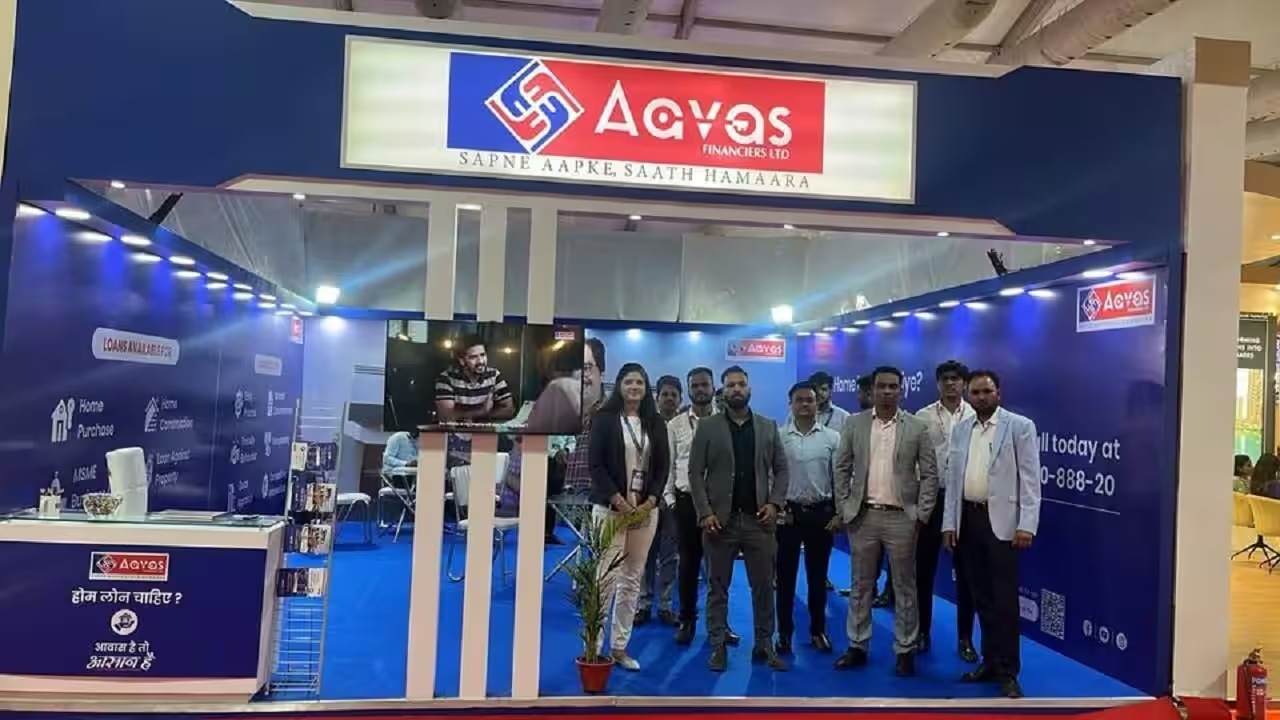
Aavas Financiers Limited has evolved from a subsidiary of AU Small Finance Bank into a standalone powerhouse in the retail affordable housing finance space. It serves the “missing middle”—low and middle-income self-employed customers in semi-urban and rural India who are often ignored by the formal banking system.
The company’s DNA is built on “in-house execution.” Unlike many peers who rely on third-party agents (DSAs), Aavas keeps its sourcing, underwriting, and collections under one roof. This model is expensive to scale but provides a “moat” of data and control.
In FY26, the company underwent a massive institutionalization phase. The transition to CVC Capital Partners as the promoter is a landmark event, signaling that the “Aavas 3.0” era has officially begun. This shift is accompanied by a fresh management team, with Manu Yeshpal Singh taking over as MD & CEO (subject to approvals), replacing the outgoing leadership.
The company is currently operating 435 branches across 15 States and Union Territories. Its mission is bold: an AUM of ₹1,00,000 crore by FY32-33. But to get there, it must navigate rising costs of borrowings and a competitive landscape where ticket sizes are inflating and “borrower poaching” is the new norm.
3. Business Model – WTF Do They Even Do?
Think of Aavas as a financial detective operating in places where Google Maps might struggle to find a house number. They provide home loans for construction, purchase, and repair, alongside Loans Against Property (LAP) and MSME loans.
The Secret Sauce: They don’t just look at salary slips—because 61% of their customers don’t have them. They are specialists in self-employed underwriting. Their credit officers visit a local grocery store owner, count the jars of biscuits, and estimate the cash flow manually.
The Product Mix:
- Home Loans (65% of AUM): The bread and butter. Average ticket size