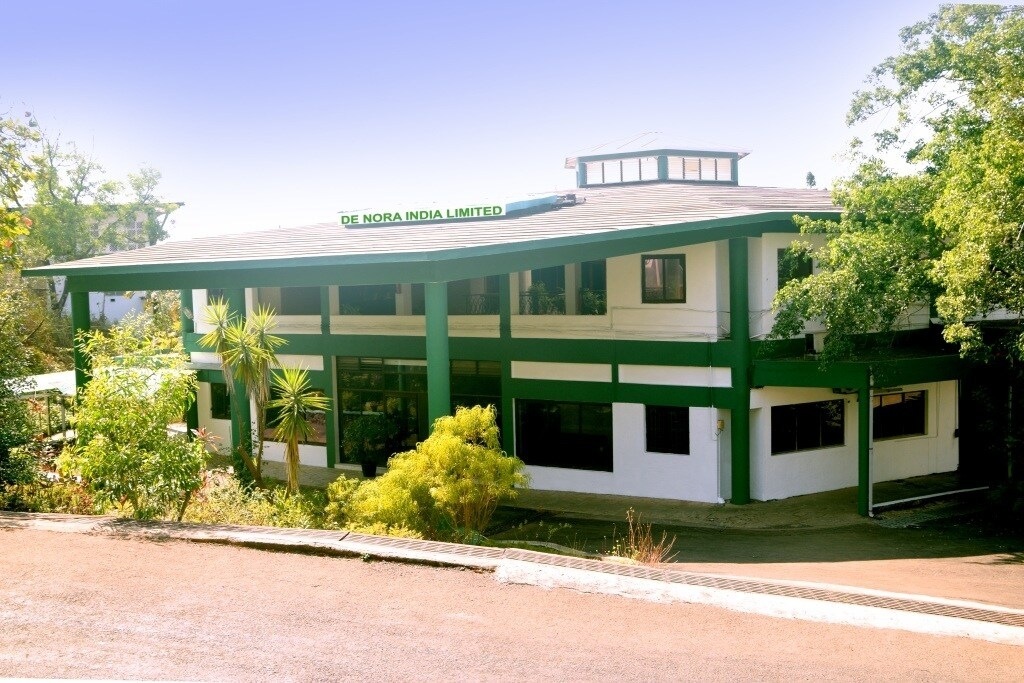
1. At a Glance
Imagine a company that holds the keys to the most essential chemical processes on the planet—chlorine production, water disinfection, and the “Holy Grail” of the decade: Hydrogen Generation. This isn’t a speculative startup operating out of a garage in Bengaluru; it is a battle-hardened subsidiary of an Italian multinational that has been quietly dominating the Indian electrochemical space since 1989.
The numbers hitting the tape right now are enough to give any analyst a mild case of whiplash. We are looking at a company that managed to grow its top line by a staggering 77% over the trailing twelve months, reaching a revenue of ₹122 crore. Investors have been swarming, pushing the stock up over 33% in just the last three months.
But here is where the mystery deepens. While the top line is screaming “Growth!” the latest quarterly bottom line is whispering “Trouble.” In the most recent quarter (March 2026), the company reported a Net Loss of ₹0.64 crore, a violent swing from the ₹12.32 crore profit it posted in the same quarter last year.
How does a debt-free company with a 53% Italian parentage and a massive order book from Reliance Industries end up in the red during a period of record sales? Is this a temporary accounting glitch, or is the “Electrode King” losing its spark? Let’s put on the auditor’s hat and find out.
2. Introduction
DE Nora India Ltd (DNIL) is essentially the technical backbone of the Indian Chlor-alkali industry. If you like clean water or need caustic soda for your industrial process, you likely owe a debt to their electrodes. Being a part of the Oronzio De Nora International B.V. group, they aren’t just a local player; they are an extension of a global empire with 24 operating companies across 10 countries.
In India, they operate with a lean, mean team of just 45 permanent employees—down from 79 a decade ago. Yet, they are handling projects for the biggest titans in the country. Their business is divided into two main buckets: Electrode Technologies (which brings in a massive 99% of the revenue) and Water Technologies.
The company is currently in a fascinating transition. They have historically been a “service” heavy business—think of them as the high-end mechanics for industrial electrolyzers. However, with the global push toward Green Hydrogen and sustainable chemistry, their proprietary DSA (Dimensionally Stable Anodes) technology is becoming more relevant than ever.
Despite the technical prowess, the financial journey has been a rollercoaster. They are debt-free, sitting on a pile of cash, but their recent margins have been squeezed harder than a lemon at a roadside stall. We are here to figure out if the recent stock price rally is backed by substance or just the fumes of “Green Hydrogen” hype.
3. Business Model – WTF Do They Even Do?
If you find chemistry boring, DNIL will make you rethink your life choices—or at least your portfolio. They manufacture and service noble metal-coated electrodes.
In simple terms: Industrial plants use electricity to trigger chemical reactions (like splitting salt water to get chlorine). DNIL provides the “rods” (electrodes) that make this happen efficiently. Without them, the Chlor-alkali industry—which fuels everything from paper to soap—would grind to a halt.
The Revenue Split (FY23 Logic):
- Sale of Services (~78%): This is the “re-coating” business. Electrodes wear out. DNIL takes them back, gives them a fresh coat of high-tech “magic dust” (noble metals), and sends them back. It’s high-margin, recurring, and keeps the lights on.
- Sale of Products (~16%): Selling the actual hardware.
- The Reliance Connection: They recently bagged a ₹48 crore order from Reliance Industries for re-coating anode and cathode pans. When Mukesh Ambani is