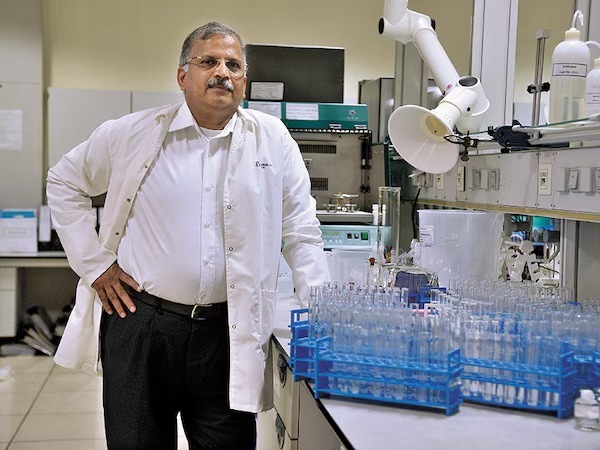
At a Glance – A Masterclass in Transformation
If you still think Laurus Labs is just another generic pill-mill from Vizag, you’re reading the wrong balance sheet. The Q4 FY26 results aren’t just numbers; they are a loud, aggressive statement of intent. For years, the market yawned at its heavy reliance on Anti-Retroviral (ARV) drugs—the high-volume, low-margin bread and butter of the HIV world. But look closer. The narrative has shifted from “commodity supplier” to a “high-tech CDMO beast.”
In FY26, the company clocked a massive ₹6,813 crore in revenue, a 23% jump that would make even the most cynical auditor double-check the decimal points. But the real juice is in the EBITDA, which skyrocketed by 64% to ₹1,826 crore. This isn’t accidental growth; it’s the result of a multi-year, multi-billion-rupee capex gamble that is finally hitting its stride.
The company is pivoting into Peptides, Antibody-Drug Conjugates (ADCs), and Gene Therapy—the kind of science that sounds like science fiction but prints money like a central bank. While the industry struggled with pricing pressure and supply chain migraines, Laurus was busy expanding its reactor volume to a staggering 8,200 KL. They didn’t just survive the storm; they built a bigger boat and equipped it with turbochargers.
What’s even more intriguing is the efficiency. The Return on Capital Employed (ROCE) has swung back to 17.7% from a dismal 9.7% just a year ago. It’s a classic story of “invest ahead of the curve.” With a customer base that includes 7 of the top 10 global big pharma players, Laurus has moved from the kids’ table to the executive lounge. If you aren’t curious about how a former ARV specialist is now doing complex synthetic chemistry for global innovators, you might be in the wrong asset class.
Introduction
Laurus Labs is currently in its “Transformation 2.0” phase. Founded in 2005 by Dr. Satyanarayana Chava, the company has spent two decades evolving through sheer scientific grit. It started as a single API product supplier and has morphed into a global pharmaceutical powerhouse.
The company operates through four distinct engines:
- Generic API: The legacy core.
- Generic FDF (Finished Dosage Forms): Moving up the value chain.
- Synthesis (CDMO): The high-margin future.
- Bio: The wild card.
The latest results show a company that is successfully de-risking. The ARV share of revenue, which was a whopping 67% in FY19, has been surgically reduced to 41% in FY26. Meanwhile, the CDMO division—the part of the business where you actually get paid for your brain cells—now contributes 31% to the total mix.
Management has been busy spending money like they found a cheat code, with a ₹4,300 crore capex cycle between FY22-26. This isn’t just maintenance; it’s building the infrastructure for the next decade of pharmaceutical innovation. With 15 manufacturing sites and over 3,000 scientists, they are playing a very long, very expensive, and very calculated game.
Business Model – WTF Do They Even Do?
Think of Laurus Labs as the TSMC of the Pharma world, but with a lot more glass tubes and white coats. They are essentially a “Chemistry-as-a-Service” platform.
When a giant global pharma company (the “Innovators”) discovers a new molecule, they don’t always want to build a factory to make it. They call Laurus. Laurus helps them refine the synthesis, scales it up from a few grams in a lab to metric tons in a reactor, and handles all the regulatory headaches. This is the CDMO (Contract Development and Manufacturing Organization) model. It’s sticky, high-margin, and incredibly difficult to replicate because it requires “One Quality” standards that can pass USFDA, WHO, and EU audits without breaking a sweat.