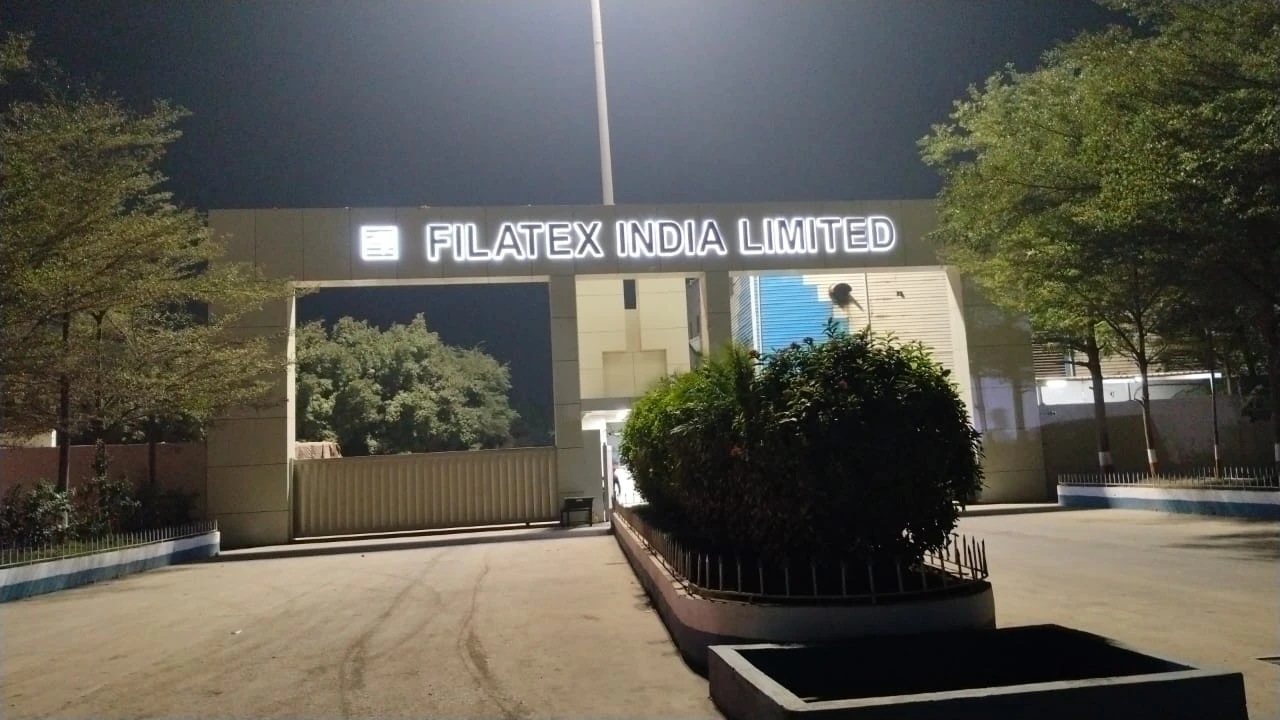
Filatex India Q4 FY26: The “Circular” Pivot and the $690 Crore Bet on Sustainability
The synthetic yarn industry isn’t exactly a place for the faint-hearted. It’s a high-octane environment of crude oil volatility, Chinese dumping drama, and razor-thin margins. But looking at Filatex India’s latest performance, they seem to be playing a different game entirely. They aren’t just making yarn; they are building a moat out of recycled textile waste.
With a 36.6% YoY jump in PAT for FY26 and a massive strategic pivot toward textile-to-textile recycling, Filatex is trying to shed its “commodity” skin and emerge as a specialized materials platform.
1. At a Glance – The Polyester Phoenix
Filatex India is currently at a fascinating crossroads. For decades, they’ve been the “steady-eddy” of the polyester world—churning out high-quality Partially Oriented Yarn (POY) and Fully Drawn Yarn (FDY) with the kind of capacity utilization (often over 90%) that makes competitors weep. But the “old” Filatex was at the mercy of the PTA/MEG spreads and the fluctuating whims of Chinese exporters.
The “New” Filatex is different. They are currently executing a ₹690 Crore growth transformation. This isn’t just about adding more machines to a factory; it’s a multi-pronged attack on inefficiency. They are investing in:
ECOSIS: A ₹300 Crore greenfield project for textile-to-textile recycling—the first of its kind in India.
Energy Autonomy: Pushing renewable energy share from 26% to 55%.
Utility Monetization: Selling surplus steam to neighbors. Yes, they are literally selling their hot air for profit (roughly ₹60 Crore p.a. of it).
The financials for FY26 show a company that is leaner than a marathon runner. While revenues stayed flat due to global price moderation, EBITDA margins expanded by 227 bps YoY to 8.33%. Why? Because they are finally getting a grip on their costs.
However, it’s not all sunshine and roses. The management has been brutally honest: Q4 FY26 was a reality check. The withdrawal of Quality Control Orders (QCO) on imports meant a flood of cheap Chinese yarn hit Indian shores, pressuring margins. But with the India-EU FTA on the horizon and a massive U.S. tariff advantage (18% for India vs 34% for China), the medium-term demand pipe looks like it’s being fed by a firehose.
2. Introduction: Not Your Grandma’s Yarn Maker
If you think of “textiles” and imagine handlooms in a dusty shed, you’re looking at the wrong century. Filatex operates at the cutting edge of polymer science. They take crude oil derivatives—Purified Terephthalic Acid (PTA) and Mono-Ethylene Glycol (MEG)—melt them down, and spin them into fibers that end up in everything from your Nike dry-fits to your fancy curtains.
Based out of Dahej (Gujarat) and Dadra, they sit right in the heart of India’s textile hub. They aren’t just a local player; they are a Top 5 producer of Polyester Filament Yarn (PFY) in India.
The story here isn’t just about “how much” they produce, but “how” they produce it. In a world obsessed with ESG, Filatex has realized that being “green” is actually “gold.” Their move into chemical recycling (depolymerization) means they can take an old, torn T-shirt and turn it back into a “virgin-grade” polyester chip.
This isn’t just good for the planet; it’s great for the pocketbook. Recycled yarn fetches a premium, and with European brands facing mandatory recycled content laws by 2030, Filatex is positioning itself as the primary dealer for the fashion world’s new addiction.
3. Business Model – WTF Do They Even Do?
Filatex is basically a high-tech kitchen.
Ingredients: They buy PTA and MEG (mostly from big boys like Reliance or IOCL, or via imports).
Cooking: They melt these together in a process called Polymerization.
The Result: Out come Polyester Chips.
The Finishing Touch: They spin these chips into various types of yarns:
DTY (Drawn Textured Yarn): The stuff that feels like wool or cotton but is actually plastic (think socks and sportswear).
The Roast: They essentially turn oil into yoga pants. It’s a game of “paisa-vasool” where even a 1% difference in power costs or a small change in the “spread” between raw materials and finished goods determines whether the management flies first class or takes the bus.
They are currently moving from a “buy-ingredients-and-cook” model to a “compost-and-cook” model through ECOSIS. By recycling old clothes, they reduce their dependence on crude oil prices.
4. Financials Overview: The Hard Numbers
The results for Q4 FY26 (Quarterly) show a slight cooling off compared to the blockbuster Q3, primarily due to import pressures. However, the annual picture (FY26) is remarkably strong.
Table: Financial Performance (Standalone)
Metric
Q4 FY26 (Latest)
Q4 FY25 (YoY)
Q3 FY26 (QoQ)
FY26 (Full Year)
Revenue
₹ 985.49 Cr
₹ 1,080.02 Cr
₹ 1,050.00 Cr
₹ 4,160.52 Cr
EBITDA
₹ 86.24 Cr
₹ 75.72 Cr
₹ 93.58 Cr
₹ 346.52 Cr
PAT
₹ 40.25 Cr
₹ 41.38 Cr
₹ 55.33 Cr
₹ 183.90 Cr
EPS (₹)
₹ 0.91
₹ 0.78
₹ 1.25
₹ 4.14
Note: Annualized EPS for the current run rate (Q4) is roughly ₹ 3.64, though the full-year actual came in at ₹ 4.14.
Witty Commentary: Revenue is down 8.7% YoY, but EBITDA is up 13.8%. That’s like eating less food but getting more muscle—it’s called efficiency, folks. The management “walked the talk” on cost discipline, though a small fire in October and grid delays for their renewable power project cost them some momentum.
5. Valuation Discussion – Fair Value Range
We don’t do target prices, but we do math. Let’s look at where Filatex sits.
Method 1: P/E Multiple
TTM EPS: ₹ 4.14
Industry Average P/E: ~19.6x
Filatex Current P/E: ~11.0x
Conservative P/E: 13x (given the commodity nature) -> ₹ 53.80
Optimistic P/E: 16x (given the recycling pivot) -> ₹ 66.24
Method 2: EV/EBITDA
FY26 EBITDA: ₹ 346.5 Cr
Enterprise Value (EV): ~₹ 2,126 Cr
EV/EBITDA: 6.13x. For a company growing EBITDA at 34% YoY, this is historically cheap. If we apply an 8x multiple, the implied price is significantly higher.
Method 3: DCF (Simplified)
Given the ₹690 Cr capex coming online by Sept 2026, the cash flows for FY27 and FY28 are expected to surge. If the recycling plant (ECOSIS) delivers the guided 35% margins, the