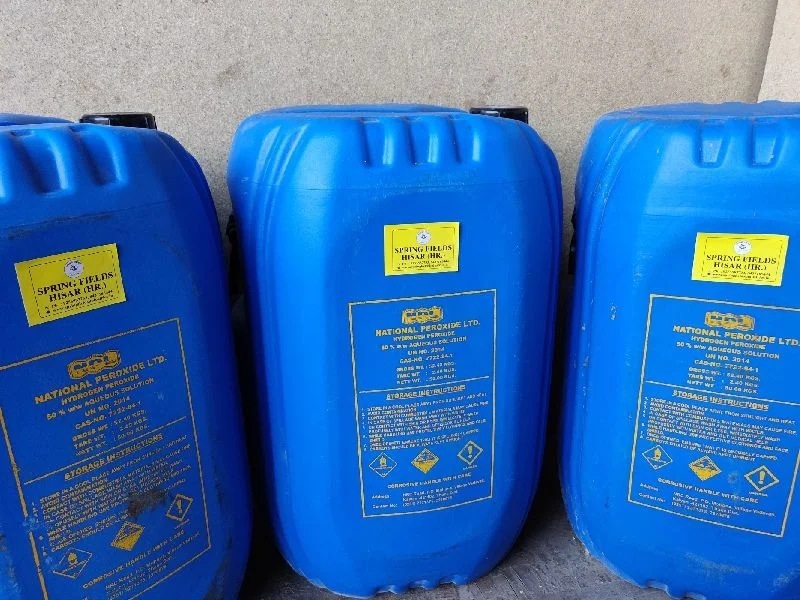
National Peroxide Ltd Q4 FY26: A Bubbly Recovery or Just Peroxide Fizz? 70% Dividend Meets a 926% Profit Surge
Date of Publishing -
Spotted a factual error — a wrong number, date, or fact? Tell us and we will check the source.
1. At a Glance
The chemical industry is often a game of “who can survive the cycle,” and National Peroxide Ltd (NPL) just pulled a Houdini. After a disastrous FY25 that saw profits evaporate faster than spilled alcohol, the company has come roaring back in Q4 FY26.
We are looking at a 926% TTM profit growth. Yes, you read that right. While the previous year felt like a slow-motion car crash involving falling realizations and skyrocketing gas prices, the latest quarter shows a management that finally got its act together—or at least benefited from the market deciding to be kind for once.
NPL is the big daddy of Hydrogen Peroxide in India. They control roughly 50% of the domestic manufacturing capacity. When you are that big, you don’t just participate in the market; you are the market. Yet, despite this dominance, the stock has been a heartbreaker for long-term holders, giving a -22% return over the last year.
The Wadia Group, which owns a massive 70.77% stake, is doubling down. They just announced a 70% dividend (Rs 7 per share), which is basically a signal to the market saying, “We still have cash, and we aren’t afraid to use it.” But here is the kicker: while the profits are soaring, the rating agencies are handing out downgrades. India Ratings recently cut them to IND A-/Negative.
Is this a classic turnaround story where the smart money buys the fear, or is the “Negative Outlook” a warning that the peroxide is losing its sting? With a Market Cap of only ₹262 Cr, this is a micro-cap play with mega-cap lineage. We’ve got a brand new CFO coming in on June 1, 2026, a demerger that has finally settled, and a valuation that is trading well below its book value.
2. Introduction
National Peroxide Limited isn’t some new-age startup trying to “disrupt” the air. These guys have been around since 1954. They are a staple of the Wadia Group, sharing the same stable as Bombay Dyeing and Britannia.
The company operates out of a massive, fully integrated plant in Kalyan, Maharashtra. Their bread and butter is Hydrogen Peroxide, a chemical used in everything from bleaching your clothes to processing paper and making other complex chemicals.
For the last two years, the story has been one of pain. Imagine being the largest producer but watching your selling price drop from ₹35/kg to ₹25/kg while the gas you use to run the plant gets more expensive. That’s exactly what happened in FY25. It was a perfect storm of operational deleverage and geopolitical mess.
However, the latest numbers suggest the bottom is in. The company has gone through a complex “Scheme of Arrangement” where the chemical business was demerged and then renamed back to National Peroxide Ltd. It’s a bit of a corporate labyrinth, but the result is a leaner entity focused strictly on the peroxide game.
The current setup is intriguing:
Promoter Skin in the Game: 70.8% holding. They aren’t going anywhere.
Capacity: 1.50 Lac MTPA. They are the 800-pound gorilla in a niche room.
The Pivot: Moving into electronic-grade chemicals to supply the tech boom.
Is this the moment the Wadia Group’s chemical arm finally stops being a laggard?
3. Business Model – WTF Do They Even Do?
If you’ve ever bleached your hair or seen a paper mill, you’ve encountered their product. NPL makes Hydrogen Peroxide (H2O2).
They use an “Auto-oxidation” process. It sounds fancy, but it basically involves reacting Hydrogen and Oxygen in a way that doesn’t blow up the factory. Since Hydrogen is a key input, they also manufacture Hydrogen Gas in-house.
Why does this business suck sometimes?
It’s a commodity. You can’t tell the difference between Wadia’s peroxide and an import from China. This means NPL is a “price taker.” If global prices fall, NPL’s margins go into the gutter.
Why is it badass?
Logistics. Hydrogen Peroxide is basically water with an extra oxygen atom; it’s heavy and expensive to transport. Being the domestic leader with a massive plant in Maharashtra gives them a “moat” of proximity to Indian textile and paper hubs.
Revenue Split:
Domestic (75%): Serving the local kings of paper and textiles.
Exports (25%): Fighting the global price wars.
They are now spending ₹200 million (₹20 Cr) to set up an Electronic Grade plant. Why? Because regular peroxide is for paper; high-purity peroxide is for semiconductors and electronics. It’s management’s way of trying to escape the “commodity” label and get some “specialty” margins.
4. Financials Overview
Let’s look at the “Before and After” of a company that just woke up from a coma. We are treating the latest March 2026 data as Quarterly Results.