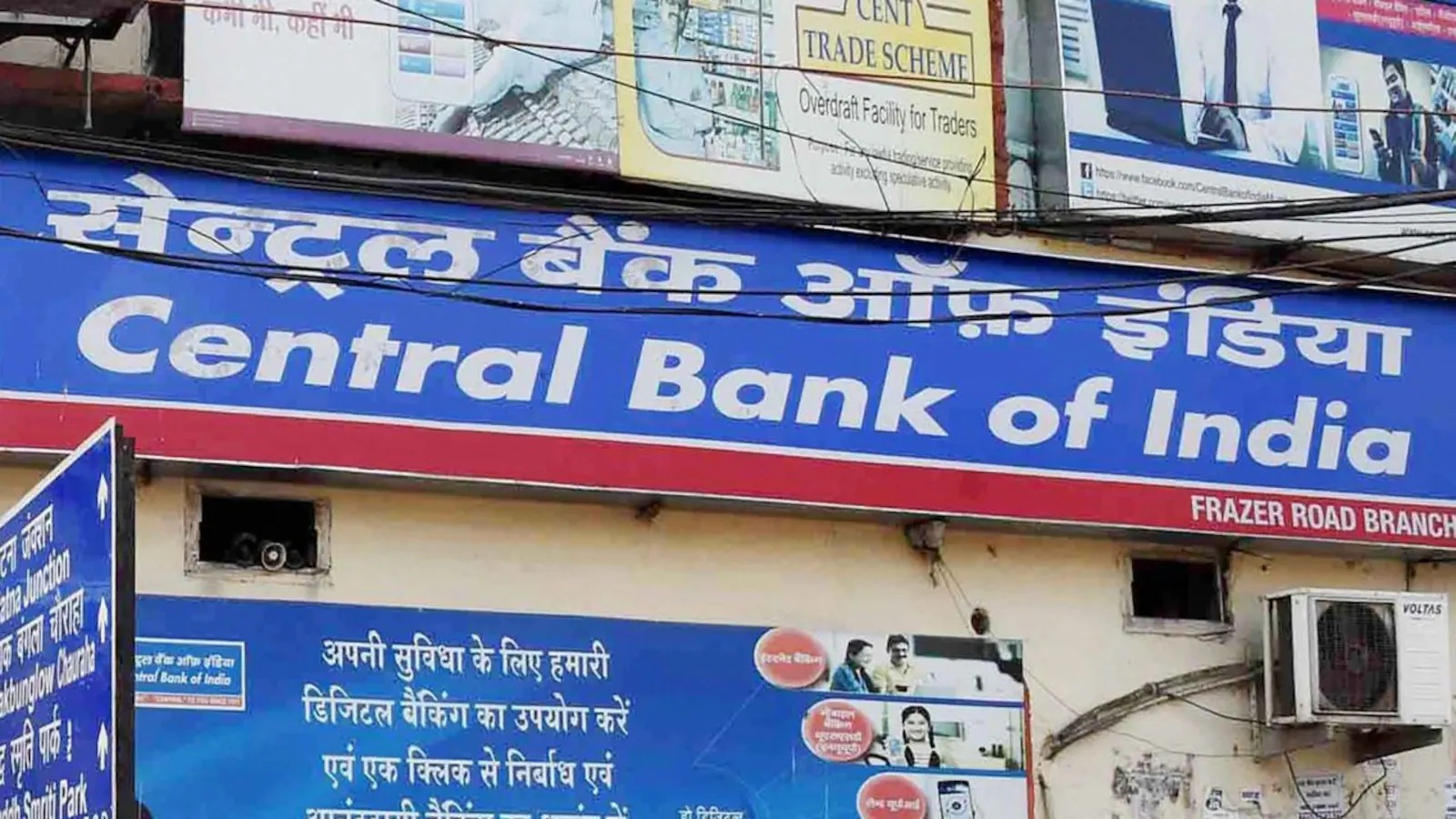
The numbers are out, and if you just look at the surface, you might think the Central Bank of India (CBI) hit a massive pothole in the final stretch. A 32.5% drop in quarterly profit? That sounds like a disaster, right? But hold your horses. In the world of high-stakes banking, things are rarely what they seem. This isn’t a story of a business failing; it’s a story of a bank cleaning up its closet while the taxman watches from the corner.
1. At a Glance
Central Bank of India just wrapped up FY26, and the headline numbers are a rollercoaster. On one hand, you have a Net Profit of ₹4,369 crore for the full year—a solid 15.43% jump from the previous year. On the other hand, the Q4 profit took a massive nosebleed, falling to ₹724 crore compared to ₹1,034 crore in the same period last year.
The culprit? A one-time accounting hit of ₹632 crore due to a change in the recognition of Deferred Tax Assets (DTA). Essentially, the bank revalued its tax benefits at a lower rate (25.168% vs 34.944%), which is like finding out your store credit is worth 10% less because the mall changed its policy.
But if you strip away that tax drama, the engine under the hood is actually revving. Total business crossed the ₹8.12 lakh crore milestone, growing at a healthy 15.6%. More importantly, the bank is finally behaving like a lender again. Gross advances are up 18.76% to ₹3.44 lakh crore, driven by a massive push in the “RAM” (Retail, Agriculture, MSME) segment.
The asset quality—the old Achilles’ heel of this institution—is looking sharper than ever. Gross NPA (Non-Performing Assets) has been hammered down to 2.67%, and Net NPA is sitting at a microscopic 0.49%. For a bank that was under the RBI’s Prompt Corrective Action (PCA) “naughty list” just a few years ago, this is nothing short of a redemption arc.
2. Introduction
Let’s be real: Central Bank of India used to be the “bad boy” of the public sector banking space, and not in a cool way. It was the bank that stayed in the RBI’s doghouse (PCA) longer than almost anyone else because its NPAs were through the roof.
Fast forward to 2026, and the transformation is palpable. The bank is no longer just surviving; it’s aggressively competing. With a massive network of 4,585 branches and over 22,000 touchpoints, it has a footprint that most private banks would kill for, especially in the rural and semi-urban heartlands of India.
Management has shifted its focus from “don’t lose money” to “let’s make money.” They are leaning heavily into digital banking, with 90% of transactions now happening through digital channels. They’ve even set up an IFSC Banking Unit in GIFT City to play in the international leagues.
However, the bank still carries the baggage of being a PSU. Efficiency is improving, but the Cost-to-Income ratio at 58.61% reminds us that there’s still plenty of fat to trim. In this article, we’ll dive into the guts of their balance sheet, roast their industry peers, and see if this bank is actually a hidden gem or just a polished relic of the past.
3. Business Model – WTF Do They Even Do?
At its core, CBI is a classic “Borrow Low, Lend High” machine. They take money from grandpas in Bihar and lend it to highway contractors or small-scale industries in Maharashtra.
The Deposit Engine
They have a massive CASA (Current Account Savings Account) ratio of 47.3%. Why does this matter? Because CASA is the “cheap fuel” of banking. While other banks are begging for expensive Term Deposits, CBI is sitting on a mountain of low-cost cash thanks to its deep rural roots.
The Lending Mix
They’ve adopted a 65:35 strategy. Roughly 65% of their loans go to the RAM segment (Retail, Agri, MSME), and 35% goes to Corporates.
- Retail: Growing at a blistering 25.67%. This is where the high-margin personal and housing loans live.
- MSME & Agri: This is their bread and butter, though it’s also where the most stress usually hides.
- Corporate: They aren’t just lending to anyone; they are targeting “green” sectors like renewables and infrastructure.
Basically, they are trying to be a modern digital bank with the soul of a 115-year-old traditional institution. It’s like your uncle suddenly learning how to trade NFTs—surprising, but surprisingly