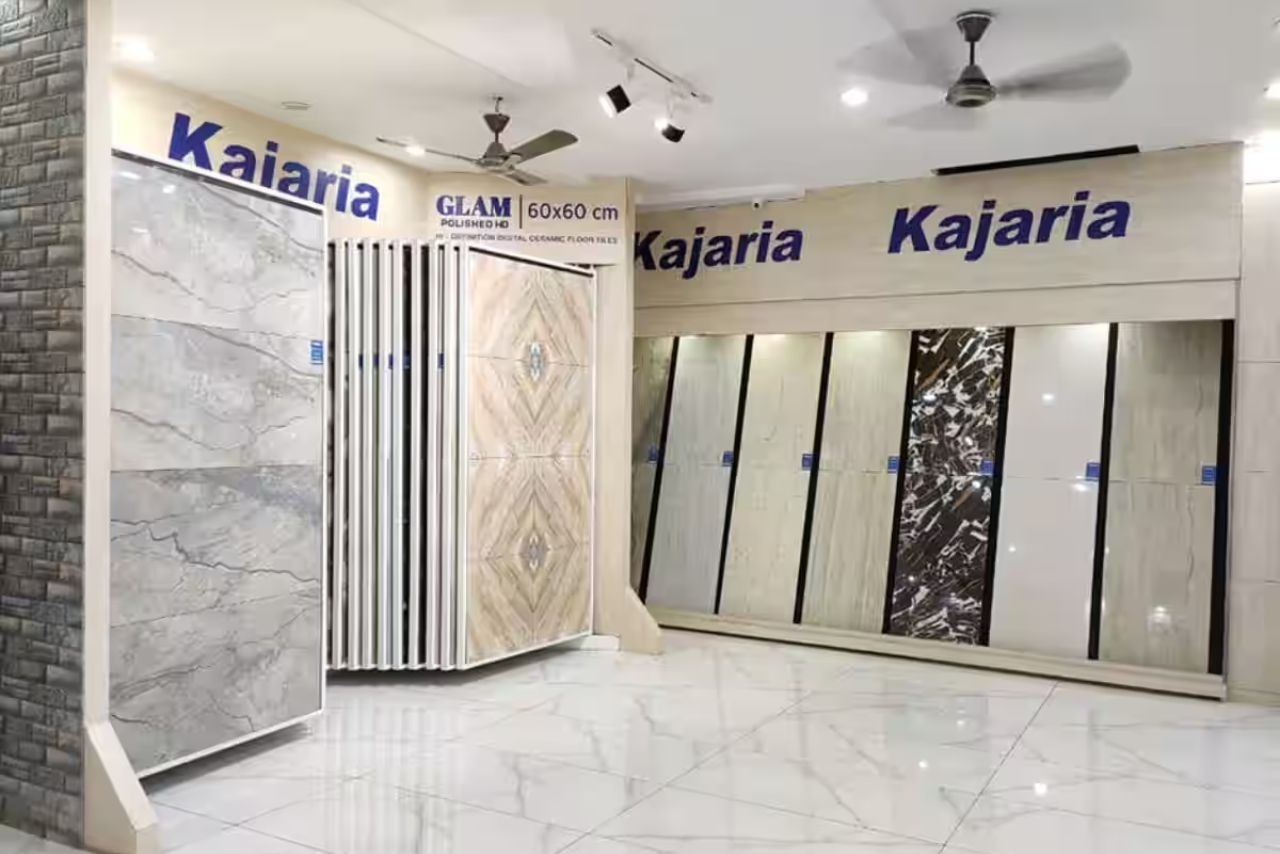
Kajaria Ceramics just dropped a financial performance bomb that has the street buzzing. While the top line is growing at a respectable 12.4%, the real story lies in the Net Profit, which skyrocketed by 118% YoY to ₹159 crore. But wait, there’s more—the board has approved a massive ₹296.7 crore buyback at a premium price of ₹1,380, signaling that the management thinks the stock is undervalued even after a 48% run in the last year.
1. At a Glance – The Porcelain Powerhouse Returns
Kajaria Ceramics isn’t just a tile company; it is a proxy for the Indian middle-class dream of a “forever home.” As the largest manufacturer in India and the 8th largest in the world, Kajaria has spent decades moving from simple clay to high-tech Glazed Vitrified Tiles (GVT). The latest results for Q4 FY26 show a company that is finally reaping the rewards of a painful but necessary internal “unification” process.
The numbers are provocative: a Profit After Tax (PAT) of ₹159 crore in a single quarter, up from ₹73 crore in the same period last year. They’ve managed this while essentially “firing” their loss-making plywood business and focusing on what they do best—selling tiles, bathware, and adhesives. The management is so confident in their cash generation that they are returning nearly ₹300 crore to shareholders via a buyback, even as they announce a fresh 10 MSM expansion at Srikalahasti.
But it hasn’t been all smooth sailing. The company recently navigated a “fraud incident” in a subsidiary, leading to a forensic audit by Ernst & Young. In a move that sounds like a plot from a corporate thriller, the CFO revealed that internal controls have been tightened so much that now “even the Chairman cannot sign off on ₹10,000” without the new protocols. This “Auditor-style” transparency is exactly what the market needed to see.
2. Introduction – The Ceramic Comeback
Kajaria Ceramics stands at a fascinating crossroads in FY26. For the uninitiated, the tile industry in India is a brutal battleground between “Branded” players like Kajaria and Somany, and the unorganized “Morbi” cluster in Gujarat. For years, Morbi players have undercut prices, but the tide is turning.
The company is currently undergoing what management calls “Kajaria 2.0.” This isn’t just marketing fluff; it involves a massive restructuring of their 1,800+ dealer network. Previously, a dealer might only sell one type of tile; now, Kajaria is forcing a “One Stop Shop” model where dealers must cross-sell ceramic, GVT, and PVT.
This transition caused some “friction” in the earlier quarters of FY26—flat volumes and dealer churn—but the Q4 results suggest the engine is finally firing on all cylinders. With an Operating Profit Margin (OPM) hitting 19% in the latest quarter, Kajaria is proving that it can maintain premium pricing even when the industry is facing headwinds from high gas prices and export disruptions in the Red Sea.
The company is also aggressively expanding into the Adhesives and Bathware segments, aiming to capture a larger share of the “home completion” wallet. If you’re buying their tiles, why not buy their glue and their faucets too? It’s a classic ecosystem play, executed with the precision of a market leader.
3. Business Model – WTF Do They Even Do?
If you think Kajaria just bakes mud in an oven, you’re stuck in the 1990s. They are essentially a brand and distribution machine that happens to manufacture tiles.
The Product Mix:
- Tiles (88% of Revenue): This is the bread and butter. They make everything from basic ceramic wall tiles to massive 8×4 feet “slabs” that look like Italian marble but cost a fraction of the price.
- Bathware (Kerovit): Sanitaryware and faucets. They are moving from “value” to “premium,” recently taking an 8–12% price hike in faucets to counter brass inflation.
- Adhesives: The new kid on the block. It’s a high-margin, sticky (pun intended) business that leverages their existing tile dealer network.
- The “Ply” Ghost: They recently killed their Plywood business. It was a loss-making distraction that didn’t fit the strategic mold. They took a ₹112 crore hit to write it off, showing they have the guts to cut off a gangrenous limb to save the body.
How they sell:
They use a mix of Own Manufacturing (56%), Subsidiaries (19%), and Outsourcing (25%). This “Asset-Light-ish” model allows them to scale up during booms without drowning in fixed costs during busts. If demand spikes, they just buy more from