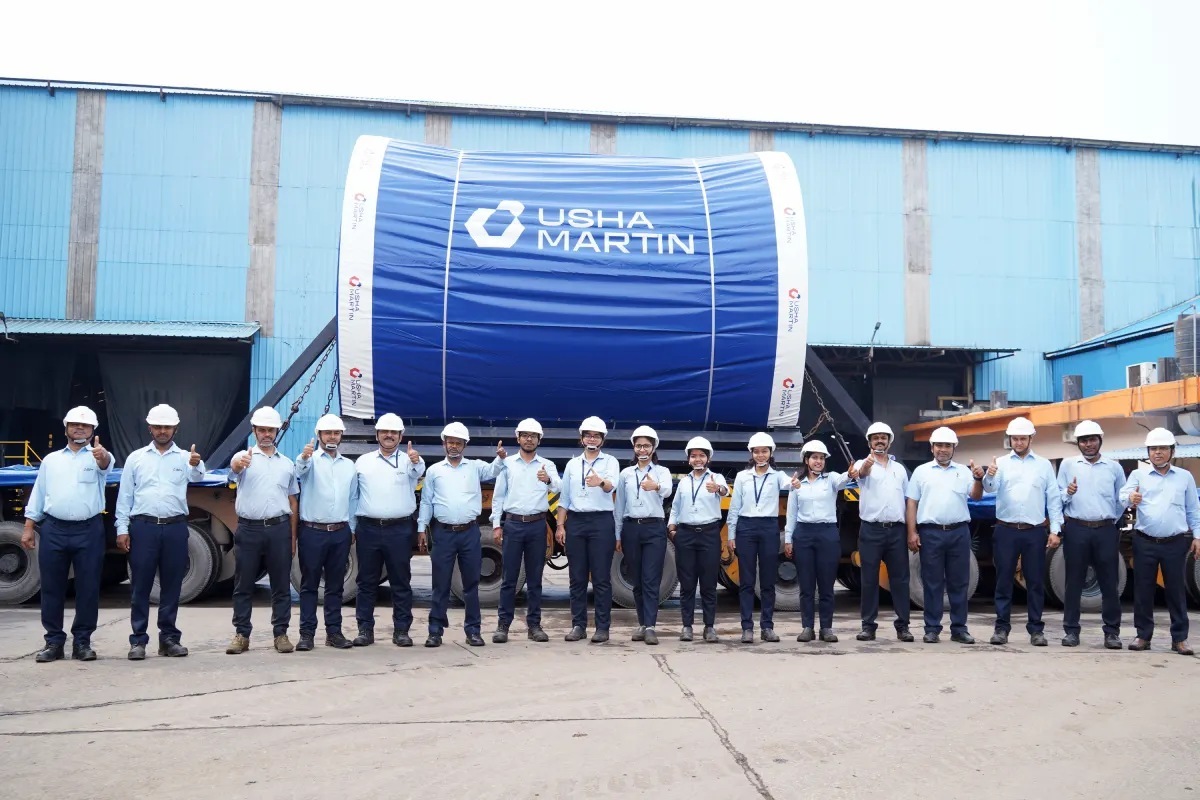
1. At a Glance – The Rope That Quietly Became Gold
There are companies that scream growth. And then there are companies that quietly tighten their grip on profitability while nobody is watching.
Usha Martin falls into the second category.
At first glance, this looks like a boring industrial business. Steel wires. Ropes. Strands. Nothing glamorous. No AI, no fintech, no buzzwords. Just metal twisted into shape.
But dig deeper, and something unusual emerges.
In Q4 FY26, the company reported ₹979 crore revenue and ₹212 crore EBITDA — the highest quarterly EBITDA since exiting its steel business. Margins expanded sharply to 21.6% from 15.6% YoY. That is not a small improvement. That is a structural shift.
Even more interesting?
The company has moved from net debt to net cash of ₹332 crore, while generating ₹457 crore free cash flow, nearly 2.5x growth YoY.
Now pause for a second.
How often do you see:
- A capital goods company
- With global exposure
- Improving margins
- Becoming debt-free
- AND increasing free cash flow
All at the same time?
Exactly.
But here is where things get interesting — and slightly uncomfortable.
Despite all this:
- Sales growth over 5 years is only ~12% CAGR
- Volume growth is deliberately muted
- Promoter holding has been declining
- And there is a CBI + ED case hanging like a shadow
So what exactly is happening here?
Is this:
- A disciplined capital allocator building a high-margin niche business?
OR - A company sacrificing growth to protect margins — and hoping nobody notices?
And most importantly…
Is this a steady compounder… or a well-dressed stagnation story?
Let’s break it down piece by piece.
2. Introduction – From Steel Chaos to Precision Engineering
Usha Martin was not always this “clean”.
Before 2019, it was a vertically integrated steel + wire business. Heavy, debt-laden, cyclical. The kind of structure that destroys balance sheets in downturns.
Then came the big move:
- Steel division sold
- Focus shifted entirely to value-added wire ropes
That one decision changed everything.
Post this:
- Margins improved
- Debt reduced sharply
- Business became asset-light (relatively speaking)
Today, Usha Martin operates as a specialty engineering company, not a commodity steel player.
And that distinction matters more than you think.
Because:
- Commodity businesses fight on price
- Engineering businesses compete on specifications
One bleeds margins. The other protects them.
Management has clearly chosen the second path.
They are now:
- Prioritizing elevator ropes, crane ropes, offshore ropes
- Avoiding low-margin generic products
- Accepting lower volumes in exchange for higher