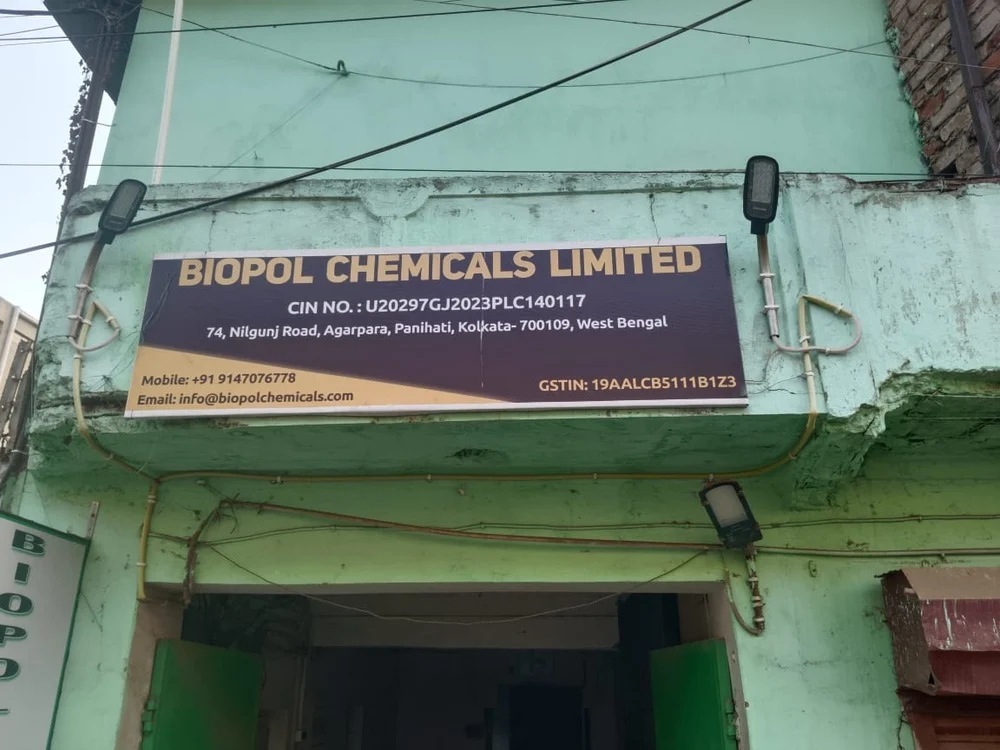
1. At a Glance – The Curious Case of a Fast-Growing Smallcap
A company barely born in 2023. Listed in February 2026. Already showing ₹81 crore revenue and ₹8.97 crore profit. On paper, this looks like the kind of SME story that makes early investors feel like geniuses.
But here’s where things get interesting.
Revenue grew 65%, profit grew 107%, margins expanded, and return ratios look impressive — ROE at 28%, ROCE at 34%. These are not just decent numbers; these are the kind that make screens light up in green.
Now pause.
Despite all this growth, the company has negative operating cash flow of ₹12.77 crore.
Yes, you read that right. The business is making profits… but burning cash.
So what exactly is happening here?
Is this:
- A classic working capital-heavy chemical business scaling aggressively?
- Or a young company growing faster than its financial discipline?
And more importantly — are these profits real in terms of cash?
The company operates in specialty chemicals — a sector where giants trade at 40–60x P/E. Meanwhile, Biopol sits quietly at 14x P/E, almost looking undervalued.
But markets are rarely that generous without reason.
Let’s dig deeper.
Because this is not a simple “growth story.”
This is a puzzle.
2. Introduction – A Startup That Jumped Straight to the Stock Market
Biopol Chemicals is not your typical decades-old manufacturing company.
It was incorporated in 2023, and within barely 3 years, it:
- Built a product portfolio of 66 specialty chemicals
- Achieved ₹81 crore annual revenue
- Raised ₹30 crore through IPO
- Listed on NSE SME platform in February 2026
That’s a fast-track journey.
Almost suspiciously fast.
The company operates in:
- Silicones
- Emulsifiers
- Biochemicals
- Polyelectrolytes
And sells primarily to:
- Textile companies (63% revenue)
- Home care
- Industrial applications
- Agriculture
Now here’s a key detail — 89.5% revenue comes from repeat customers.
This suggests:
- Strong relationships
- Product stickiness
- Possibly consistent quality
Or… heavy dependence.
Would you feel comfortable if nearly 90% of your revenue depends on existing customers?
Because loyalty is great — until it becomes concentration risk.
Geographically, the company is even more concentrated:
- 87.5% revenue from West Bengal
- 12% from Bangladesh exports
So essentially:
- One region
- One dominant sector (textiles)
- One young company
And yet, it’s already showing strong profitability.
The question is simple:
Is this focused execution… or limited diversification?
3. Business Model – WTF Do They Even Do?
Let’s simplify this.
Biopol makes chemicals that help other industries function better.
They don’t sell directly to consumers. Instead, they sell to businesses that: