1. At a Glance – When Science Meets Stock Market Reality
There are companies that tell a story of innovation. And then there are companies where innovation sounds exciting… but the numbers quietly whisper something else.
Syngene International sits exactly at that uncomfortable intersection.
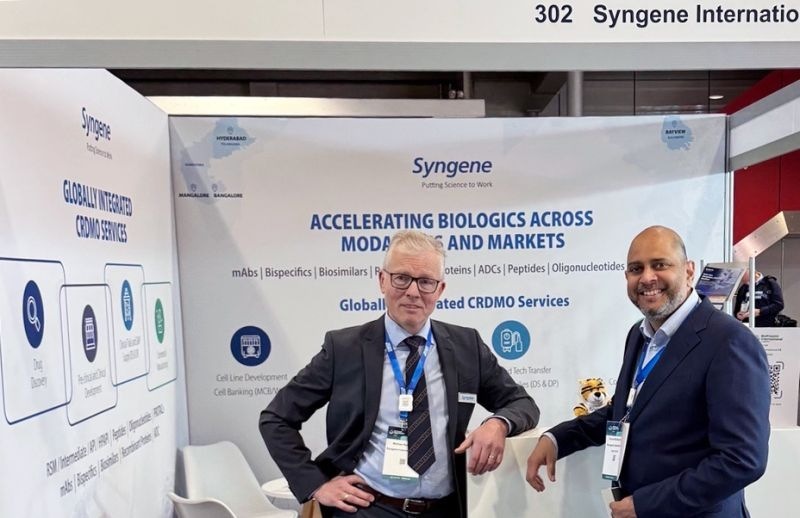
On paper, this is one of India’s most sophisticated biotech outsourcing platforms — a CRAMS (Contract Research and Manufacturing Services) powerhouse working with global pharma giants. It has 400+ clients, partnerships with 13 of the top 15 global pharma companies, and over 5,700 scientists solving problems most investors can’t even pronounce. Sounds elite.
But here’s where the plot twists.
FY26 revenue grew just 3% to ₹3,739 crore, while PAT dropped 20% YoY to around ₹380 crore (before exceptional items) . Margins shrank. Growth slowed. And yet, the market still values this company at a P/E of ~50 .
So the real question is:
Are we looking at a temporary biotech hiccup… or a structural slowdown hiding behind complex science?
Because when a company with world-class clients and infrastructure struggles to grow, it’s rarely “just one bad quarter.”
Dig deeper, and you find something more concerning — dependence on a single product from a single client that disrupted earnings significantly. Management admitted it. Repeatedly.
Even more interesting?
That impact is expected to continue into FY27.
So this is not a one-off accident. It’s a business model stress test.
At the same time, Syngene is aggressively expanding — US biologics facility, new labs, acquisitions, partnerships. Capital is being deployed heavily.
Which leads to a classic dilemma:
Is Syngene investing for the future… or overbuilding ahead of demand?
And here’s the irony — while the company is busy “putting science to work,” investors are left wondering:
Why isn’t the science translating into consistent profits?
Let’s break this down layer by layer.
2. Introduction – The Biotech Middleman Nobody Talks About
Syngene isn’t a pharma company. It doesn’t invent blockbuster drugs and sell them to patients.
Instead, it plays a quieter but critical role — it helps others do that.
Think of it as the “outsourced brain + factory” for global pharma companies.
- Want to discover a drug? Syngene helps.
- Need clinical trials? Syngene runs them.
- Want manufacturing at scale? Syngene builds it.
It is essentially a one-stop platform from molecule discovery to manufacturing.
This business model is called CRAMS — and globally, it’s a huge opportunity.
Pharma companies increasingly outsource because:
- R&D is expensive
- Drug failure rates are high
- Speed matters more than ever
So instead of building