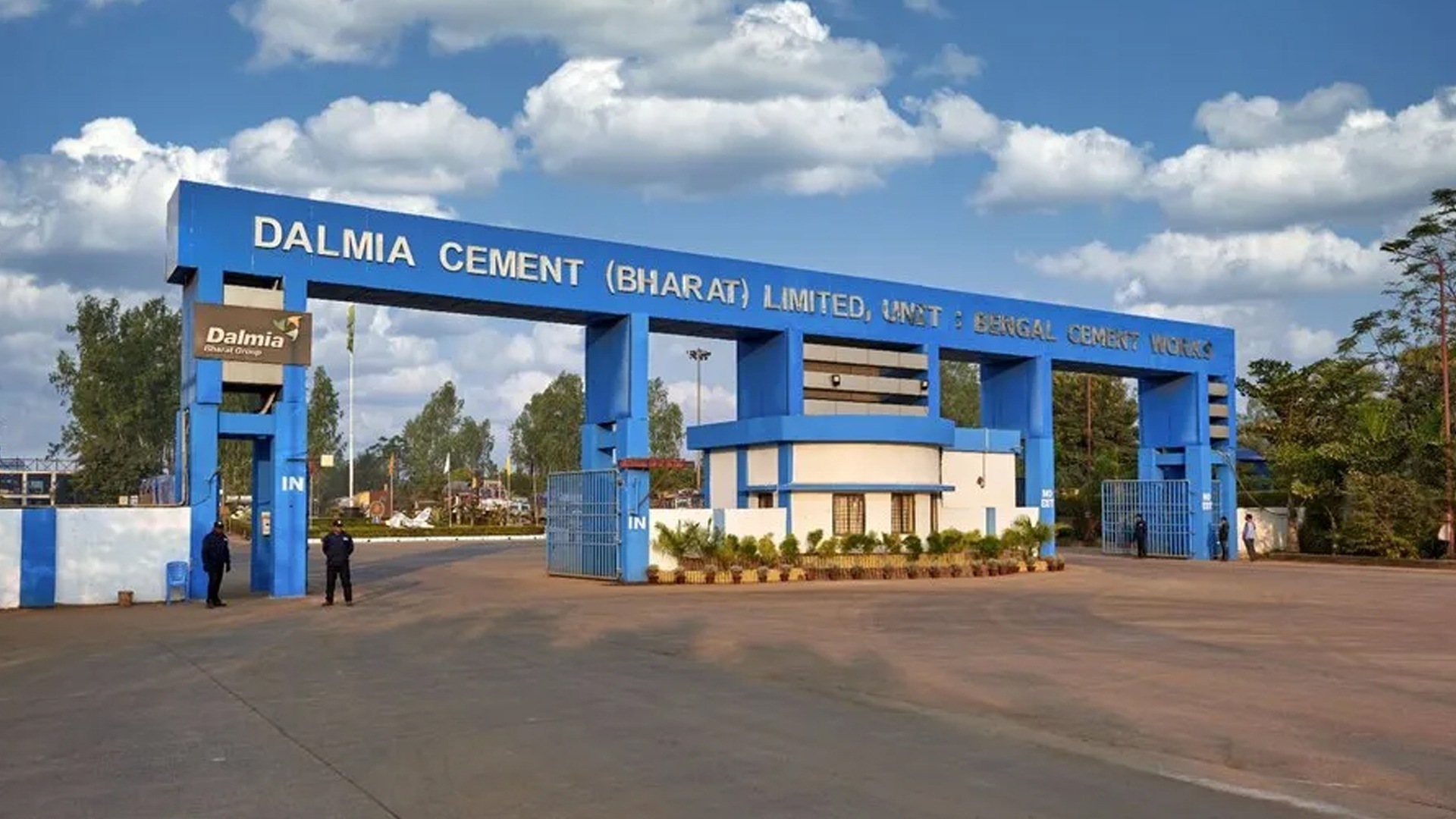
1. At a Glance
A strange thing happened at Dalmia Bharat this year.
Volumes barely moved.
Revenue rose only modestly.
Yet profits exploded.
That usually does not happen in cement unless one of two things is true:
Either management has suddenly found religion in cost discipline.
Or a cycle is quietly turning before the market fully notices.
FY26 numbers suggest perhaps a bit of both.
Revenue rose 5.9% to ₹14,804 crore while EBITDA jumped 28% to ₹3,083 crore. Profit after tax surged 65% to ₹1,157 crore. More importantly, EBITDA per ton moved from ₹820 to ₹1,027 — a 25% jump.
Pause there.
In cement, this is the number.
Not revenue.
Not headline profit.
This.
Because cement can seduce investors with volume growth while quietly destroying economics.
But when unit economics improve this sharply, something deeper may be shifting.
Dalmia’s story has always been sold around three words:
Cost.
Capacity.
Compounding.
For years, critics argued only the second existed.
Capacity additions kept coming.
Returns often did not.
Now management is trying to show all three are arriving together.
Installed cement capacity stands at 49.5 MnT, with expansion to 61.5 MnT underway and 75 MnT targeted by FY28. Longer ambition? 110–130 MnT by FY31.
That is not expansion.
That is imperial ambition.
Question is:
Will this become an UltraTech-style compounding machine…
Or a beautifully engineered empire with average returns?
That remains the investment puzzle.
There is intrigue.
Because beneath boring cement bags sits a company attempting multiple transformations simultaneously:
- Raising trade share
- Premiumizing mix
- Expanding renewables
- Driving ₹150–200 per ton cost savings
- Growing in East and Northeast where profitability can be structurally superior
- Maintaining net debt/EBITDA only 0.46x despite capex aggression
That last number matters.
Usually capex stories arrive carrying debt bombs.
This one, so far, comes with a balance sheet.
Then there is the legal overhang.
The ED attachment cloud that once looked ugly has shrunk dramatically.
Alleged proceeds of crime reduced roughly 90%.
Attached land released.
Sometimes de-risking hides in legal footnotes.
Could the market be underestimating what reduced uncertainty plus rising EBITDA/ton can do together?
Or is the market right in valuing this at ~31x earnings while ROCE is still only 8.2%?
That is where this gets interesting.
Because this may not be a simple cement company debate.
This is a debate about whether a low-cost operator can become a high-return compounder.
Very different thing.
And one often far more valuable.
2. Introduction
Dalmia Bharat has been around since 1939.
Which in Indian corporate terms means it has survived empires, licenses, reforms, cycles, and probably several finance ministers.
Yet despite legacy, the market has often treated it as a “maybe.”
Never quite given the premium of the dominant giants.
Never discounted enough to be obvious value.
Stuck in valuation purgatory.
This year may have changed that debate.
Because FY26 was not merely stronger earnings.
It was evidence management may actually be executing what it has been promising.
Go back to old commentary.
Management spoke repeatedly of:
- Cost leadership
- Higher blended cement share
- Renewable energy advantage
- Direct dispatch efficiencies
- Premium product mix
- Trade share normalization
Many companies give these speeches.
PowerPoint is a large industry.
But FY26 showed operating evidence.
Logistics costs reduced.
Power and fuel held.
Renewable capacity scaled.
Trade share improved.
EBITDA/ton crossed ₹1,000.
That is walking the talk.
Not perfectly.
But visibly.
Yet skepticism remains justified.
Why?
Because despite better profitability:
ROCE remains 8.2%.
ROE 6.56%.
P/E 31.
That combination is unusual.
High valuation.
Average returns.
Investors are effectively underwriting future