1. At a Glance – A Distillery Printing Cash, Or A Quiet Trap Wearing a Dividend Cap?
There are companies that grow loudly. Then there are companies that quietly compound while nobody pays attention.
And then there is G M Breweries.
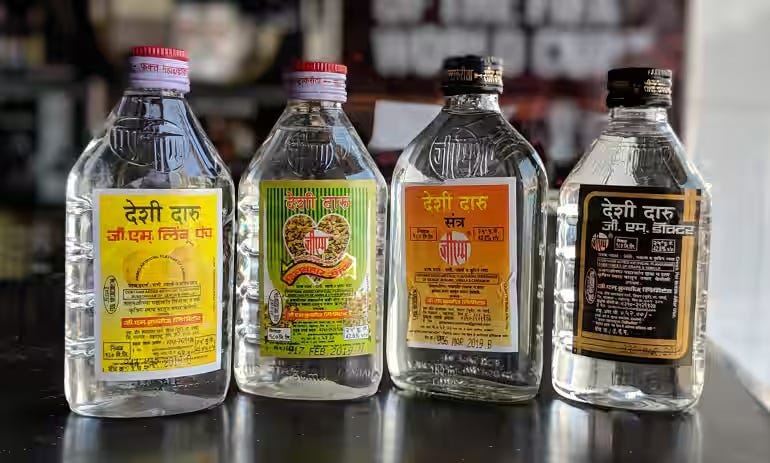
A liquor company selling country liquor — not premium whisky narratives, not fancy craft gin stories, not aspirational urban branding — plain, regulated, excise-heavy country liquor. Hardly the stuff around which multibagger folklore gets written.
Yet the numbers raise eyebrows.
Revenue has climbed to ₹748 crore in FY26 from ₹307 crore in FY15. PAT has moved from ₹19 crore to ₹157 crore. Operating margin jumped to 24%. Debt? Zero. Cash and investments? Massive. Return on capital? 18%. Annual EPS ₹68.64. P/E just 17.5.
Something does not fit.
Why does a debt-free monopoly-like business with high cash generation trade at such pedestrian valuations while premium liquor peers trade at two to five times the multiples?
That is where the detective work begins.
Because this is not merely a liquor business.
This is part excise annuity.
Part controlled monopoly.
Part hidden investment company.
Part regulatory hostage.
And every one of those parts deserves scrutiny.
The company contributes roughly 25-30% of Maharashtra’s country liquor excise collections. Think about that. In some ways, the government is almost an economic partner. That creates resilience — and risk. Governments can be wonderful customers until they become regulators. Sometimes both on the same day.
Then there is the balance sheet oddity.
Investments at ₹570 crore. Investment property. Cash-rich. No debt. For a company with market cap around ₹2,208 crore, those investments are not decoration — they matter.
Strip that out mentally, and the operating liquor business may be cheaper than headline valuation suggests.
Interesting.
But then comes the first red flag.
Operating cash flow in FY26 turned negative ₹96 crore despite profits rising. That deserves raised eyebrows, not applause. Was it working capital? Timing issue? Inventory build? One-off? This needs watching.
Second red flag:
Country liquor monopoly sounds beautiful until you remember monopolies created by regulation can also be disrupted by regulation.
Third:
The PET bottle legal overhang remains alive.
Fourth:
Dividend payout remains modest despite cash.
So what exactly is this?
Cheap compounder?
Regulatory cigar butt?
Hidden value stock?
Or sleepy business that looks safe until taxation policy changes ruin everyone’s party?
Question for readers:
When a debt-free monopoly trades cheaper than weaker peers, is market stupid… or cautious for a reason?
That is the puzzle.
And puzzles are where investing gets interesting.
2. Introduction
Let us be honest.
Most investors would ignore a company called G M Breweries before even reading page one.
Mistake.
Sometimes the boring businesses hide the strongest economics.
The company dominates country liquor in Mumbai, Thane and Palghar, with manufacturing capacity of 13.76 crore bulk litres and only ~55.74% utilization. That last part matters. Growth can come without heroic