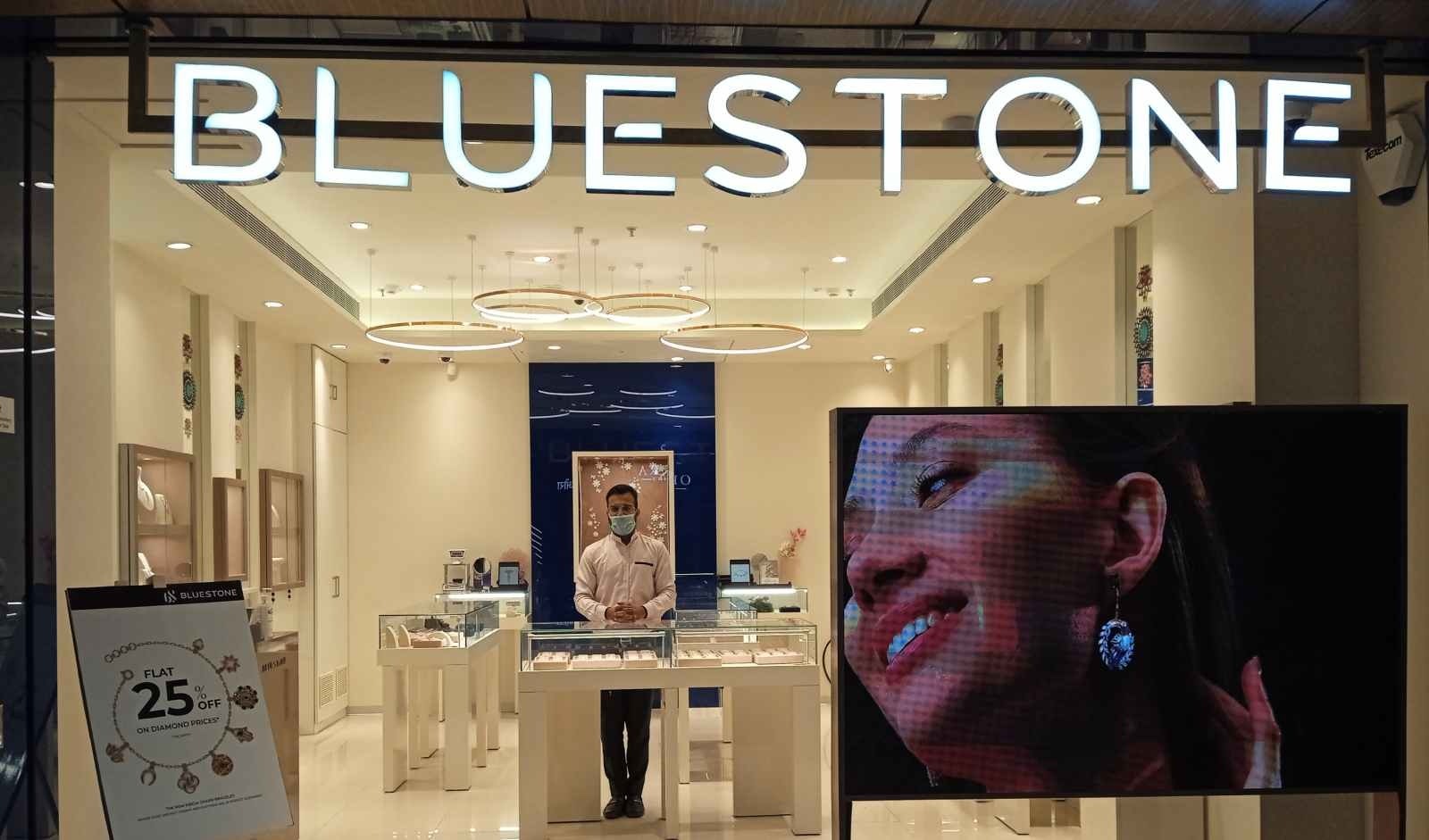
1. At a Glance — The Jewellery Startup That Walked Into Titan’s Party
What exactly is BlueStone becoming?
A tech company pretending to be a jeweller?
A jeweller pretending to be a tech platform?
Or a loss-making IPO that accidentally discovered profits?
That is where this gets interesting.
For years BlueStone looked like a classic Indian startup script:
Raise capital.
Burn capital.
Open stores.
Talk “omnichannel.”
Call losses “investments.”
And suddenly…
Revenue up 38% in FY26.
Operating margin from 1% to 7.4%.
PAT positive.
Net debt collapsing.
65 stores added.
340 stores now.
That is not cosmetic improvement. That is operating leverage showing up.
And management, for once, may have actually walked the talk.
Remember Jan concall? Management said Q3 was “inflection”, margins had “fair runway”, December exit trends suggested acceleration into Q4.
Q4 came.
Revenue up 49%.
Exactly what they promised. Rare species spotted: management credibility.
But before we crown it the next Titan Company, look at the drama:
- Stock P/E 559.
- Promoters own just 16%.
- 37% promoter pledge.
- Inventory days 700. Seven hundred.
- Working capital days ballooned from 39 to 138.
That last one screams:
“Growth is great. But somebody is financing the wedding.”
This company sells jewellery for the wardrobe, not the locker.
Interesting twist.
Traditional jewellers sell gold weight.
BlueStone sells design.
Traditional jewellers depend on weddings.
BlueStone is betting on Instagram.
This could be genius.
Or fashion with debt.
Question for readers:
Is this the early-stage compounding story the market sees…
Or just expensive sparkle?
Keep reading.
2. Introduction — This Isn’t Your Father’s Jeweller
Indian jewellery usually means:
Wedding.
Dowry.
22 karat.
Heavy necklace.
Store owner giving chai.
BlueStone said:
No, let’s make jewellery behave like fashion.
That sounds stupid.
Until you notice daily-wear jewellery may actually have better repeat economics than wedding gold.
That is the bet.
And they’ve built around it:
- 9,900+ designs
- 95%+ in-house production
- 54.5% repeat revenue
- 340 stores
- 134 cities
That repeat ratio is quietly monstrous.
Half your sales coming back without reacquiring customers?
Retail guys would sell kidneys for that.
And here’s where it gets fun.
Most jewellery chains fight for weddings.
BlueStone went after “wardrobe jewellery.”
Essentially:
“What if earrings behaved like handbags?”
Ridiculous?
Maybe.
Profitable?
Possibly.
And unlike many IPO stories, scale seems improving economics.
Usually Indian IPO pitch:
“We lose money today but profits later.”
BlueStone:
Actually delivered first profits.
Very suspicious behavior.
I like suspiciously good numbers more than suspiciously bad ones.
3. Business Model — WTF Do They Even Do?
Think of BlueStone as:
Half Titan Company CaratLane cousin,
Half fashion-tech retailer,
Half jeweller.
Yes that is three halves.
Welcome to startup math.
Model:
1. Design-led retail
High studded mix.
Higher margins than commodity gold.