1. At a Glance
There are companies that quietly make nuts and bolts. Then there are companies that make the machines that keep the entire country’s electricity system alive. Transformers & Rectifiers India Ltd, better known as TARIL, belongs to the second category.
This is not a boring wires-and-metal business anymore. This is a company sitting in the middle of India’s power transmission boom, renewable energy expansion, railway electrification, industrial capex revival, and the great government obsession called Viksit Bharat 2047.
TARIL has gone from being a sleepy transformer manufacturer to a business that now has a market cap of more than ₹9,100 crore, an unexecuted order book of ₹5,005 crore, inquiries under negotiation of more than ₹23,000 crore, and a dream of becoming a US$1 billion revenue company in the next three years.
But this is also where things get interesting.
The company has reported FY26 consolidated revenue of ₹2,509 crore and PAT of ₹272 crore. Revenue is still growing at more than 24%, but margins have become a little shaky. Q4 PAT growth was actually negative on a YoY basis despite higher revenue. EBITDA margin slipped from 17.5% in Q4 FY25 to 15% in Q4 FY26.
Meanwhile, management has seen some turbulence at the top. The CEO resigned in January 2026. Then the CFO resigned in March 2026. The new MD & CEO is Satyen Mamtora, while Mehul Shah has taken over as CFO.
That is not all.
The company also had a brief World Bank debarment drama related to an old Nigeria order worth USD 24.74 million. The market panicked. Then the World Bank removed the company from the debarred list. Investors relaxed. The stock, however, still remains down nearly 42% over the last year.
This is what makes TARIL fascinating.
On one side, it has huge demand, huge order books, strong government tailwinds, improving credit ratings, backward integration plans, and capacity expansion.
On the other side, it has working capital headaches, rising debt, promoter pledge of 21.8%, falling promoter holding over the last three years, and a stock that behaves like it drank five cups of coffee before market opening.
The question is simple.
Is TARIL becoming India’s next electrical equipment giant?
Or is it becoming too ambitious too fast?
2. Introduction
India’s transformer industry has suddenly become fashionable.
For years, investors ignored transformer companies because they were seen as low-margin engineering businesses with messy balance sheets, government clients, delayed payments, and endless working capital pain.
Then renewable energy happened.
Then transmission corridors happened.
Then substations, grid upgrades, green hydrogen, railways, industrial capex, solar parks, and power evacuation infrastructure all happened together.
Now everyone wants transformers.
Suddenly, transformer companies are trading at valuations that look like software companies wearing a hard hat.
TARIL is one of the biggest beneficiaries of this cycle.
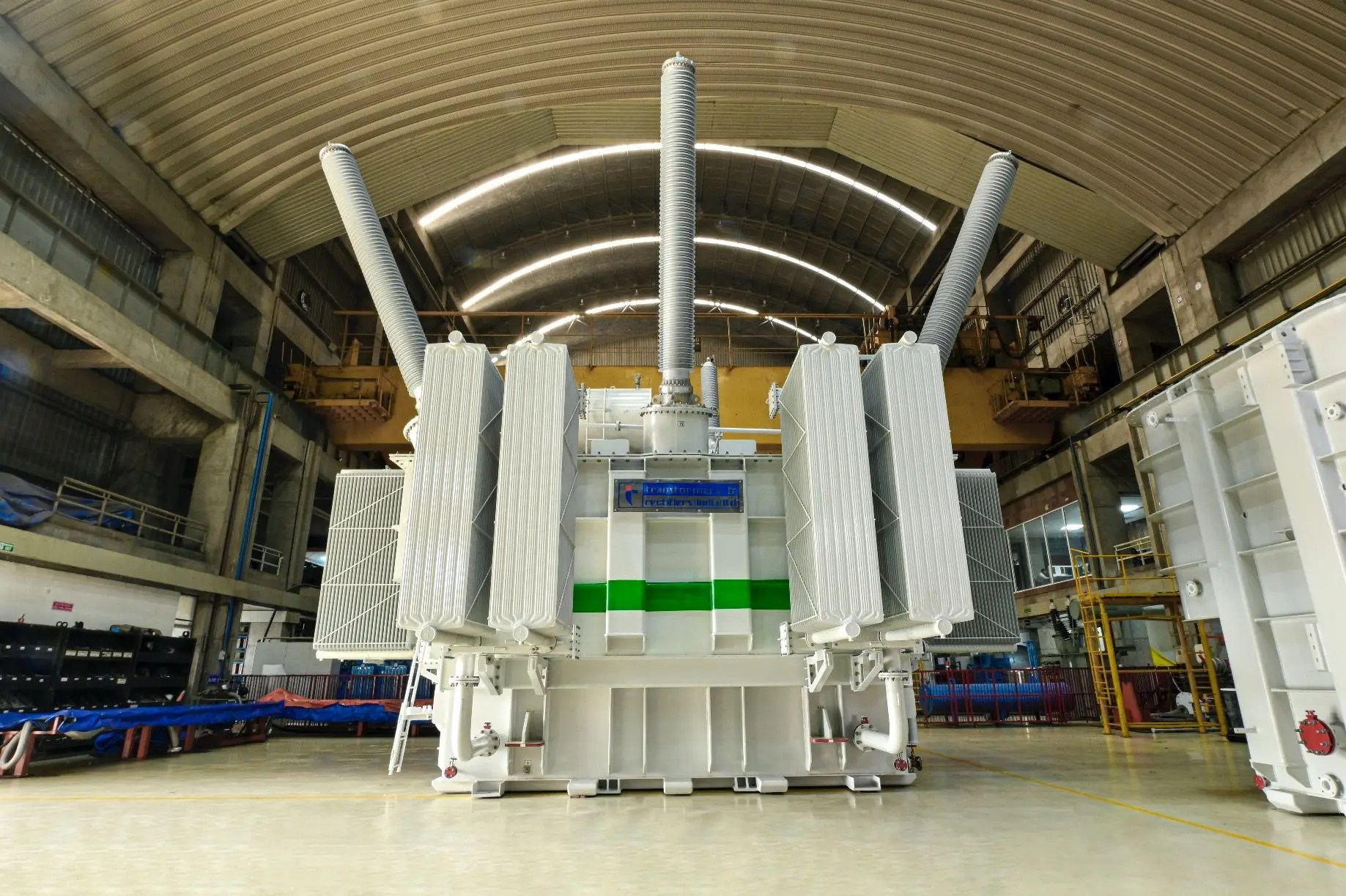
The company is India’s second-largest transformer manufacturer by capacity. It currently has around 40,000 MVA capacity, which management plans to increase to around 75,000 MVA through expansion at Changodar and Moraiya.
The company manufactures everything from power transformers to furnace transformers, reactors, mobile substations, specialty transformers, solar application transformers, and even green hydrogen application transformers.
Its clients include some of the biggest names in Indian power and industry: Power Grid, NTPC, Tata Power, Torrent Power, Siemens Energy, JSW, Hindustan Zinc, GETCO and many more.
The real attraction here is not just the existing order book.
The real attraction is the visibility.
Management says it has more than ₹23,000 crore worth of inquiries under negotiation. That is almost nine times FY26 revenue.
The company is also being selective with new orders. During the January 2026 concall, management openly said it is deliberately delaying some order bookings because it wants better margins, better payment terms, and shorter execution cycles.
That is unusual.
Most companies say yes to every order like a college student saying yes to every internship opportunity.
TARIL is trying to be more disciplined.
But discipline has a cost.
It can slow growth temporarily. It can also frustrate investors expecting explosive order inflows every quarter.
The stock market loves speed.
Management is talking about patience.
Let us see whether both can coexist.
3. Business Model – WTF Do They Even Do?
TARIL manufactures transformers and reactors.
That sounds simple until you realize there are about twenty different types of transformers, each with different uses, customers, technical requirements, and profit margins.
The company’s biggest category is power transformers, which are used in high-voltage electricity transmission networks.
Then there are furnace transformers, which are used in steel plants and industrial furnaces. These are risky and technically demanding because if a furnace transformer fails, the entire production line can shut down.
Then there are rectifier transformers used for converting AC to DC current in industries like electroplating and metal refining.
Then there are specialty transformers for railways, renewable energy, locomotives, solar applications, and even green hydrogen projects.
The company also makes shunt reactors and series reactors, which help stabilize transmission systems.
In simple words, if India is building power plants, transmission lines, railways, solar parks, substations, factories, refineries, steel plants, or industrial projects, there is a good chance TARIL is supplying something.
Its business is largely B2B and project based.
That means orders are large, payment cycles are slow, margins can fluctuate, and working capital is always a headache.
The company’s