1. At a Glance – The IPO That Came Out of Nowhere
A company born in May 2023, selling smartphones like your neighborhood mobile shop, suddenly shows up in 2026 asking for ₹28 crore from public markets at a valuation of over ₹100 crore. Sounds normal? Of course not.
Here’s the spicy part:
Revenue jumps, profits magically appear, margins look decent, and ROE screams “high-quality business”… but wait… this entire story is just 2 years old.
Even more interesting:
- FY24: basically zero
- FY25: suddenly profitable
- FY26 (9 months): even better
And right before IPO? Boom — strong numbers.
Classic coincidence or well-timed financial glow-up?
Add to that:
- Highly competitive business (selling phones… seriously?)
- No moat
- Heavy dependence on mobile sales (97% revenue)
- And “low capital requirement” — the most overused phrase in IPO documents
Now the real question:
Are you investing in a growing retail chain… or a perfectly dressed IPO candidate?
2. Introduction – The “Startup” That Wants Public Money
Let’s set the stage.
Mehul Telecom is not Reliance Digital.
It’s not even a regional giant like Poorvika Mobiles.
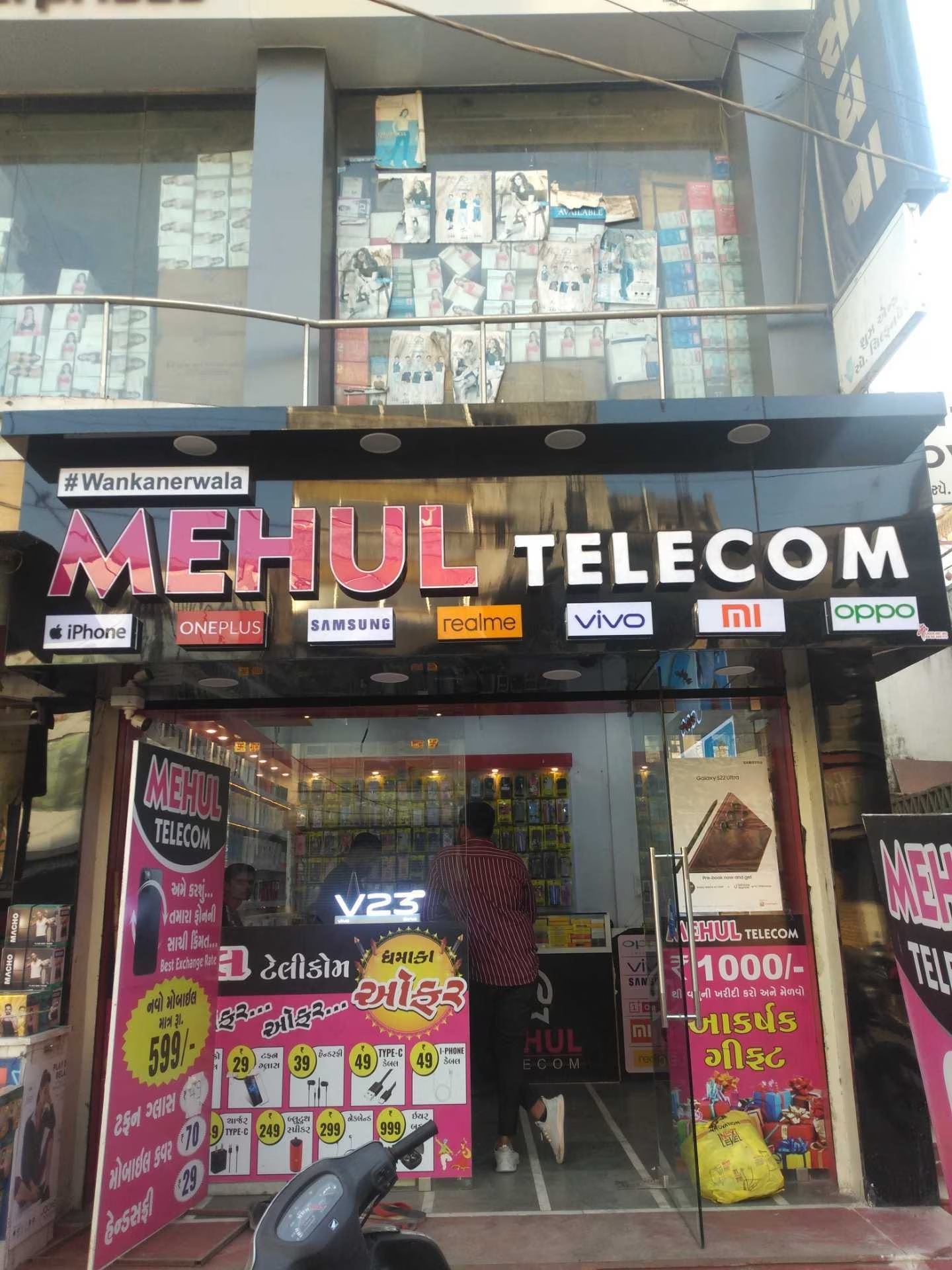
It’s essentially a multi-brand mobile retail chain in Gujarat, operating through:
- COCO (Company Owned, Company Operated)
- FOFO (Franchisee Owned, Franchisee Operated)
Translation:
They sell smartphones, accessories, and gadgets — just like thousands of other shops across India.
And here’s the twist — this isn’t a legacy business.
This company is barely 2–3 years old.
Yet somehow:
- It already has IPO-ready financials
- Strong ROE
- Clean margins
- And a valuation pitch ready
Sounds too smooth, doesn’t it?
Also, workforce?
27 employees.
Let that sink in.
A ₹100+ crore valuation company… with 27 employees… selling phones.
Now ask yourself:
Is this a scalable retail story… or just a distribution layer dressed as a growth company?
3. Business Model – WTF Do They Even Do?
Let’s simplify this.
Mehul Telecom:
- Buys phones from brands (Samsung, Apple, Vivo, etc.)
- Sells them through:
- Its own stores
- Franchise stores
Also sells:
- Accessories (earphones, chargers, power banks)
- Small gadgets
So basically… it’s:
A glorified electronics retailer.
No manufacturing.
No proprietary tech.
No brand moat.
Just:
- Inventory
- Margins
- Sales volume
Now the “COCO + FOFO” model sounds fancy, but it’s common in retail:
- COCO = full control, higher cost
- FOFO = lower cost, shared revenue
Nothing groundbreaking here.
Also:
- 97% revenue comes from mobile sales
→ Which means margins are thin
→ Because smartphone retail is brutally competitive
So the real question:
What stops a customer from buying the same phone from Amazon,