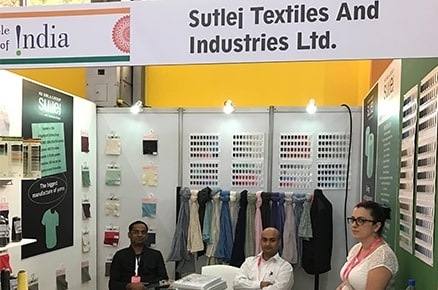
1. At a Glance – The Yarn That Refuses to Stitch Profits
If Indian textile companies were Bollywood characters, Sutlej Textiles would be that tragic hero who keeps saying “picture abhi baaki hai” while the audience quietly leaves the theatre.
Here’s the plot twist:
- Revenue: ₹636 Cr (flat, slightly down)
- PAT: still negative
- EPS: -₹0.99 (yes, still bleeding)
- Debt: ₹825 Cr
- Interest coverage: negative territory vibes
And yet… management is talking about margin recovery, value-added yarns, sustainability, integration, exports, renewable power, cost optimization, global expansion… basically everything except actual profits.
This is not a boring company. This is a corporate thriller.
But here’s the real question:
Are we looking at a deep turnaround story… or a slow-motion textile meltdown wrapped in ESG buzzwords?
Let’s pull the thread.
2. Introduction – From Yarn King to Margin Beggar
Sutlej Textiles is not some startup kid trying to prove itself. This is a KK Birla Group company with decades of legacy.
And yet, the current situation feels like:
“MBA presentation strong hai, but P&L weak hai.”
Let’s understand the contradiction:
- Once profitable: FY22 PAT ₹150 Cr
- Now: consistent losses since FY24
- Revenue: stagnating around ₹2,500–2,700 Cr
- Margins: collapsed from ~12% OPM to ~1%
So what happened?
Textile industry happened.
- Raw material volatility
- Export uncertainty
- Bangladesh, China, Turkey competition
- Cotton price madness
- Demand cycles behaving like crypto
Management now claims:
- “We are not chasing volume, only margins”
- “We are transforming into integrated platform company”
- “Profitability will improve without revenue growth”
Sounds great.
But investors should ask:
If margins are improving… why are profits still missing?
3. Business Model – WTF Do They Even Do?
Let’s simplify this.
Sutlej basically does three things:
1. Yarn (93% of revenue)
- Dyed yarn
- Mélange yarn
- Cotton + synthetic blends
Customers include:
- Jockey
- H&M
- Raymond
- Marks & Spencer
This is the bread and butter… but also the biggest problem.
Why?
Because yarn is a commodity disguised as a product.
2. Home Textiles (7%)
Brand: Nesterra
- Curtains
- Upholstery
- Made-ups
Retail