1. At a Glance
A small-town supermarket chain quietly clocks ₹309 crore in a quarter, doubles profit YoY, starts exporting spices globally, opens stores like a Domino’s franchise on steroids, and casually tells investors: “We are becoming a private label brand engine.”
Sounds impressive?
Now add spice:
- CFO resigns mid-cycle
- Working capital stretched due to exports
- Sales growth historically weak (5-year CAGR ~5%)
- No dividends despite profits
This is not a clean fairy tale. This is a masala khichdi of growth + risk + ambition.
Patel Retail is that kid in class who suddenly topped exams but still has suspicious handwriting.
The real question is:
Is this a smallcap turning into a mini-DMart… or a margin illusion powered by spices and spreadsheets?
2. Introduction
Patel Retail started in 2008 as a simple value retail chain. Think of it as the neighborhood store where your mother buys atta, oil, and occasionally fights with the cashier over ₹2 rounding.
But over time, the company decided:
“Why just sell Maggi… when we can become Maggi?”
So now, Patel Retail is trying to evolve into a retail + manufacturing + export hybrid model.
And that changes everything.
Instead of relying purely on retail margins (which are thin), they are:
- Manufacturing spices, pulses, and food products
- Selling under private labels like Indian Chaska
- Exporting to 35+ countries
- Using stores as distribution engines
Basically:
Retail is the front-end.
Manufacturing is the margin engine.
Exports are the growth story.
But here’s the catch:
When companies try to become everything at once… execution risk becomes everything too.
Let me ask you something:
Do you trust a company trying to be DMart + HUL + Export trader all at once?
3. Business Model – WTF Do They Even Do?
Let’s simplify this chaos.
1. Retail Business
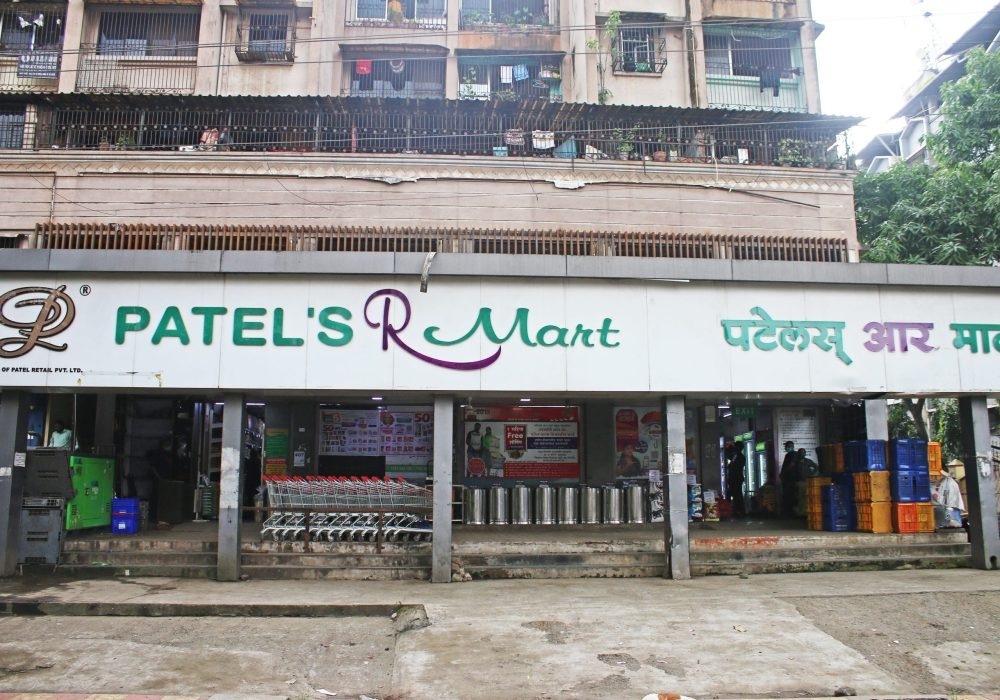
- 43 stores (now 50 as of March 2026)
- Located in Tier-III and suburban areas
- Sells FMCG, groceries, apparel
This is the bread-and-butter business.
Stable, predictable… and boring.
2. Private Label Manufacturing
- Brands: Patel Fresh, Indian Chaska, Blue Nation
- Products: spices, pulses, ready-to-cook, etc.
This is where margins improve.
Management clearly said:
Private label → better margins + control + brand equity
Translation:
“Why earn 8% margin selling others’ products… when we can earn more selling our own?”
3. Export Business
- Supplies spices, atta, peanuts, FMCG
- 35+ countries
- Recent ₹25 crore export order
This is the “growth fantasy.”
4. Processing & Agro Infra
- Facilities in Maharashtra & Gujarat
- Cold storage, warehouses, processing units
Backward integration = better control.
So the model looks like this:
Retail stores → Sell products
Manufacturing → Supply products
Exports → Scale products
It’s vertically integrated.
But here’s the real