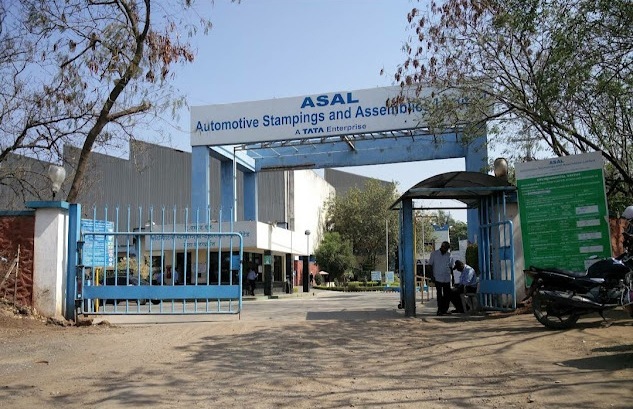
1. At a Glance – The Comeback Kid… Or Just Tata’s Sidekick?
This is not your usual “multibagger discovered before Twitter finds it” story. This is more like that underdog cricketer who finally scored a half-century… but only because Virat Kohli was holding the other end steady.
Automotive Stampings & Assemblies Ltd (ASAL) is trying very hard to convince the market that it has turned around. After years of losses, negative net worth, and financial stress, the company is now profitable, generating decent operating margins (~6.5%) and showing strong quarterly growth (PAT up 140% YoY). Sounds impressive, right?
But here’s the plot twist:
Almost 79% of revenue comes from top 4 customers, and a large chunk is tied to Tata Motors ecosystem. Basically, if Tata sneezes, ASAL catches a full-blown viral fever.
And just when you start feeling comfortable, you see:
- Debt-to-equity: 7.18 (yes, that’s not a typo)
- Price to Book: 41x (the kind of premium usually reserved for companies that actually print money)
- ROE: 2,332% (which looks insane until you realize it’s because net worth was almost wiped out earlier)
So what are we looking at here?
A genuine turnaround story fueled by EV demand and capacity expansion?
Or a fragile recovery hanging on Tata’s mercy?
Let’s dig deeper — because this balance sheet has more drama than a daily soap.
2. Introduction – From ICU to “Stable Condition”
Let’s set the stage.
ASAL was not always in a good place. In fact, it spent years behaving like that one friend who keeps saying “next month se gym pakka” but never actually shows up.
Losses. Negative reserves. Weak margins. Heavy debt.
Classic smallcap tragedy.
But something changed.
Around FY22–FY25, the company:
- Reduced debt significantly
- Improved operating efficiency
- Benefited from Tata Motors’ EV push
- Achieved breakeven by Q2 FY25
Now suddenly:
- Quarterly revenue: ₹250 Cr
- Quarterly PAT: ₹7.47 Cr
- EPS: ₹4.71
And the market said:
“Arre bhai, comeback story! Premium de do!”
But before we get carried away, let’s ask a simple question:
👉 Is this growth coming from internal strength… or external dependence?
Because there’s a big difference between:
- Building your own business
vs
- Being the favorite vendor of a giant OEM
And ASAL is clearly in the second category.
3. Business Model – WTF Do They Even Do?
Alright, let’s simplify this.
ASAL basically does:
- Stamping metal sheets
- Welding parts together
- Making assemblies for vehicles
Think of them as the guy in the kitchen who doesn’t own the restaurant but makes sure the rotis come out on time.
Their product list includes:
- Sheet metal components
- Welded assemblies
- Battery trays (for EVs 👀)
- Aluminium cooling tubes
- Heavy fabricated parts
And who do they sell to?
👉 Tata Motors
👉 Tata Group companies
👉 Some other OEMs like Ashok Leyland, Fiat, JCB
But let’s be honest — Tata is the main character here.
Now here’s the interesting part:
With EVs growing, ASAL is focusing on:
- Battery trays
- Lightweight materials
- Robotic welding
So they are trying to move from:
“Basic vendor” → “EV ecosystem supplier”
Smart move.
But here’s the catch again:
👉 If Tata Motors scales EVs → ASAL wins
👉 If Tata slows down →