1. At a Glance – Export Champion or Policy Puppet?
₹1,767 crore market cap. ₹703 stock price. P/E of ~15.6. Sounds like a calm, fairly valued textile company—until you look under the hood.
S P Apparels just delivered Q3 FY26 revenue of ₹383 crore and PAT of ₹27 crore, showing modest YoY growth of ~6.6% and ~11% respectively. Margins are holding at ~14–15%, which is respectable for a garment exporter. But here’s the twist: the company itself is guiding for a weak Q4 due to tariff disruptions and expects recovery only from Q2 FY27.
So while the numbers look stable, the underlying story is anything but.
Return over the last 3 months? A lukewarm ~2.79%. That tells you the market is watching… but not convinced.
Debt has climbed to ₹405 crore post acquisitions. ROE is ~11.7% and ROCE ~14.2%, which puts it squarely in the “respectable but not exciting” category.
This is not a high-growth rocket. This is a globally exposed textile business navigating tariffs, trade agreements, and shifting supply chains.
The real question is simple:
Is this a steady compounder quietly positioning for a breakout… or a business constantly reacting to global shocks?
2. Introduction – A Textile Company Playing Global Chess
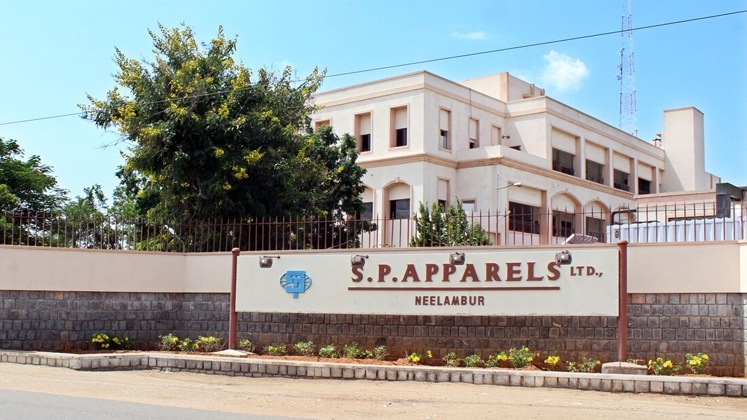
At first glance, S P Apparels looks like a straightforward exporter of children’s garments. Founded in 1989 and based in Tirupur, it has built a strong position as one of India’s largest infantwear exporters.
Clients include global names like Marks & Spencer, Victoria’s Secret (PINK), Jockey, and others. That alone signals product quality and long-standing relationships.
But the simplicity ends there.
Nearly 80% of the company’s revenue comes from exports. And those exports are concentrated in a few regions:
- UK and Europe: ~65–70%
- US: ~25–30%
This means the company’s performance is deeply tied to international trade policies.
And FY26 has been exactly