01 — At a Glance
The Snack King in a Battle With Mother Nature, Raw Material Gods, and Its Own Ambitions
- 52-Week High / Low₹1,296 / ₹861
- Q3 FY26 Revenue (₹ Mn)₹4,616
- Q3 FY26 PAT (₹ Mn)₹56.9
- TTM EPS₹-1.41
- Annualised EPS (Avg × 4)₹9.2
- Book Value / Share₹291
- Price to Book3.00x
- Operating Margin (Q3)4.4%
- Gross Margin (Q3)28.3%
- Stock Return (3 months)-25.1%
Flash Summary: Prataap Snacks just delivered ₹461.58 crore revenue in Q3 — their highest ever. Yet the stock is down 25% in three months. PAT bounced to ₹56.9 crore after the Jammu plant fire wrote off ₹34.34 crore in FY25. The company sells 12 million packets of snacks daily across 2.5 million retail outlets. But with ROE at -1.22% and a promoter stake now at 54.8% (after Authum took over 47%), this is less “let’s scale to the moon” and more “let’s first make some money, yaar.”
02 — Introduction
The Rings That Conquered India But Can’t Conquer Its Own Margins
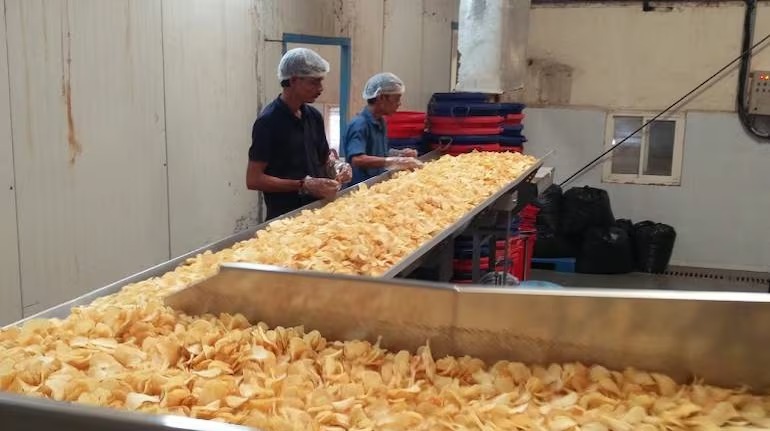
Prataap Snacks Limited is India’s leading manufacturer of extruded snacks, potato chips, namkeen, and sweet snacks under the Yellow Diamond brand. Founded in 2003, they’ve expanded from a single potato chip operation in Indore to a pan-India juggernaut selling roughly 12 million packets daily across 2.5 million retail outlets. Their market leadership in Rings and Top-5 position in Western savoury snacks is genuine. The company has more SKUs than most investors have watched TV shows (150+). And they’ve done all this while burning cash consistently for three years.
The Q3 FY26 story has three acts. First: Revenue hits an all-time high of ₹461.58 crore, with growth of 3.8% YoY and 6.9% QoQ. Good. Second: Margins got hammered because palm oil prices went up faster than a meme on Twitter. Gross margin came down 150 basis points QoQ despite being up 520 bps YoY. Confusing but factual. Third: The company is now betting ₹425 crore on a new greenfield plant in Indore that will have 60,000 MT capacity and ‘superior automation.’ Because nothing says ‘we’re profitable’ like building a massive factory while your ROE is negative.
Also, if you were wondering about the elephant in the room — yes, a literal fire happened at their Jammu plant on December 30, 2024. ₹34.34 crore went up in smoke. The insurance claim is pending. The company is maintaining that this won’t disrupt operations much. Investors, meanwhile, are not convinced, hence the 25% stock correction in three months.
ICRA Rating (June 2025): [ICRA]A+(Stable) — ICRA reaffirmed the rating citing operational track record, diversified product portfolio, extensive distribution network, and comfortable capital structure. ICRA also noted the Jammu fire incident but argued it was “adequately insured.” ICRA did flag raw material price volatility and intense competition as concerns. Classic auditor speak: ‘Everything is fine as long as nothing goes wrong.’
03 — Business Model: WTF Do They Even Do?
Making Snacks That Indians Impulse-Buy at Railway Stations and Small Shops
Members get full access to every article.

One Response
Revenue Q3 is 461crRevenue