01 — At a Glance
The Decorator’s Goldmine That The Market Forgot to Notice
- 52-Week High / Low₹390 / ₹205
- Q3 FY26 Revenue₹80.4 Cr
- Q3 FY26 PAT₹23.6 Cr
- TTM EPS₹6.66
- Annualised EPS (Q3 Avg × 4)₹7.58
- Book Value / Share₹26.1
- Price to Book8.24x
- Debt to Equity0.08x
- Interest Coverage48.2x
- Sales Growth (TTM)28.2%
Flash Summary: Euro Pratik just delivered Q3 PAT of ₹23.6 crore — up 17% YoY with a 43% EBITDA margin. Debt to Equity is 0.08x. ROCE stands at a brain-melting 49.5%. The company has 3,000+ designs, 36 contract manufacturers across 8 countries, and distribution in 138 cities. Yet the stock is down 28.7% in three months. Welcome to India, where fundamentals are optional and sentiment is the only thing that pays.
02 — Introduction
Who Knew Walls Could Be This Profitable?
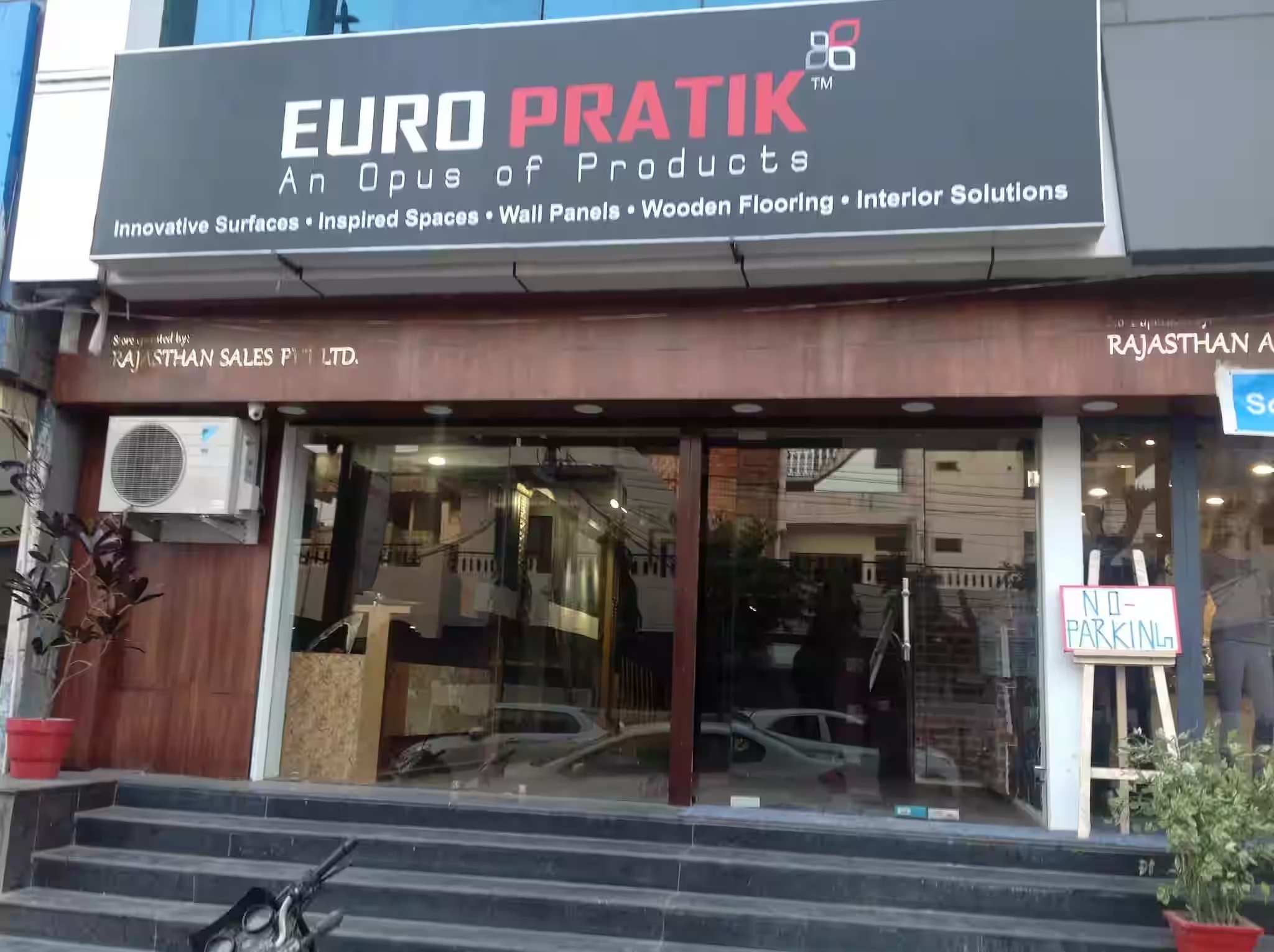
Somewhere between your living room’s paint job and your neighbour’s Rs 50 lakh interior “consultation,” there exists a delightfully overlooked company called Euro Pratik. They make decorative wall panels, decorative laminates, and other stuff that makes your walls look like they cost money. Think of them as the “fast fashion” of home décor — except fast fashion loses money. Euro Pratik makes 49.5% ROCE.
Founded in 2010 and listed in September 2025 (yes, fresh IPO listing), Euro Pratik operates via an asset-light model — they design and distribute, contractors manufacture. It’s the antithesis of capex-heavy manufacturing. The company markets under two brands: “Euro Pratik” (premium) and “Gloirio” (also premium, but you know, brand differentiation theatre). Sales in Q3 FY26: ₹80.4 crore. Profit after tax: ₹23.6 crore. Debt: ₹22.5 crore against ₹322 crore in total assets. This is a company that takes “lean and mean” seriously.
Here’s where it gets interesting. Management went on a concall in February 2026 and explained that Q3’s 7% YoY growth (technically slowish) was entirely due to North India’s GRAP pollution-related construction ban. Without it, management estimated 27-28% growth. They also announced a ₹33.2 crore acquisition of Chawla Brothers (51% stake) by March 31, 2026, plus a joint venture with Hues Ply Decor in Hyderabad. And then acquired URO Veneer World (51% stake) in November 2025 for ₹76.5 crore. The company is empire-building while trading at 8.24x book value with zero leverage. Make that make sense.
Concall Insight (Feb 9, 2026): Management explicitly stated they are a “bottom-line driven company.” They targetted “25% minimum” Q4 growth YoY (inclusive of acquisitions) and expect EBITDA margins to stay in the “40% plus-minus 2-3%” band. Translation: they’re not chasing top-line memes. Profit matters more than revenue, which is why the stock is down 28.7% in three months. The market hates disciplined profitability.
03 — Business Model: WTF Do They Even Do?
IKEA’s Older Brother Met Interior Design and Had Very Profitable Babies
Euro Pratik sells decorative wall panels (66.5% of 9M revenue), decorative laminates (26.9%), and allied products like adhesives and interior films (8.2% of the rest). They’re a design-first, asset-light, fast-inventory-turnover business disguised as a home décor company.
Here’s the magic: they don’t own a single factory. Not one. Instead, they operate 36 contract manufacturers across India, South Korea, China, USA, Romania, Turkey, Indonesia, and Portugal. Every product design is in-house. Every supply chain relationship is long-term. And here’s the kicker — for every running product, they maintain at least two to three manufacturers to avoid single-vendor dependency. It’s what supply chain people call “risk mitigation” and what everyone else calls “actually having a functioning business.”
Products become “obsolete” in 15-20 months. The company launches over 1,000 new designs every year. They’ve published 113 catalogues in four years (approximately two per month). Management on the concall kept emphasizing “fast fashion” product strategy — rapid design cycles, market-led development, continuous innovation. This is not a “set it and forget it” product company. It’s a “what are the architects and contractors ordering this month” company that turns SKU refresh into a competitive moat.
Decorative Panels66.5%of 9M revenue
Laminates26.9%of 9M revenue
Debt/Equity0.08xpractically zero
Contract Mfg Partners36+across 8 countries
The distribution network is 188 distributors across 138 cities spanning 25 states and 6 Union Territories. They also operate 180 distributors in the exact same geography. (Yes, the numbers are slightly different across filings — welcome to Indian accounting.) The key insight: they’ve doubled their distributor count in the last year. For a company that said “we’re bottom-line driven,” the fact that they’re expanding distribution by 15% annually tells you they smell growth opportunity like a dog smells a treat.
04 — Financials Overview
Q3 FY26: The Margin Story That Defies Stock Price Logic
Result type: Quarterly Results | Q3 FY26 EPS: ₹2.28 | 9M Avg EPS: (₹0.95+₹2.25+₹2.28)/3 = ₹1.83 | Annualised EPS: ₹7.32 | TTM EPS: ₹6.66
| Metric (₹ Cr) |
Q3 FY26 Dec 2025 |
Q3 FY25 Dec 2024 |
Q2 FY26 Sep 2025 |
YoY % |
QoQ % |
| Revenue | 80.4 | 75.1 | 97.3 | +7.06% | -17.3% |
| EBITDA | 34.6 | 27.4 | 30.9 | +26.3% | +12.0% |
| EBITDA Margin % | 43.1% | 36.5% | 31.8% | +660 bps | +1130 bps |
| PAT | 23.6 | 20.2 | 23.3 | +16.8% | +1.3% |
| PAT Margin % | 29.4% | 26.9% | 23.9% | +250 bps | +550 bps |
| EPS (₹) | 2.28 | 1.96 | 2.25 | +16.3% | +1.3% |
The Margin Amplification Story: EBITDA margin expanded from 36.5% (Q3 FY25) to 43.1% (Q3 FY26) — nearly 660 basis points! Management attributes this to “operating leverage.” Translation: they’re selling more with the same cost base, which is what happens when your variable cost structure is tilted toward design (fixed) rather than manufacturing (variable). The stock is down 28.7% despite this. Either the market thinks margins are unsustainable (possible), or the market is drunk on sentiment (probable).
💬 A company grows revenue 7% YoY but EBITDA margin expands 660 bps and the stock crashes 28.7% in three months. Are you seeing hidden leverage, future margin compression, or is the market just being silly? Comment your diagnosis below.
05 — Valuation Discussion: Fair Value Range
What is a Company Worth When Markets Don’t Know What They’re Worth?