01 — At a Glance
When ₹81 Crore Revenue Is Actually Good News
- 52-Week High / Low₹684 / ₹309
- Q3 FY26 Revenue₹81.4 Cr
- Q3 FY26 PAT₹6.04 Cr
- TTM EPS₹7.99
- Annualised EPS (9M Avg × 4/3)₹18.51
- Book Value / Share₹51.3
- Price to Book8.54x
- Order Book (Q3)₹1,295 Cr
- Order Book / Revenue3.1x FY25
- 9M FY26 PAT₹29.2 Cr
Flash Summary: Premier Explosives just delivered a Q3 that would make most companies panic-sell. Revenue tanked 51% YoY. PAT dropped 34%. The stock is down 16% in 3 months. Yet the order book is ₹1,295 crore (2 years of revenue), management is confident about ₹500–600 crore FY27 delivery, and defence contractors everywhere are scratching their heads wondering when execution timelines matter less than having the India’s only domestic solid propellant supplier on speed dial. Welcome to bhaiyya-land of defence contracting.
02 — Introduction
Making Chaffs, Flares, And Solid Rockets: India’s Quiet Defence Hero
Imagine you’re the Indian Air Force. You need countermeasures (chaffs and flares) to protect fighter jets. You call the only company in India qualified to make them. Premier Explosives picks up. They say yes. There’s your market moat.
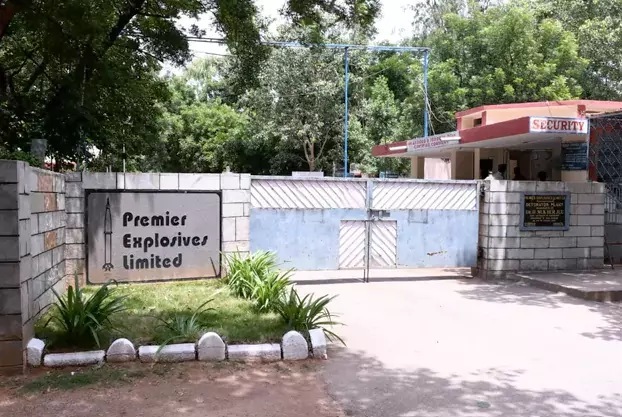
Premier Explosives (incorporated 1980) manufactures solid propellants, rocket motors, high-energy explosives, countermeasures (chaffs and flares), pyro devices, and provides O&M services for ISRO’s Sriharikota and DRDO’s Jagdalpur facilities. Translation: when India wants things to explode on purpose, they call Premier. When they want things to explode precisely, they call Premier. When they want things to explode for rockets, they also call Premier.
Defence & Space represented 84% of revenue in 9M FY25. Commercial explosives for mining? 16%. The company is effectively a defence PSU without the “public sector” part — it has all the constraints of one and none of the funding certainty. Yet, a ₹1,295 crore order book (2 years of revenue at current run-rate) speaks louder than quarterly volatility.
From The Concall (Feb 20, 2026): Management emphasized “underlying demand environment and operational momentum remains strong, supported by a healthy order book” across domestic + exports. Yes, Q3 was soft. But that’s because inspection timelines and MoD dispatch schedules are unpredictable. The actual underlying demand? Booming. Which is why investors are stuck between “the numbers suck” and “but the order book doesn’t lie.”
03 — Business Model: Defence Contractor 101
Sole Supplier Syndrome: When Your Only Customer Is The Government
Premier makes products that have zero commercial application. Solid propellants? Used by ISRO and DRDO. Chaffs and flares? Used by the Indian Air Force. Rocket motors? ISRO. High explosive charges? Defence ministry. Mining explosives? Competing on price with coal companies (and losing). The business model is elegantly simple: India’s defence and space agencies need these products, Premier is the only domestic supplier for most of them, and therefore Premier gets the order.
The catch? Execution is everything. A 500-crore order means nothing if inspections get delayed by 6 months. Revenue recognition depends on MoD pre-dispatch inspection approvals. Working capital gets eaten by 6–12 month payment cycles from government buyers. The “sole supplier” moat is real but comes with government-sector friction baked in.
Revenue mix in 9M FY25: Defence & Space 84%, Bulk Explosives 16%. FY22, it was 63% defence. The company has deliberately shifted away from commercial explosives (competing on price with Arevam, a much larger player) toward captive defence contracts. Smart move. ROCE at 16.9% is respectable for a capital-intensive manufacturing business.
Defence & Space84%of 9M FY25 revenue
Bulk Explosives16%of 9M FY25 revenue
Export Revenue₹40 Crin 9M FY26
Domestic Revenue₹259 Crin 9M FY26
The January 2025 fire at the Telangana facility damaged a pyro tech unit and cost one life — a tragic reminder that explosive manufacturing isn’t a software company. Production came back online in September 2025, costing the company an estimated ₹20–30 crore in lost business. Yet management guided for ₹500–600 crore FY27, suggesting they believe the order backlog is large enough to absorb quarterly volatility.
04 — Financials Overview
Q3 FY26: The Execution Timing Story
Result type: Quarterly Results | Q3 FY26 EPS: ₹1.12 | 9M FY26 EPS: (₹2.28+₹3.32+₹1.12)/3 = ₹2.24 | Annualised EPS: ₹8.96 (conservative vs TTM ₹7.99)
| Metric (₹ Cr) |
Q3 FY26 Dec 2025 |
Q3 FY25 Dec 2024 |
Q2 FY26 Sep 2025 |
YoY % |
QoQ % |
| Revenue | 81.4 | 165.9 | 75.6 | -50.9% | +7.7% |
| Operating Profit | 11.65 | 15.45 | 6.60 | -24.6% | +76.5% |
| Operating Margin % | 14.3% | 9.3% | 8.7% | +500 bps | +560 bps |
| PAT | 6.04 | 9.19 | 17.87 | -34.3% | -66.2% |
| EPS (₹) | 1.12 | 1.71 | 3.32 | -34.5% | -66.3% |
The Real Story Behind The Numbers: Revenue fell 51% because, according to management, “last year included higher dispatches of chaffs and flares” (elevated base) and “execution timing due to inspection/dispatch cut-offs.” In desi terms: 9M FY26 revenue is ₹299 crore vs TTM run-rate of ₹373 crore. But the order book is ₹1,295 crore. The quarterly chop is noise. The delivery pipeline is signal.
Margin Surprise: Operating margin expanded to 14.3% in Q3 from 9.3% in Q3 FY25, despite lower revenue. Why? Better product mix (higher-margin defence products) and operational leverage. CFO flagged legacy MoD orders with liquidated damages (LDs) that were on the lower side earlier — now being replaced with better-margin contracts. This could be a multi-quarter margin expansion driver.
💬 Q3 was a dud on revenues but margins expanded. For a defence contractor, would you rather see lumpy quarterly revenue or consistent profitability? Comment below if you’re buying on the order book or selling on the quarterly miss.
05 — Valuation: Fair Value Range
Deciding If 50x P/E Is “Premium for Moat” or “Waiting for a Correction”