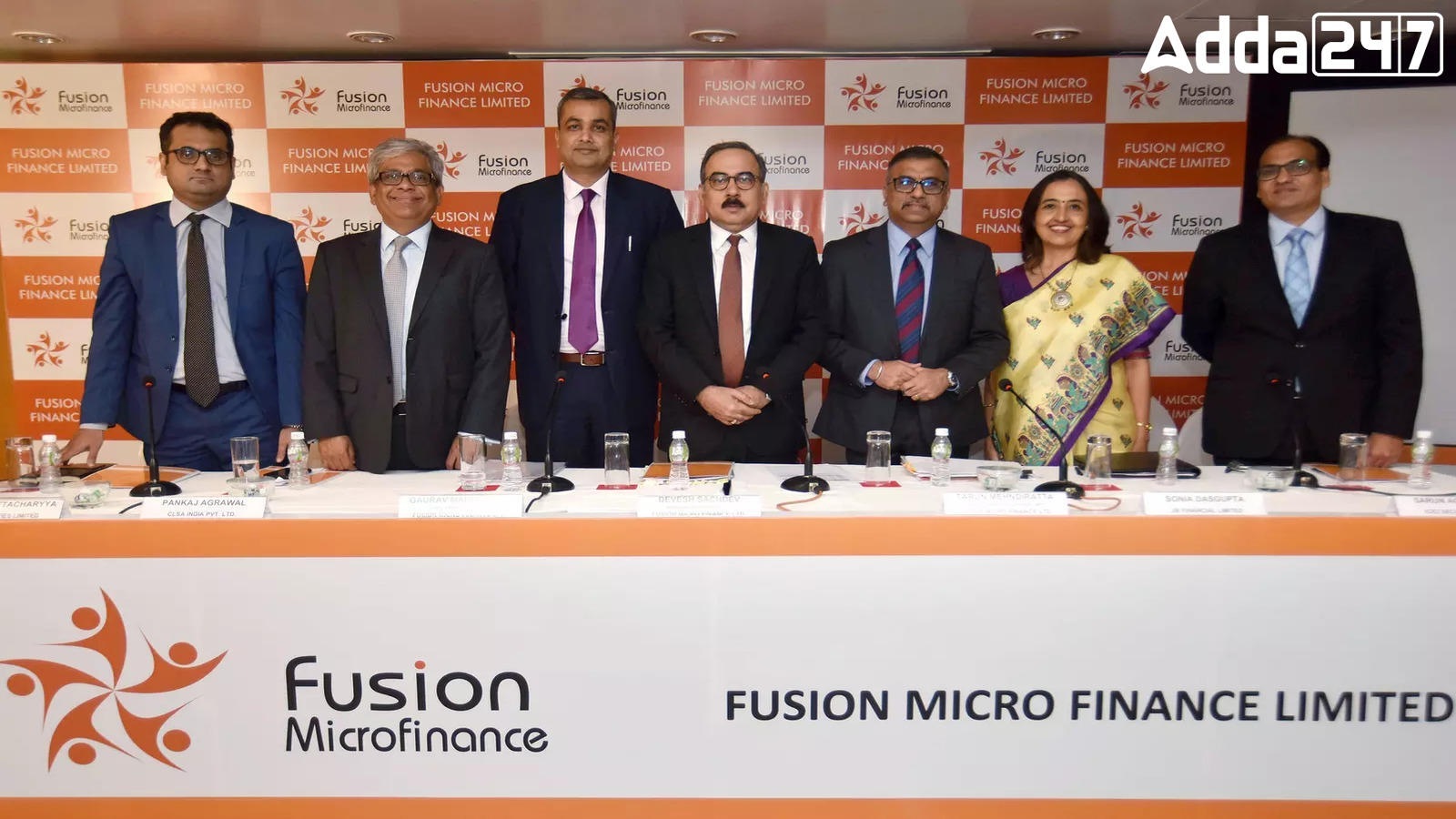
Fusion Finance:₹14 Cr PAT. From Bankruptcy to Bounce-Back. The Comeback King Nobody Was Watching.

Fusion Finance Q3 FY26 | EduInvesting
Q3 FY26 Results · Quarterly Results (Oct–Dec 2025)

Fusion Finance:
₹14 Cr PAT. From Bankruptcy to Bounce-Back.
The Comeback King Nobody Was Watching.

Three quarters ago, this microfinance company was the wallpaper on investor nightmare moodboards. Now it’s profitable again, collections are humming, and auditors finally removed the “going concern” warning. This is not a drill.

Market Cap₹2,566 Cr
CMP₹159
P/BV1.34x
Div Yield0%
ROE (TTM)-55%

The Microfinance Disaster Area That’s Quietly Rebuilding Itself

  • 52-Week High / Low₹212 / ₹124
  • Q3 FY26 Revenue₹416 Cr
  • Q3 FY26 PAT₹14 Cr
  • TTM EPS₹-16.34
  • Annualised EPS (Q3)₹3.48
  • Book Value / Share₹118
  • Price to Book1.34x
  • Gross NPA (Dec 2025)4.38%
  • Net NPA (Dec 2025)0.60%
  • AUM (Dec 2025)₹6,876 Cr
Flash Summary: Fusion Finance just recorded its first profitable quarter in ages (₹14 crore PAT). AUM is still 40% below peak (₹11,476 Cr in FY24), but the bleeding has stopped. Collections are normalizing. The auditor removed the going-concern bomb. Management says “inflection point.” The stock hasn’t moved. Market cap ₹2,566 crore, down from ₹2,600+ range. In other words: a tragedy that’s becoming a recovery nobody’s pricing in yet.

The Microfinance Company That Learned to Swim Again

Picture this: 2023 was the year Fusion Finance was the poster child for “what not to do in MFI.” Customers defaulted in monsoon floods. Reclassifications sent 55,000 borrowers into delinquency buckets. The balance sheet looked like someone had set it on fire. Auditors wrote the dreaded words: “going concern.” Shareholders watched their ₹400+ crore investment become ₹100+ crore overnight.

Now jump to December 2025. Three years later, the company has gone from “should we shut it down?” to “wait, this is actually working again.” Q3 FY26 PAT: ₹14 crore. Collections efficiency: 99.4%. GNPA: 4.38% (down from 5.46% in June). Net flow forward rates: 0.25% (that’s 99.75% retention, for the uninitiated). And here’s the kicker: auditors signed off saying going-concern is “no longer relevant.”

In short, this is a company that went to financial ICU, spent two years getting dialysis, and is now asking the doctor when it can go back to playing cricket. The answer: probably Q1 FY27, if current momentum holds.

Management’s Own Words (Feb 2026 Concall): “An important inflection point. Controlled stabilization and disciplined execution.” Translation: We stopped the bleeding. Now we’re learning to run again. And unlike the broader sector, we’re doing it on tighter guardrails, not just hoping lightning doesn’t strike twice.

Lending to Women. In Groups. At 19-23% Interest. Simple. Except When It Isn’t.

Fusion is a systemically important non-deposit NBFC. Translation: they’re regulated like a bank but can’t take deposits. They lend to women in rural and semi-urban India via the Joint Liability Group (JLG) model — groups of 5-7 women, backed by mutual guarantees. Loan tenures: 17–25 months. Repayments: every 14 or 28 days. Interest rates: 19.15%–23.40% (reducing balance).

The beauty of JLG is that if one person defaults, the group feels social pressure (and financial pain) to cover. It’s like a chit circle, but with leverage. The problem: when economic conditions tighten, the group feels it together. When there’s a flood, or a health crisis, or customers take more credit than they can service, the entire branch implodes. This is what happened in 2023.

Current strategy: be extremely choosy. Management explicitly says they’re growing with “tighter-than-industry underwriting.” AUM is ₹6,876 crore (down from ₹11,476 crore at peak in FY24). They’re rebuilding slowly, which sounds boring but is actually genius in microfinance — boring and alive beats exciting and bankrupt.

Branches1,571mostly MFI (1,466)
Active Clients31.9 Lakhdown from 38.4L peak
Avg Ticket Size₹43.4Kper new loan
Geographic Reach453 Districts22 states, 94% rural
Current Strategic Shift: Management has introduced a “preapproved base” of borrowers. ~30% of new disbursements now come from repeat customers with cleaner credit history. Approval rate on these: ~50%. The logic: get money to proven customers faster, reduce origination risk, and essentially build a reserve army of lower-risk disbursements. Very defensive. Very un-sexy. Very smart.

From Funeral to Flowers: How Q3 Swung Back to Profitability

Result type: Quarterly Results  |  Q3 FY26 EPS: ₹0.87  |  Annualised EPS: ₹0.87 × 4 = ₹3.48

Metric (₹ Cr) Q3 FY26
Dec 2025
Q3 FY25
Dec 2024
Q2 FY26
Sep 2025
YoY % QoQ %
Revenue416474401-12.1%+3.7%
Financing Profit9-513-52✓ turned positive+120%
Financing Margin %2%-108%-13%+110 pts+15 pts
PAT14-719-22✓ positive again+163%
EPS (₹)0.87-44.38-1.37+102%+164%
Translation for Non-Auditors: Q3 is the first quarter where Fusion didn’t lose money on its core lending business. Financing profit went from -₹513 crore (Dec 2024) to +₹9 crore (Dec 2025). That’s not a typo. It’s a 520+ crore swing. Revenue is down YoY (portfolio contraction), but management is deliberate about this — they’re lending less, but lending better. The fact that they’re back to profitability at 40% lower AUM tells you the quality of the book has dramatically improved.
💬 If Fusion is profitable again, collections are normalizing, and NPAs are declining, why is the stock down 0.92% in 3 months while the market celebrated? Is it still too wounded, or is the market just not paying attention? Drop your theory in the comments.

What Is A Coming-Back-From-Death NBFC Actually Worth?

error: Content is protected !!
Verified by MonsterInsights