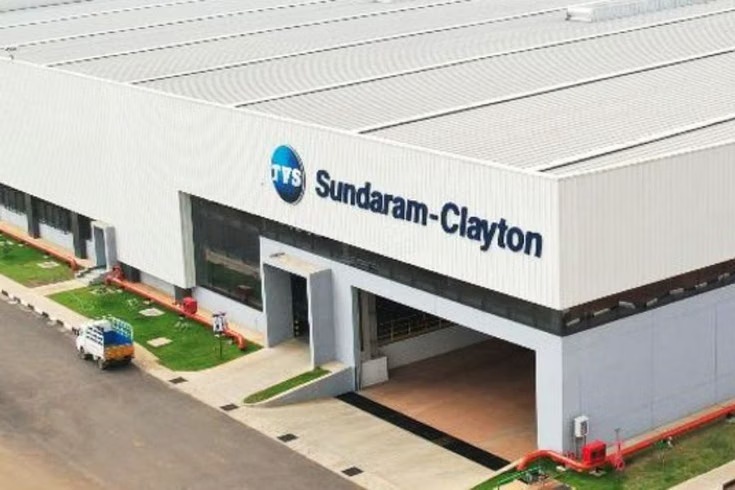
01 — At a Glance
The Company That Turns Metal Into Losses (Impressively Consistently)
- 52-Week High / Low₹2,538 / ₹1,110
- FY25 Revenue₹2,259 Cr
- FY25 PAT₹-11 Cr (Loss)
- TTM PAT₹-30 Cr
- Debt (Sep 2025)₹1,631 Cr
- Book Value / Share₹397
- Price to Book3.25x
- Debt / Equity1.87x
- CRISIL RatingAA- / Negative
- Credit TrendReverted Nov 2024
Flash Summary: SCL lost ₹11 crores in FY25 and is losing ₹45.7 crore in Q3 FY26. The company just agreed to sell 16.38 acres of land in Chennai for ₹560.67 crore — which sounds great until you realize they’re selling land because they can’t make money from castings anymore. Debt stands at ₹1,631 crore. CRISIL downgraded them to Negative outlook in October 2024. The stock is down 42% in one year. And the CEO literally resigned on February 26, 2026. This is what “transition phase” looks like when the transition goes very wrong.
02 — Introduction
Die Casting: It’s Like Pouring Dreams Into Metal And Getting Nightmares Back
Sundaram Clayton Ltd was born in 1962 when the TVS group decided to make aluminum die-casting components. For 60 years, the company was the trusted supplier of engine blocks, transmission cases, and miscellaneous metal bits to every major automobile manufacturer in India and abroad. Tata Motors, Cummins, Volvo, Hyundai, Ford, Daimler — they all depended on SCL to turn molten aluminum into precision parts.
Then 2024 hit. And things got weird. SCL has been bleeding losses for the past few years, especially because of their wholly-owned US subsidiary, Sundaram Holdings USA Inc (SHUI), which has been making operational losses for 4-5 consecutive fiscal years. Meanwhile, domestic demand is tepid. Exports are weak. Tariffs on US imports are eating into margins. And the new facility at Thervoy Kandigai, Chennai — built at a cost of ₹550 crores — is sitting there like an expensive statue, reminding everyone that capex is easy. Profits are hard.
In August 2023, a massive demerger happened: the aluminum die-casting operations were separated from the parent entity (which became TVS Holdings Limited and kept the valuable 50.26% stake in TVS Motor Company). The new SCL got all the losses. The parent got all the upside. This is the kind of financial engineering that makes private equity firms weep with envy.
CRISIL Ratings Update (Jan 22, 2026): AA-/Negative with A1+ on short-term facilities. They reaffirmed the ratings (didn’t downgrade further) because SCL is expected to monetize land from the Padi unit for ₹560.67 crore, which will reduce debt from ₹1,700 crore to around ₹1,100 crore by March 2026. In other words: sell assets to survive. Bold strategy.
03 — Business Model: Aluminum Into Cash (Minus The Cash Part)
They Make Die-Cast Components. Beautifully. Profitably? That’s A Separate Chapter.
SCL manufactures aluminum die-casting components — essentially, they take molten aluminum, pour it into dies, cool it down, and sell the finished parts to automotive OEMs. The business sounds straightforward. The economics are brutal.
The company operates across three main segments: Passenger Vehicles (19% of revenue), Commercial Vehicles (62% of revenue), and Two-Wheeler components (which they literally sold in March 2025 for ₹163 crore because it was unprofitable). About 44-50% of revenues come from exports, heavily weighted toward the US market — which means they’re exposed to tariffs, trucking industry cycles, and the whims of class-8 truck demand.
Here’s the real problem: while domestic OEMs are relatively stable, the US operations at SHUI have been a dumpster fire wrapped in a burning tire. SHUI started in FY21, had operational losses of ₹150-175 crore in each of the last three fiscals, and management keeps saying “we’ll breakeven by H2 FY27.” That’s code for “we have no idea.”
CV Exposure62%of revenue
PV Exposure19%of revenue
Export Share44%+2-wheeler divested
SHUI Losses₹150-175 Cr/Yrongoing since FY21
Fun Fact: SCL’s standalone operating profitability (before consolidating SHUI’s disasters) is healthy at 12-14%. It’s CRISIL expects 15-16% in FY26 and 16-17% in FY27. But once you consolidate SHUI’s losses, the consolidated operating margin collapses to 4.5-5%. It’s like having a successful restaurant and then opening a second location that loses money every single day. The average of the two looks bad.
04 — Financials Overview
Q3 FY26: A Quarter So Bad, The CEO Decided To Resign
Period: Q3 FY26 (Dec 2025) | Latest Full Year: FY25 (Mar 2025) | TTM Basis: Latest 4 quarters ending Sep 2025
| Metric (₹ Cr) |
Q3 FY26 Dec 2025 |
Q3 FY25 Dec 2024 |
Q2 FY26 Sep 2025 |
YoY % |
QoQ % |
| Revenue | 501 | 529 | 495 | -5.33% | +1.21% |
| Operating Profit | 36 | 38 | 15 | -5.26% | +140% |
| OPM % | 7% | 7% | 3% | flat | +400 bps |
| PAT | -52 | -44 | -58 | -18.2% | +10.3% |
| EPS (₹) | -23.55 | -20.03 | -29.19 | -17.6% | +19.3% |
Reality Check: SCL reported Q3 FY26 revenue of ₹501 crore with a PAT of ₹-52 crore. That’s negative ₹52 crore on ₹501 crore of sales. Their OPM (Operating Profit Margin) is fine at 7%, but by the time you account for interest (₹29 crore), depreciation (₹49 crore), and the consolidated losses at SHUI, you end up with a fat loss. The quarterly EPS loss is ₹-23.55. Annualized (EPS × 4) = ₹-94.20 per share. At a current price of ₹1,290, that makes the P/E ratio… undefined. You can’t divide by a negative number and feel good about it.
💬 If a company consistently reports losses, how does CRISIL maintain an AA- rating? Is it the “TVS group backing” factor, or is CRISIL just hoping for the land sale to work out? What’s your take on credit rating agencies rating companies in distress?
05 — Valuation: When Fair Value Means “What You Can Sell It For”
Can You Even Value A Company Losing Money Consistently?
Method 1: Asset-Based Valuation (Book Value)
Book Value per share = ₹397. Current Price = ₹1,290. Price-to-Book = 3.25x. For a loss-making company, P/B should be closer to 1x (or less). A 3.25x multiple suggests the market is betting heavily on a turnaround OR valuing the underlying assets (especially the 16.38 acres of land that’s being sold for ₹560.67 crore).
→ Liquidation View: 1.0x × ₹397 = ₹397 Turnaround Bet: 1.5x × ₹397 = ₹595
Range: ₹397 – ₹595
Method 2: DCF (Distressed Version)
Assuming SCL turns profitable by FY27 (PAT of ₹150-200 crore), and grows at 8-10% thereafter, with a WACC of 9% and terminal growth of 3%: the DCF value lands between ₹450-₹650. But this assumes a full turnaround, which is NOT guaranteed.
→ Bear Case: ₹350 Base Case: ₹520 Bull Case: ₹700
Range: ₹350 – ₹700 (HIGH UNCERTAINTY)
Method 3: Liquidation + Real Estate
Current tangible assets: ₹3,077 crore. Liabilities: ₹3,077 crore. Land sale proceeds: ₹560.67 crore. After debt reduction and restructuring, residual equity value would support a price of ₹450-₹550 per share.
→ Conservative: ₹450 Fair: ₹550
Range: ₹450 – ₹550
Consolidated View: The fair value range, across all three methods, converges around ₹400-₹650. The current price of ₹1,290 is significantly elevated. Either the market is pricing in a strong turnaround (which is NOT yet visible in the numbers), OR the stock is trading on momentum from the land sale announcement and the belief that TVS group will support the company. The downside risk is substantial if the turnaround doesn’t materialize by FY27.
⚠️ EduInvesting Fair Value Range: ₹400 – ₹650. This fair value range is for educational purposes only and is not investment advice. SCL is a high-risk, restructuring story. Please consult a SEBI-registered investment advisor before making any financial decision.
06 — What’s Cooking: Crisis Management & CEO Musical Chairs
Land Sales, Leadership Changes & The Great Turnaround Gamble