01 — At a Glance
The Kalyani Group’s Quiet Domination of Specialty Steel
- 52-Week High / Low₹989 / ₹634
- Q3 FY26 Revenue₹462 Cr
- Q3 FY26 PAT₹61 Cr
- TTM EPS₹60.34
- Annualised EPS (Q3 Avg × 4)₹56.14
- Book Value / Share₹451
- Price to Book1.44x
- Debt / Equity0.22x
- Interest Coverage32.9x
- 3-Yr Return28.1%
Flash Summary: Kalyani Steels delivered Q3 FY26 revenue of ₹462 crore and PAT of ₹61 crore. The stock is down 19.6% in one year but up 28.1% over three years. It trades at 10.6x P/E with 14% ROE and zero long-term debt. The market’s memory of the auto downturn is still fresher than the company’s balance sheet. But if CARE gives them AA; Stable, maybe we should too.
02 — Introduction
The Company That Makes Gears Your Car Gears Depend On
Kalyani Steels Limited is, in short, the guy behind the guy. Your car has a transmission? There’s a shaft in there that probably came from Kalyani Steels. Your transmission gears? Yep. Connecting rods? Steering knuckles? The axle beam that keeps your wheels from doing an impromptu freestyle? Kalyani Steels.
Incorporated in 1973, KSL is part of the Pune-based Kalyani Group — a conglomerate with its fingers in defense, railways, energy, and automotive. But KSL’s real job is simpler: make forging-grade and engineering-grade carbon and alloy steel at a facility in Karnataka spread over 375 acres. That coke oven plant commissioned in March 2023 was the cherry on the integration cake — now they control their own coke sourcing, which is like owning your own petrol pump while selling cars.
The Kalyani Group accounts for 53.6% of KSL’s revenue. Bharat Forge Limited (the group’s flagship forging company, rated CARE AA+ no less) is basically the anchor customer. This isn’t customer concentration — this is vertical integration that works. The remaining 46% comes from OEMs and outside customers, giving breathing room against group company drama.
CARE Ratings (Dec 15, 2025): CARE AA; Stable for long-term bank facilities. CARE A1+ for short-term instruments. Rating rationale: “Strong promoter group, established track record, robust capital structure, comfortable debt coverage metrics.” Translation: KSL is the kind of company that makes auditors sleep peacefully. The company’s PBILDT/tonne averaged over ₹10,000 for a decade. In FY25, it peaked at ₹14,456/tonne. That’s better margins than you make in a month.
03 — Business Model: WTF Do They Even Do?
They Make the Steel Your Car Absolutely Cannot Survive Without.
KSL is a vertical integration play disguised as a steel company. They blast iron ore, melt it, forge it, finish it, and ship it to people who turn it into critical auto components. They’re not trying to be ArcelorMittal. They’re trying to be the only guy who can supply a specific grade of steel that Bharat Forge has been using since 1998.
The product mix is niche: camshafts, connecting rods, gears, transmission shafts, axle beams, steering knuckles, and rolled bars. About 70% goes to automotive. The rest bounces between seamless tube, oil & gas, energy, bearings, defence, and railways. This is not a commodity play. This is a “we know what you need before you know you need it” play.
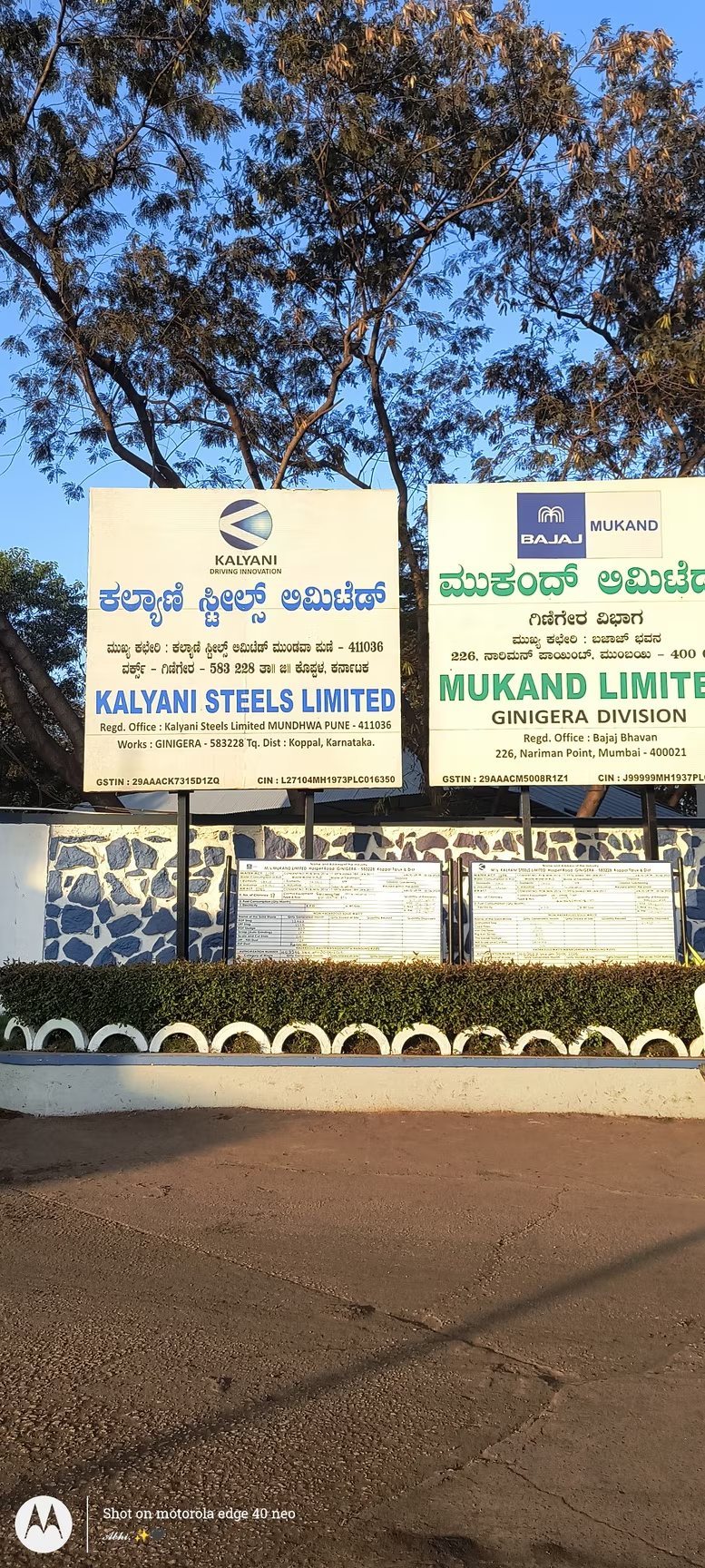
Manufacturing facility: 7 lakh MTPA capacity at Hospet. They also have a strategic alliance with Mukand Limited (Bajaj group), where they share manufacturing facilities but own 41.38% of the assets. Translation: they get capacity upside without owning land. The 2023 coke oven commissioning knocked out a major raw material headache — coking coal was eating 50-60% of the cost structure; now they make it themselves.
Automotive~70%of revenue
Group Sales53.6%to Kalyani Group
Capacity7 LMTPAHospet plant
Annual Volume~2.5 LMTPAproduced
Here’s the thing about specialty steel: you can’t pivot. If KSL decides to make stainless steel for hotels tomorrow, Bharat Forge doesn’t take delivery. Customers are locked in by engineering approvals and supplier assessments that take years. Once you’re approved, you’re sticky. KSL is very, very sticky to its customers. And they like it that way.
04 — Financials Overview
Q3 FY26: Keeping It Steady While the Sector Swings
Result type: Quarterly Results | Q3 FY26 EPS: ₹14.05 | Avg Q1–Q3 EPS: (₹13.97+₹14.16+₹14.05)/3 = ₹14.06 | Annualised EPS: ₹56.24
| Metric (₹ Cr) | Q3 FY26
Dec 2025 | Q3 FY25
Dec 2024 | Q2 FY26
Sep 2025 | YoY % | QoQ % |
|---|
| Revenue | 462 | 484 | 456 | -4.55% | +1.31% |
| Operating Profit | 92 | 83 | 85 | +10.84% | +8.24% |
| OPM % | 20% | 17% | 19% | +300 bps | +100 bps |
| PAT | 61 | 55 | 62 | +10.91% | -1.61% |
| EPS (₹) | 14.05 | 12.69 | 14.16 | +10.64% | -0.78% |
The Margin Story Is The Real Story Here: Revenue is down 4.55% YoY, but operating profit is up 10.84%. OPM expanded 300 bps to 20%. This isn’t because they got smarter — it’s because the coke oven plant from FY25 is now running full throttle, knocking out ₹13% reduction in coking coal prices on a per-tonne basis. PAT up 10.91% despite lower sales. That’s what integration does. It’s unsexy, unglamorous, and absolutely unstoppable.
One Watch-Out: Revenue volumes stayed basically flat YoY (they produced ~2.5 LMTPA), but realisations took a hit. Industry-wide steel prices softened in FY25-26. KSL’s value-added alloy positioning helped them weather the storm better than commodity steelmakers, but they’re still exposed to the cycle. Just less exposed.
💬 With zero debt and 32.9x interest coverage, why is the stock down 19.6% in a year? Is the market allergic to boring stability, or is it waiting for something else? Your thoughts in the comments.
05 — Valuation Discussion: Fair Value Range
What’s a Boring, Profitable, Debt-Free Steel Company Worth?
Members get full access to every article.