Search /

The Anup Engineering:Heat Exchangers & Pressure Vessels. A 20% Growth Machine with 53% Exports & Chairman Drama.

The Anup Engineering Q3 FY26 | EduInvesting
Q3 FY26 Results · Quarterly Results (Oct–Dec)

The Anup Engineering:
Heat Exchangers & Pressure Vessels.
A 20% Growth Machine with 53% Exports & Chairman Drama.

₹207 crore quarterly revenue. 54% jump in orders. New leadership on deck. Kheda facility humming. 9M PAT margins taking a mysterious dip. And somehow, export dominance keeps the ship sailing.

Market Cap₹3,224 Cr
CMP₹1,610
P/E Ratio27.7x
Div Yield1.04%
1-Yr Return-47.9%

The Capital Goods Bet That Forgot to Tell You It Was Collapsing

  • 52-Week High / Low₹3,633 / ₹1,410
  • Q3 FY26 Revenue (Consolidated)₹207 Cr
  • Q3 FY26 PAT₹26.7 Cr
  • Q3 FY26 EPS₹12.74
  • Annualised EPS (Q3×4)₹50.96
  • Book Value (Mar 25)₹318
  • Price to Book5.07x
  • Order Book (Feb 2026)₹550 Cr
  • Sales Growth YoY (9M)+20.2%
  • Debt / Equity0.25x
The Plot Twist: Anup Engineering delivered stellar 20%+ revenue growth (₹615 Cr in 9M FY26), hit an order book of ₹550 Cr, and got CARE rating upgrades to AA- from A+. Meanwhile, the stock crashed 47.9% in one year because apparently, the market reads tech news instead of capital goods orders. Chairman Sanjay Lalbhai stepped down, Punit Lalbhai took over, and nobody told you that growth doesn’t always translate to stock price appreciation. Welcome to the paradox of being boring and profitable.

When Your Company Builds Better Equipment Than Your Stock Performance

Picture this: You’re sitting in Mumbai, sipping chai, and your portfolio is getting decimated. You bought Anup Engineering at ₹3,100 thinking “industrial boom + capex cycle = profit.” You were right about the company. You were very, very wrong about the stock price. Welcome to the world of capital goods.

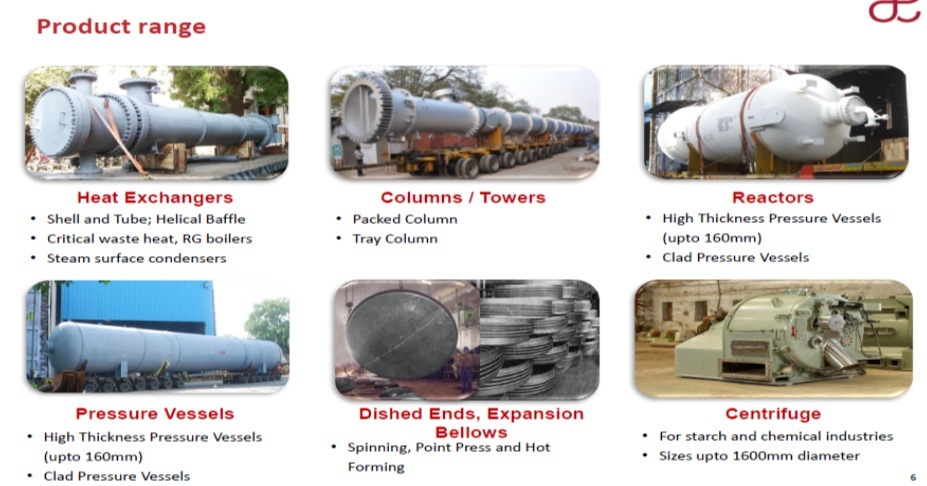
The Anup Engineering Limited is a niche player in process equipment manufacturing—think heat exchangers, pressure vessels, columns, reactors, and centrifuges that power refineries, petrochemical plants, fertilizer facilities, and power plants across India and 60+ countries. It’s unglamorous, highly technical, and executed flawlessly for 2+ years running. And yet, the stock decided 2024-25 was the year to become a penny stock’s emotional support animal.

Demerged from Arvind Limited in 2018, the company has grown from a ₹288 Cr revenue base (FY22) to ₹732 Cr (FY25), with exports now accounting for 53% of revenues—a stunning pivot from a domestic-first model. The order book swelled to ₹550 crore. New capacity at Kheda is humming. Credit ratings have been upgraded. And the stock crashed 47.9% in one year. This, ladies and gentlemen, is what happens when growth meets valuation correction, or as your ex-broker would call it, “profit-taking.”

Feb 2026 Concall Note: Management explicitly stated: “We’re aiming for ROCE of ~21%, EBITDA of 22%, and exports >50%.” Translation: We’re delivering everything we promised, but apparently, the market was pricing in a moon landing.

How Anup Makes Money (And Why It’s Less Exciting Than Your Instagram Feed)

Imagine engineering shops where smart people design and fabricate equipment used in the world’s most dangerous industries—refineries, petrochemical plants, fertilizer facilities, power generation. If your reactor leaks, people die. If your heat exchanger fails, a plant shuts down. If your column cracks, that’s ₹10 crore in losses. So when Anup says “we make stuff,” what they really mean is “we make stuff that keeps the global industrial complex from combusting.”

The business is split into two models: (1) Large orders—build-to-spec equipment with long lead times (12-24 months) and fat margins (~22% EBITDA); (2) Short-cycle products—HVAC condensers, PSA adsorber vessels, modular units that ship fast and have thinner margins (~15-18% EBITDA) but improve cash conversion and reduce reliance on mega-orders.

Anup operates three facilities: Ahmedabad (45,000 sq m, handles short/medium items), Kheda (new ₹50 crore capex, 20,000 sq m, can handle 1,000 MT per equipment), and Mabel Engineers (acquired 2024, Tamil Nadu, silos & tanks). Plants are strategically positioned—Kheda near highways for port logistics, Ahmedabad for city deliverables, Mabel for silo specialization.

Heat Exchangers57%Revenue Mix
Exports53%Revenue Mix
Order Book₹550 CrAs of Feb 2026
Order Book24-monthRevenue Visibility
Strategic New Bets (Feb 2026 Concall): Anup just landed its first nuclear order (NPCIL Kaiga, ₹20-30 Cr) and a thermal power order (NTPC, ₹20-30 Cr). Management is positioning for 3-4x upside into high-pressure feedwater heaters once NTPC qualification opens pipeline. They also partnered with GE for precision-machined turbine components. Translation: margins may compress, but order velocity and pipeline will go parabolic if execution holds.
💬 If a company grows 20% YoY, has 22% EBITDA margins, and gets rating upgrades—why does the stock crash 47.9%? Drop your theory in the comments. (Hint: Valuation ≠ Growth.)

Q3 FY26: The Numbers That Prove Growth Is Not Enough

Result type: Quarterly Results  |  Q3 FY26 EPS: ₹12.74  |  Annualised EPS (Q3×4): ₹50.96  |  9M FY26 PAT: ₹85.3 Cr  |  Full-year FY25 EPS: ₹59.07

Metric (₹ Cr) Q3 FY26
Dec 2025
Q3 FY25
Dec 2024
Q2 FY26
Sep 2025
YoY % QoQ %
Revenue206.9172.0232.0+20.3%-10.8%
EBITDA44.139.051.0+13.1%-13.5%
EBITDA %21.3%22.7%22.0%-140 bps-70 bps
PAT26.730.032.0-11.0%-16.6%
EPS (₹)12.7415.0916.00-15.5%-20.4%
The Margin Squeeze Story: Revenue grew +20.3% YoY, but PAT declined -11% and EPS dropped -15.5%. This happened because (a) other expenses surged from 18% to 24.5% of revenue YoY (labour +1.5%, royalty +1.3%, freight +0.5%, contractual charges +2.2%), and (b) working capital costs spiked due to lower customer advances and elongated receivables. Management’s Feb 2026 concall revealed this was planned and temporary—they’re pivoting to short-cycle products which have lower margin profile but better cash conversion. Strike rate of 20-25%, deliberate avoidance of price-cutting, and exit from low-margin work. The math works if execution holds.

What’s This Company Actually Worth When Growth Meets Compression?

error: Content is protected !!
Verified by MonsterInsights