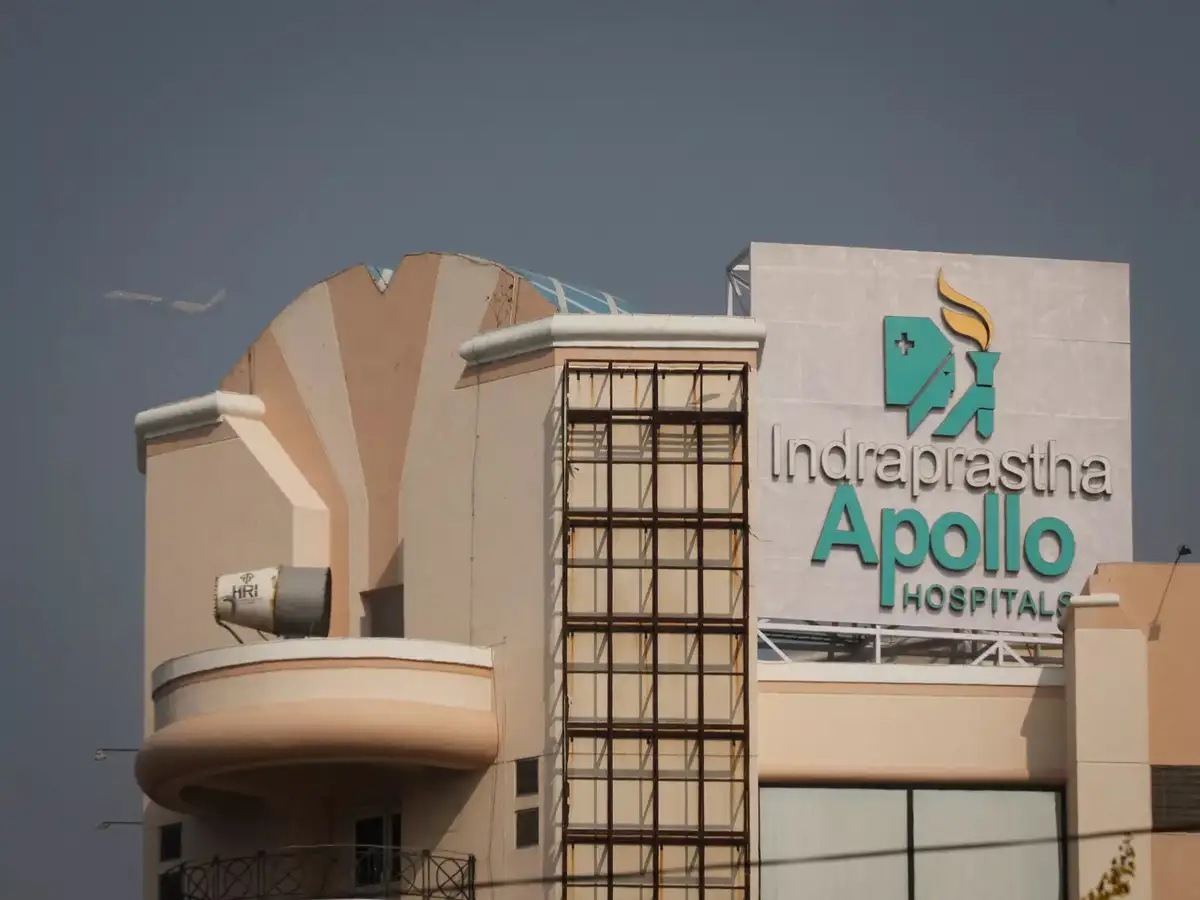
01 — At a Glance
The Finest Tertiary Care Joint Venture. Ever Heard of It? Exactly.
- 52-Week High / Low₹641 / ₹322
- FY25 Revenue (TTM)₹1,451 Cr
- FY25 PAT (TTM)₹183 Cr
- TTM EPS₹19.95
- Q3 EPS (Dec 2025)₹4.47
- Book Value₹71.8
- Price to Book5.49x
- Dividend Yield1.12%
- Debt / Equity0.05x
- Stock Return (1 Yr)5.04%
The Opening Note: Indraprastha Medical closed Q3 FY25 (Dec 2025) with ₹372 crore quarterly revenue (+14.4% YoY), ₹41 crore PAT (+25% YoY), and a 39.1% ROCE that would make most hospitals blush. It’s a super-speciality tertiary care facility in Delhi-NCR, backed by Apollo Hospitals (22%) and the Delhi Government (26%). The stock has returned 5% in one year, 73% in three years, and still trades at a P/E of 19.7x — which is aggressive for a hospital, but not insane for one that prints cash like a government hospital with private sector margins.
02 — Introduction
Okay, So What’s a Super-Speciality Tertiary Care Hospital?
Translation for investors not in medical jargon: they fix the problems that regular doctors can’t. Cardiology, neurology, oncology, transplants—the kind of stuff that requires a consultant who went to school for so long they forgot how to have a social life. Indraprastha Medical Corp (IMCL) has been around since 1988 as a joint venture between Apollo Hospitals and the Delhi Government. Yes, that’s right. Government meets private sector. And somehow it works.
Two main facilities: 703 beds in Sarita Vihar (since 1996) and 46 beds in Noida (since 2006). Total = 749 beds of unapologetic medical excellence in the NCR. They have 52 specialty departments, which means they essentially specialise in fixing everything that can possibly break inside a human body. They treat poor patients for free (government mandate), rich patients at premium rates (profit motive), and international patients at premium rates with a smile (diversification). The business model is less “hospital” and more “cash generation machine with a Hippocratic Oath.”
Financially? They’ve grown revenue at 10% CAGR over five years, profits at 29% CAGR, and somehow maintained an almost-debt-free balance sheet while doing it. Their latest quarter (Q3 FY25) showed 14.4% revenue growth and 25% profit growth. That’s not a hospital. That’s a printing press that occasionally heals people.
A Quick Note on FY25 Performance (9M Data): The government-mandated RRBO free care policy (poor patients) hasn’t stopped them from growing. Neither has the sub-judice PIL on free medicines. Delhi healthcare regulation is a minefield. IMCL somehow walks it like a consultant walking out of a successful surgery—confident, profitable, and leaving everyone else envious.
03 — Business Model: How to Print Money While Saving Lives
They Fix You. They Bill You. You Cry at Your Medical Receipt. Everyone Wins.
The genius of IMCL is its tri-part revenue model. First: domestic patients (mostly Delhi-NCR), who come for serious medical issues, pay premium rates, and fund 70% of revenues. Second: free/subsidised government patients (Delhi mandate), who come for the same care, pay nothing, but help maintain occupancy rates and demonstrate social responsibility to regulators. Third: international patients (18% of revenues in 9M FY25), who fly in from Bangladesh, Afghanistan, and beyond because IMCL has accreditation from the Joint Commission International (USA). They pay in dollars. Dollars don’t get devalued by the Delhi government.
Revenue levers are simple. Bed occupancy (currently ~72% in 9M FY25, up from 67% in FY24), average revenue per operating bed (ARPOB), and case mix. Oncology, cardiology, nephrology, and neurology—the big four—account for ~48% of inpatient revenues. These are high-margin procedures. A transplant patient isn’t negotiating the bill. They’re negotiating their kidney’s ability to function.
On the cost side, it’s pure operational excellence. Labour is skilled but not unionised (government employees get salary + benefits, private consultants work on commission). Capex is disciplined. They announced a ₹550 crore expansion—350 new beds—but are self-funding the early phase and will tap debt only for later phases. Translation: no empire-building fever. No “let’s blow ₹2,000 crore and hope it works.” Just steady, methodical growth.
Bed Occupancy72%9M FY25
ARPOB₹67,872Up 8% YoY
Free Beds Mandated15%Delhi Govt Requirement
Specialities52Oncology to Ortho
The Free Care Conundrum: 15% of beds are government-sponsored (free care). That’s ₹50+ crore annually in forgone revenue. The PIL demanding free medicines could add another ₹20–30 crore if ruled against IMCL. Yet they still grew profits 29% CAGR in five years. That’s not luck. That’s operational discipline mixed with pricing power on private patients.
💬 Quick question: If a hospital can grow 14% revenue, 25% profit, and still carry almost no debt—why isn’t this stock up 300%? Drop your thoughts.
04 — Financials Overview
Q3 FY25: The Numbers That Make Bean Counters Happy
Result type: Quarterly Results | Q3 FY25 EPS: ₹4.47 | Annualised EPS (Q3 average): ₹20.64 | TTM EPS: ₹19.95
| Metric (₹ Cr) |
Q3 FY25
Dec 2025 |
Q3 FY24
Dec 2024 |
Q2 FY25
Sep 2025 |
YoY % |
QoQ % |
| Revenue | 372 | 325 | 381 | +14.4% | -2.4% |
| Operating Profit | 62 | 52 | 71 | +19.2% | -12.7% |
| OPM % | 17% | 16% | 19% | +100 bps | -200 bps |
| PAT | 41 | 33 | 49 | +24.9% | -16.3% |
| EPS (₹) | 4.47 | 3.58 | 5.40 | +24.9% | -17.2% |
Read Between the Lines: Q3 was softer sequentially (QoQ decline in revenue and PAT) but strong YoY (revenue +14.4%, PAT +25%). This is seasonal in hospitals—Q2 (Sep) usually has higher patient volumes due to pre-monsoon procedures. Q3 shows the underlying growth. And that growth is solid. P/E of 19.7x on CMP ₹393 ÷ TTM EPS ₹19.95 = justified for a hospital printing 39% ROCE, but only if you believe this growth stays on rails.
05 — Valuation: Is This Hospital Worth The Hospital Bill?
What’s Fair Value for a Cash Cow That Heals People?