01 — At a Glance
The Diversified Disaster That Forgot to Diversify Successfully
- 52-Week High / Low₹39.3 / ₹14.6
- Q3 FY26 Revenue₹119 Cr
- Q3 FY26 PAT₹13.9 Cr
- Q3 FY26 EPS₹0.09
- TTM Revenue (Trailing)₹706 Cr
- Book Value₹10.7
- Price to Book2.41x
- Dividend Yield0.00%
- Debt / Equity0.27x
- YoY Revenue Decline-76.7%
Narrator’s Opening Warning: Sindhu Trade Links shut down Q3 FY26 with the kind of performance metrics that make auditors reach for antacids. Revenue crashed 76.7% YoY to ₹119 crore. Operating margins hit -44.6%. The PAT survived only because ₹27 crore in “other income” saved the quarter from complete obliteration. CEO resigned January 31, 2026. India Ratings pulled its coverage in November 2025. The stock is up 10.9% in 3 months anyway. India’s stock market: where fundamentals come to die.
02 — Introduction
The Comeback Kid Who Forgot How to Come Back
Sindhu Trade Links Ltd: a name that screams “we do everything.” And by everything, we mean they’ve been in the business of doing almost nothing profitably for the better part of this decade. Transportation? Check. Oil & Lubricants? Check. Coal mining? Check. Petrol pumps? Check. Finance and lending? Check. Media? Check. Power generation? Check. It’s like a diversification fever dream where the fever broke somewhere around 2018 and nobody called a doctor.
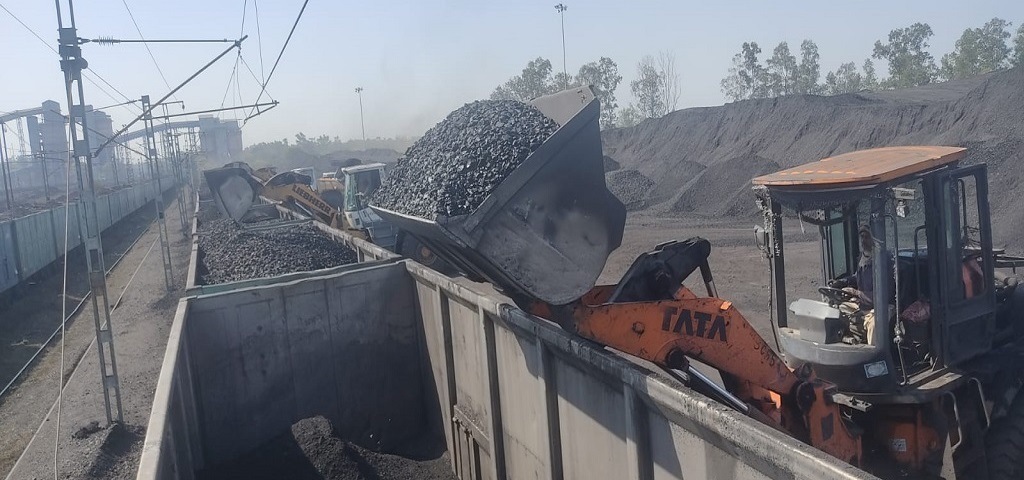
The company was once a proud logistics outfit — operating 600+ tippers and loaders as of FY23. Coal was flowing. Cash was rolling. Then something changed. Or maybe nothing changed and that was the problem. By TTM (trailing twelve months), revenue stands at a charred ₹706 crore, down from better days. The latest quarter’s ₹119 crore is a 76.7% crash YoY. Their margins? Negative. Their profitability? Surviving on other income. Their CEO? Gone as of January 31, 2026. And yet somehow, this collection of struggling subsidiaries commands a market cap of ₹3,963 crores.
This is not a story about a company that’s turnaround-ready. This is a story about a holding company with a serious case of “organizational obesity” — too many businesses, none of them performing, all of them losing money separately but somehow still afloat together. Let’s dissect the mess.
The Diversification Lie: “We are diversified” = “we are confused.” “We operate in multiple segments” = “none of them are making money.” “We have 5 subsidiaries” = “we have 5 different holes to fill with cash.” Diversification only works if at least one business actually works.
03 — Business Model: WTF Is This Company Actually Doing?
The Hydra Company: Cut One Head, Two More Lose Money
Sindhu Trade began life as a logistics play. Fair enough. Transportation + coal movement = natural synergy. But then the company caught a bad case of “conglomerate envy” and started bolting on subsidiaries like a teenager collecting Pokémon cards. Result? A portfolio so diversified it might as well be called a mutual fund with legal liability.
The main revenue buckets (FY23 mix): Transportation & Logistics (63%), Oil & Lubricants (15%), Oil Drilling (8%), Finance Operations (4%), and Interest/Other Income (10%). Notice something? The “other income” bucket is already doing heavy lifting. And in Q3 FY26, that “other income” rose to ₹27 crore — which is basically the only reason the quarter didn’t report negative PAT instead of just barely positive PAT.
Subsidiary overview: Victory Oil & Gas (oil business). Sudha Bio Power (power generation). Hari Bhoomi Communications (media). Indus Automotives (spare parts). Param Mitra Resources (overseas coal mining in Indonesia — which stopped producing anything useful around 2023). These aren’t subsidiaries. These are tax-write-off experiments that accidentally became corporate organs.
Logistics Fleet600Tippers + Loaders
Installed Power30MW Capacity
Coal Reserves500Million Tonnes (Stated)
The Oceania Resources Horror Show: The company owns Oceania Resources Pty Ltd, an overseas mining JV in Indonesia. In October 2023, Oceania filed for administrator appointment. In plain English: it went bust. On foreign soil. With Indian shareholder money. The company’s still holding ₹1,929 crore in “investments” as of Sept 2025 — a number we suspect includes Oceania’s corpse.
💬 If a company has six different business segments and five of them are on fire (bad way), does that make it a diversified portfolio or just organized chaos?
04 — Financials Overview
Q3 FY26: The Numbers That Make Auditors Cry
Result type: Quarterly Results (Unaudited) | Q3 FY26 EPS: ₹0.09 | Annualised EPS (Q3×4): ₹0.36 | TTM EPS: ₹-0.10
| Metric (₹ Cr) |
Q3 FY26
Dec 2025 |
Q3 FY25
Dec 2024 |
Q2 FY26
Sep 2025 |
YoY % |
QoQ % |
| Revenue | 119 | 511 | 124 | -76.7% | -4.0% |
| Operating Profit | 3 | 57 | -2 | -94.7% | -250% |
| OPM % | 2% | 11% | -2% | -900 bps | +400 bps |
| Other Income | 27 | 9 | 30 | +200% | -10% |
| PAT | 13.9 | -7 | 11 | N/A* | +26% |
| EPS (₹) | 0.09 | -0.05 | 0.07 | N/A* | +29% |
Death By A Thousand Cuts: Revenue fell from ₹511 crore (Q3 FY25) to ₹119 crore. That’s not a decline — that’s a collapse. The only reason the quarter didn’t implode completely is because the company collected ₹27 crore in “other income” (interest, dividends, investments, random windfalls). Strip that out, and operating profit = ₹3 crore on ₹119 crore revenue = 2.5% OPM. The previous year’s operating profit at ₹57 crore suddenly looks like the good old days. Notice that operating profit went negative in Q2 FY26 at -₹2 crore? Yeah, this is a trend, not a glitch.
05 — Valuation Discussion
Fair Value Range: When Valuation Itself Becomes The Joke
Method 1: P/E Based (With Caveats)
TTM EPS = ₹-0.10 (negative). Company is not profitable on a trailing basis. Traditional P/E valuation is useless. Fair value through P/E: Cannot determine — negative earnings disqualify P/E method.
Not Applicable
Method 2: EV/EBITDA Based
TTM Operating Profit = -₹315 Cr (negative EBITDA). Current EV = ₹4,362 Cr → EV/EBITDA = -13.8x (meaningless). The company is burning capital. EV/EBITDA multiples don’t work for negative cash-flow businesses.
EV/EBITDA Method Verdict:
Not Reliable
Method 3: Asset-Backed / Adjusted Book Value
Total Assets (Sept 2025): ₹2,816 Cr. Less: Total Liabilities = ₹2,816 Cr. Net Worth = ₹1,635 Cr (Equity ₹154 Cr + Reserves ₹1,481 Cr). But ₹1,929 Cr is tied up in “Investments” (many of them likely impaired). Adjusted Book Value per share: ~₹10.7. CMP: ₹25.7 = 2.4x Book.
→ Adjusted Book Value (conservative): ~₹7–9 per share
→ Fair Value Range (Asset-Backed): ₹7 – ₹14 per share
Range: ₹7 – ₹14
⚠️ Valuation Caveat: Traditional valuation methods fail because the company is not profitable. The only defensible valuation method is asset-backed value, which suggests fair value between ₹7–₹14 per share. CMP ₹25.7 implies the market is pricing in a turnaround that hasn’t materialized and shows no signs of materializing. The 10.9% 3-month return is driven by speculative buying, not fundamental improvement.
⚠️ EduInvesting Fair Value Range: ₹7 – ₹14. CMP ₹25.7 significantly exceeds this range. This analysis is strictly for educational purposes and does not constitute investment advice. Please consult a SEBI-registered investment advisor before making any financial decision.
06 — What’s Cooking: News, Triggers & Drama
The Resignation Pile-Up: A Comedy in Three Acts