01 — At a Glance
The Mission-Critical Maker That Can’t Manage Its Own Mission
- 52-Week High / Low₹3,046 / ₹1,310
- TTM Revenue (Full Year)₹1,251 Cr
- Q3 FY26 Revenue₹331 Cr
- Q3 FY26 PAT-₹62 Cr
- Full-Year EPS (TTM)-₹21.33
- Book Value₹274
- Price to Book10.5x
- Dividend Yield0.22%
- Debt / Equity0.52x
- Order Book (H1 FY26)₹1,772 Cr
Auditor’s Opening Sarcasm: Centum ended Q3 with ₹331 crore quarterly revenue (+21% YoY). Standalone India operations were gorgeous: ₹238 cr revenue (+27% YoY), ₹26 cr EBITDA (+27% YoY). But then the consolidated numbers arrived with an overnight loss of ₹62 crore, courtesy of overseas subsidiaries that apparently believe profit is a four-letter word (literally). The order book sits pretty at ₹1,772 crore. The balance sheet? It’s having an identity crisis after impairments of ₹153.8 crore just materialized. Management claims these are “conservative accounting adjustments.” Translation: “We hope nobody noticed how badly France and Canada have been bleeding.”
02 — Introduction
The Company That Designs Rocket Electronics But Can’t Land Its Own Spreadsheet
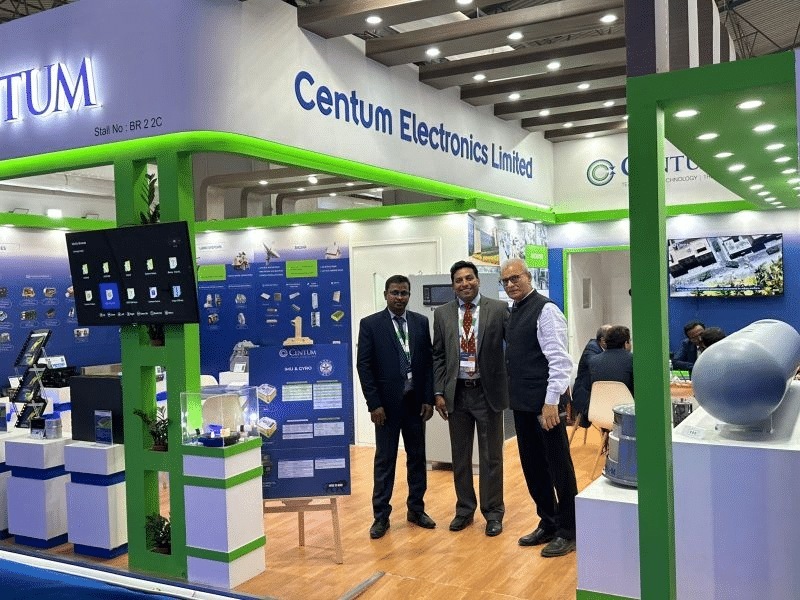
Centum Electronics Limited. Founded in 1993. A company that, over 30 years, has managed to become one of India’s most mission-critical ESDM providers—meaning defence, space, and aerospace boards. We’re talking electronics that go into radars, satellites, naval navigation systems, tank electronics, and Rafale fighter jets. These are the people whose mistakes might literally kill people. The pressure is real.
Yet here we are in March 2026, reading financial results that look like a comedy script written by someone who hates happy endings.
The protagonist: a split personality. On one side, Centum India—churning out 25%+ growth in FY26, expanding margins, winning ₹700 crore radar contracts, ₹500 crore naval navigation programs, launching into semiconductor equipment manufacturing. On the other side: Centum Europe (France) and Centum North America (Canada). Two subsidiaries that have spent the better part of three years accumulating losses like Tinder matches at a wedding. Both are now being shut down / divested. Both have already eaten ₹153.8 crore in goodwill impairments.
The concall in February 2026 (we have the transcript, and it’s chef’s kiss) revealed something spicy: management called Q3 an “important inflection point” because they “stopped bleeding overseas and doubled down on India.” A euphemism so eloquent it deserves framing.
Concall Quote (Feb 2026): “We have decided to discontinue operations of our Canadian subsidiaries and explore divestment/restructuring of our French entity. This will effectively stop further operational losses from these entities (operationally).” Translation: “We are surgically removing the gangrene. The good news? The body is finally gonna breathe.”
03 — Business Model: WTF Do They Even Do?
Three Divisions Doing Very Different Things (And Only One Is Printing Money)
Centum operates three distinct segments. Let’s walk through this like a three-course meal where the first two courses are inedible.
Engineering R&D22%Q2 FY25 Revenue
Electronic Manufacturing49%EMS Services
Build-to-Specification29%High-Margin Segment
Defense + Space58%Industry Mix H1 FY25
Engineering R&D Services (22% of revenue): Centum employs 650 design engineers globally. They design and certify electronic hardware, embedded software, and RF (radio frequency) products for defence, aerospace, and medical companies. This is the “thinking” business. High complexity. Moderate margins. Vulnerable to customer consolidation and outsourcing trends.
Electronic Manufacturing Services / EMS (49% of revenue): The workhorse. Centum manufactures PCB assemblies, subsystems, and full-system integrations. Structurally a cost-plus model (10–11% EBITDA margins sustainable, per concall). In Q3 FY26, management disclosed a “new semiconductor equipment customer” that ramped from practically zero to “at least $10 million in FY26 run rate, scaling to $30 million in 2 years.” This single ramp is a case study in execution. Qualification of 65 part numbers in record time. But EMS is lumpy, customer-concentration-heavy, and structurally lower-margin.
Build-to-Specification (BTS) / Mission-Critical Systems (29% of revenue): This is where the saucepan gets hot. Centum designs and manufactures complete radar systems, naval navigation systems, tank electronics, and payload systems for DRDO, ISRO, and the Indian Navy. This is the “systems integrator” business. Management guidance: 20–25% EBITDA margin on these programs. Q3 major wins include:
🚁 Airborne Radar System (L1 Winner): Centum declared L1 (sole remaining bidder after competition) for a complete helicopter radar system for a major Indian defence PSU. Program value: ~₹700 crore over 5–6 years. First tranche order expected in Q4 FY26. Management described it as “multipurpose” (search, tracking, surveillance modes).
⚓ Naval Air Navigation System (GRSE Partnership): Centum partnered with Garden Reach Shipbuilders & Engineers (GRSE) to deliver mission-critical air navigation systems—essentially an “air traffic controller for military aircraft landing on ships.” First order: ₹30 crore (already disclosed). Pipeline: ₹500 crore over 3–5 years across multiple shipyards (GRSE, GSL, HSL, others).
🛰️ Space-Based Systems (SBS): Centum is L1 on some payloads for space-based surveillance missions. Management estimates an addressable opportunity of ~₹1,000 crore. Some orders expected Q4/Q1 next year. (Note: One of their payloads was on the PSLV that failed—”quite an unfortunate event”—but demand for such programs is “only increasing.”)
The brutally honest summary: Centum India’s core ESDM business is scaling. Margins are expanding. Order visibility is multi-year. The company is “moving up the value chain toward integrated systems and platform-level solutions,” as management put it in the concall. But then you look at the consolidated numbers, and the overseas drag is so severe that Q3 profit is MINUS ₹62 crore on ₹331 crore revenue. That’s a -18.7% net margin. On a ₹1,772 crore order book. It’s like owning a Formula 1 pit crew but the driver is in a wheelchair.
💬 Here’s your thought starter: If Centum India is so profitable, why does the consolidated number look like it lost a bar fight? Who’s actually earning the money here?
04 — Financials Overview: The Split Personality in Numbers
Q3 FY26: When Standalone Beauty Meets Consolidated Beast
Result type: Quarterly Results | Q3 FY26 EPS: -₹41.90 | TTM EPS: -₹21.33 | Industry P/E: 27.5x (Centum trades at 76.4x—a premium you’ll need to explain to your therapist)
Standalone India Operations (The Good News)
| Metric (₹ Cr) |
Q3 FY26
Dec 2025 |
Q3 FY25
Dec 2024 |
9M FY26
To Dec 2025 |
9M FY25
To Dec 2024 |
YoY % |
| Revenue | 238 | 187 | 630 | 505 | +25% |
| EBITDA | 26 | 20 | 76 | 51 | +50% |
| EBITDA Margin % | 11% | 11% | 12.1% | 10.1% | +200 bps |
| PBT (Pre-Exceptional) | 19 | 11 | 58 | 26 | +128% |
Consolidated Numbers (The Ugly Reality)
| Metric (₹ Cr) |
Q3 FY26
Dec 2025 |
Q3 FY25
Dec 2024 |
9M FY26
To Dec 2025 |
9M FY25
To Dec 2024 |
YoY % |
| Revenue | 331 | 273 | 873 | 758 | +15% |
| EBITDA | 31 | 26 | 78 | 71 | +10% |
| EBITDA Margin % | 9.5% | 9.7% | 8.9% | 9.4% | -50 bps |
| PBT (Pre-Exceptional) | 18 | 12 | 45 | 18 | +155% |
| Exceptional Items | -57 | -19 | -55.6 | -22 | Impairment City |
| NET PROFIT (REPORTED) | -62 | -19 | -71 | -22 | -1,050% |
The Spin Doctor’s Translation: If you ignore the ₹1,537.83 crore in good will impairments (French subsidiary) and ₹153.8 crore in investment impairments (Canadian subsidiaries), plus the ₹29.8 crore in discontinued operations losses, Q3 actually made ₹18 crore pre-exceptional. Management characterized this as “largely onetime, predominantly noncash accounting adjustments” meant to make the balance sheet “conservative and realistic.” Translation: “The overseas entities are zombies. We’re putting them down. The corpse is being removed from the balance sheet. India is the only living thing in this house.”
The EPS Nightmare: Q3 FY26 EPS came in at -₹41.90. TTM EPS is -₹21.33. You know what a 76.4x P/E looks like when the denominator is negative? It’s not a multiple. It’s a void. An existential crisis. A reminder that markets can price anything, including nothing.
05 — Valuation: What’s This Radioactive Asset Actually Worth?
Three Methods to Value a Company That Lost Money Last Quarter
Method 1: Standalone India Business P/E Based
9M FY26 standalone PBT: ₹58 crore. Annualised: ~₹77 crore (₹58 cr ÷ 9 months × 12). Tax at ~30%: ~₹54 crore PAT. If we assume Centum India deserves a 20–22x P/E (given growth profile and ESDM credentials), fair value for standalone operations: ₹1,080–1,188 crore. But you’re buying the consolidated company. Bad luck.
Standalone Fair Value: ₹1,200–1,400 Cr (₹800–950 per share)
Method 2: Order Book Conversion Approach
Order book at ₹1,772 crore (H1 FY26, excluding EMS). If converted at 10% EBITDA margin over 2–3 years, that’s ~₹177 crore in cumulative EBITDA. At 15x EBITDA multiple (reasonable for defence contractors), that alone is worth ₹2,655 crore. But the current mcap is ₹4,247 crore. Factoring in ongoing drag from overseas entities (if not divested immediately) and working capital intensity, fair value reflects execution risk heavily.
Order book conversion value: ~₹2,600–2,800 Cr (₹1,730–1,860 per share, assuming successful execution & divestitures)
Fair Value Estimate: ₹1,700–2,000 per share
Method 3: DCF (Assuming Divestitures Close Successfully)
Standalone India operations: ₹630 cr in 9M FY26 → annualised ~₹840 cr revenue. At 12% EBITDA margin (management guidance for high-margin BTS), that’s ~₹100 cr EBITDA. Terminal growth: 8%. WACC: 10%. Tax rate: 30%.
→ PV of 5-year FCF at 10%: ~₹380 Cr
→ Terminal Value (8% growth / 2% cap rate): ~₹4,500 Cr
→ Total EV (adding net debt): ~₹4,880 Cr
→ Less impairments + overseas drag: assume ₹1,200 Cr haircut
→ Conservative DCF EV: ~₹3,680 Cr
DCF Fair Value: ₹2,450–2,800 per share
Conservative: ₹800
CMP: ₹2,881
Optimistic: ₹2,800
CMP ₹2,881
Fair Value ₹1,200–2,800
⚠️ EduInvesting Fair Value Range: ₹1,200 – ₹2,800 (wide due to execution risk). CMP ₹2,881 is pricing in perfect execution of the turnaround AND successful divestment of overseas units AND sustained ramp of the BTS pipeline. Any delay on any front means re-rating downward. This fair value range is for educational purposes only and is not investment advice. Please consult a SEBI-registered investment advisor before making any financial decision.
06 — What’s Cooking: The Surgical Cleanup
Overseas Bloodletting Stops. Balance Sheet Surgery Begins.