01 — At a Glance
The Card Factory That Woke Up One Day and Realized It’s Valuable
- 52-Week High / Low₹437 / ₹227
- Q3 FY26 Revenue₹374 Cr
- Q3 FY26 PAT₹67 Cr
- TTM EPS₹14.46
- Book Value₹79.2
- Price to Book3.19x
- Debt / Equity0.26x
- CRISIL RatingA+ / Stable
- IPO Price (Sep 2025)₹880 Cr
- IPO Proceeds Raised₹813 Cr
Fresh Off the IPO Oven: Seshaasai went public on Sep 30, 2025 at ₹880 crore valuation. Six months later, it’s valued at ₹4,095 crore. That’s not a 4.65x return, that’s a stock that convinced an entire nation that payment card manufacturing is the next NVIDIA. The company raised ₹813 crore, used ₹346 crore to repay debt, and is sitting on ₹387 crore in cash. Meanwhile, the stock has given retail investors a -42% return from its 52-week high. Welcome to IPO investing, where everything that goes up must come down, ideally within six months.
02 — Introduction
Cards, Chips, and Risk Appetite (In That Order)
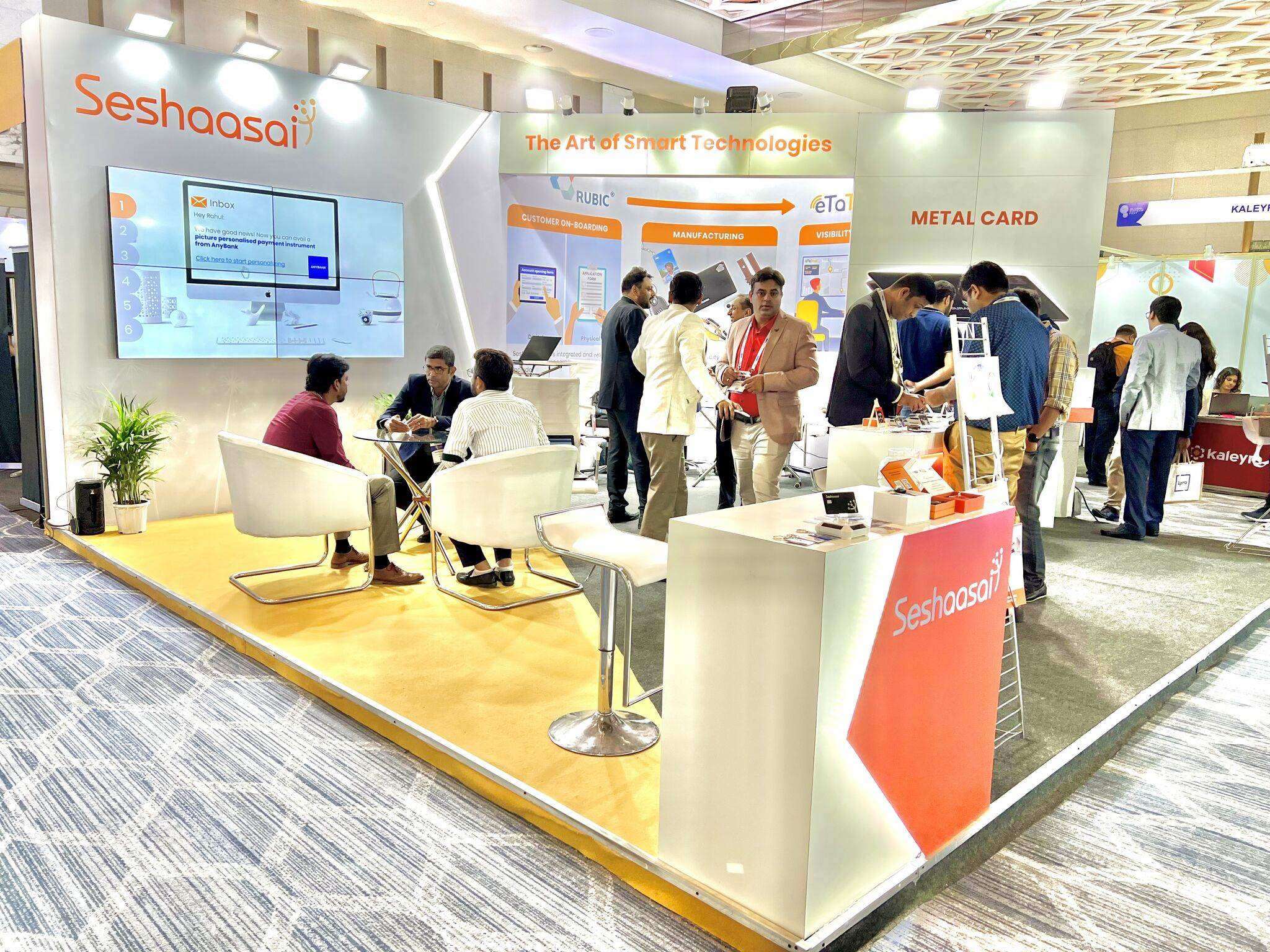
Let’s talk about Seshaasai Technologies. Your bank’s debit card? Printed here. Your credit card? Also here. That fancy metal card your fintech boyfriend bragged about? Yep, here too. The company manufactures payment cards, communicates on behalf of banks to their customers, and builds IoT tags that track goods across retail stores. Three businesses, one factory, infinite ways to profit from India’s financial infrastructure.
Founded in 1993 — when the internet still required a dial tone and a prayer to the gods — Seshaasai has been printing secured documents since the dinosaurs roamed India’s banking sector. Thirty-one years later, it ranks among India’s top two payment card manufacturers with a 31.9% market share in debit and credit card issuance. That’s not market leadership. That’s market domination dressed in a turtleneck.
But here’s the thing: the company IPO’d at a ₹880 crore valuation in Sep 2025. Today it’s at ₹4,095 crore. And the stock is down 42% from its 52-week high. This is a company that somehow managed to be overvalued and undervalued at the exact same time. On paper, it’s printing money. On the stock ticker, it’s watching money evaporate. There’s a concall in February 2026 where management revealed some deeply strange things about metal cards, semiconductor supply, and why Q3 IoT revenue flopped despite a “100% YoY growth.” Let’s decode all of this — with data, sarcasm, and the kind of financial commentary that makes auditors weep with joy.
February 2026 Concall Goldmine: Management casually dropped that a “project rollout was delayed” in Q3 IoT, but Q4 “historically tends to be stronger.” Translation: we missed our own targets but we’re confident next quarter will be better. Every company ever has said this. Most of them are wrong.
03 — Business Model: WTF Do They Even Do?
Printing Money. Literally. But Not the Legal Way.
Seshaasai operates three distinct business verticals, and they’re all B2B plays to India’s financial system:
Payment Solutions (53% of Q3 revenue): The company manufactures debit cards, credit cards, prepaid cards, and — this is where it gets fun — metal cards, wearables, and payment stickers. They’ve won multi-year contracts with PSU banks worth ₹489 crore (budgeted tender value) and are supplying to 10 of 12 PSU banks, 15 of 21 private banks. Market share: 31.9% in FY25. Not bad for a company that nobody knows.
Communication & Fulfilment (36.4% of Q3 revenue): Banks need to send documents. Lots of them. Policy statements. KYC notices. Marketing emails. Regulatory compliance blah-blah. Seshaasai handles it all through their RUBIC and IOMS platforms. They serve 35,800+ bank branches, printing 27 million+ policy documents and 14.8 million tax cards in FY25. When a bank sneezes a regulatory requirement, Seshaasai prints the tissue box to catch it.
IoT & RFID Solutions (10.3% of Q3 revenue, growing 100% YoY): The company supplies RFID tags and labels to retail, logistics, manufacturing, and renewable energy. These tags track inventory. When Amazon doesn’t know where a shipment is, Seshaasai’s tags know. When a retail giant wants to reduce shrinkage (fancy word for theft), they use Seshaasai tags. Management hinted at winning a contract with “the largest Indian retail giant having more than 19,000 stores,” and if that goes through, it becomes their largest IoT account. Strategic value? Absolutely. Revenue visibility? Depends on when the rollout happens.
The company operates 24 manufacturing units across seven locations. Can produce 470,000 cards per day and 1.67 million RFID tags per day. Has 387 crore in cash post-IPO and is expanding capacity across Bengaluru, Nagpur, Navi Mumbai, and Kundli. Debt is down from ₹379 crore (Mar 2025) to ₹336 crore (Sep 2025) after the IPO proceeds debt repayment. Interest coverage at 12.3x — meaning they could triple their debt and still sleep at night.
Metal Card Mania: Management flagged “strong traction in the metal card and premium card segment” and got shortlisted by “a large European fintech to supply metal and PVC cards globally.” Why should you care? Because metal cards are the new status symbol in banking. And unlike Dharamraj’s Khanjarpur, the margins on metal cards are genuinely better. Volumes are “exploratory” right now, but management expects “significant growth.” Translation: we’re bullish but also cautious. Very auditor-like energy.
💬 How many times have you held a metal credit card and felt fancy? Ever thought about who printed it? Now you know. Drop a comment!
04 — Financials Overview
Q3 FY26: The Numbers Game
Result type: Quarterly Results | Q3 FY26 EPS: ₹4.56 | Annualised EPS (Q3×4): ₹18.24 | TTM EPS: ₹14.46 | Full-year FY25 EPS: ₹15.05
| Metric (₹ Cr) |
Q3 FY26
Dec 2025 |
Q3 FY25
Dec 2024 |
Q2 FY26
Sep 2025 |
YoY % |
QoQ % |
| Revenue | 374 | 340 | 351 | +10.1% | +6.1% |
| Operating Profit | 100.7 | 80 | 94 | +25.9% | +7.1% |
| EBITDA Margin % | 26.9% | 23.6% | 26.8% | +316 bps | +11 bps |
| PAT | 64.1 | 53.9 | 58.2 | +19.3% | +10.1% |
| EPS (₹) | 4.56 | 3.63 | 3.58 | +25.6% | +27.4% |
P/E Math Check: TTM EPS ₹14.46 ÷ CMP ₹253 = P/E 17.5x. Stock screener says 18.3x (probably uses full-year FY25 ₹15.05). Either way, company is trading at a modest premium to its sector median P/E of 19.7x. Not overvalued in absolute terms, but investors have already paid for growth — the question is whether management can deliver it sustainably.
What’s Actually Happening Here: Revenue grew 10.1% YoY, but EBITDA margin expanded 316 basis points. That’s the real story. Management attributed this to “favorable product mix” (likely more metal cards and high-margin IoT), “operational efficiencies” (they’ve done ₹300 crore debt repayment but still growing), “procurement benefits” (vendors giving better payment terms), and crucially, “import costs reduced” (likely a lag effect from earlier dollar strength).
PAT grew 19.3% YoY despite revenue growing only 10%. That’s margin magic, not volume magic. And it’s sustainable if management can keep the product mix favorable. But here’s the risk: 37-38% of their cost base is USD-denominated. If the dollar strengthens, those margins compress. Management explicitly said they’re “keeping a close eye on the dollar increase.” Translation: they’re aware that a strong dollar could kill Q4. Or maybe not. We’ll see in April 2026.
05 — Valuation: Fair Value Range
What’s This Payment Card Factory Actually Worth?
Method 1: P/E Based
TTM EPS = ₹14.46. Sector median P/E = 19.7x. Quality fintech/financial services comps typically trade at 18x-24x. Seshaasai has 36.5% ROCE (well above cost of capital at ~11%), justifying premium valuation.
Fair P/E Range: 16x – 22x → Range: ₹231 – ₹318
Method 2: EV/EBITDA Based
Q3 FY26 annualized EBITDA ≈ ₹403 Cr. TTM EBITDA ≈ ₹420 Cr (conservative). Current EV = Market Cap ₹4,095 Cr + Net Debt (₹336 Cr debt – ₹387 Cr cash = -₹51 Cr) ≈ ₹4,044 Cr. Current EV/EBITDA ≈ 9.6x. Quality payment solutions companies trade at 10x-14x EBITDA.
EV range (10x-14x): ₹4,200 Cr – ₹5,880 Cr → Per share (assuming ₹162 Cr equity):
Range: ₹259 – ₹363
Method 3: DCF-ish (Conservative Approach)
Operating CF for full year approaching ₹200-250 crore range post-capex. Conservative FCF yield approach: if the business can deliver 15% long-term FCF CAGR with modest 2-3% terminal growth, and we use 11% WACC, intrinsic value suggests range of ₹240-₹340.
Conservative Range: ₹240 – ₹340
Fair Min: ₹231
CMP: ₹253 | IPO: ₹880 (ref)
Fair Max: ₹363
CMP ₹253
⚠️ EduInvesting Fair Value Range: ₹230 – ₹365. CMP ₹253 sits near the lower-middle of this range, implying limited downside but also limited upside unless growth accelerates. This fair value range is for educational purposes only and is not investment advice. Please consult a SEBI-registered investment advisor before making any financial decision.
06 — What’s Cooking: News, Triggers & Drama
Card Wars: The Concall Revealed More Than The Results